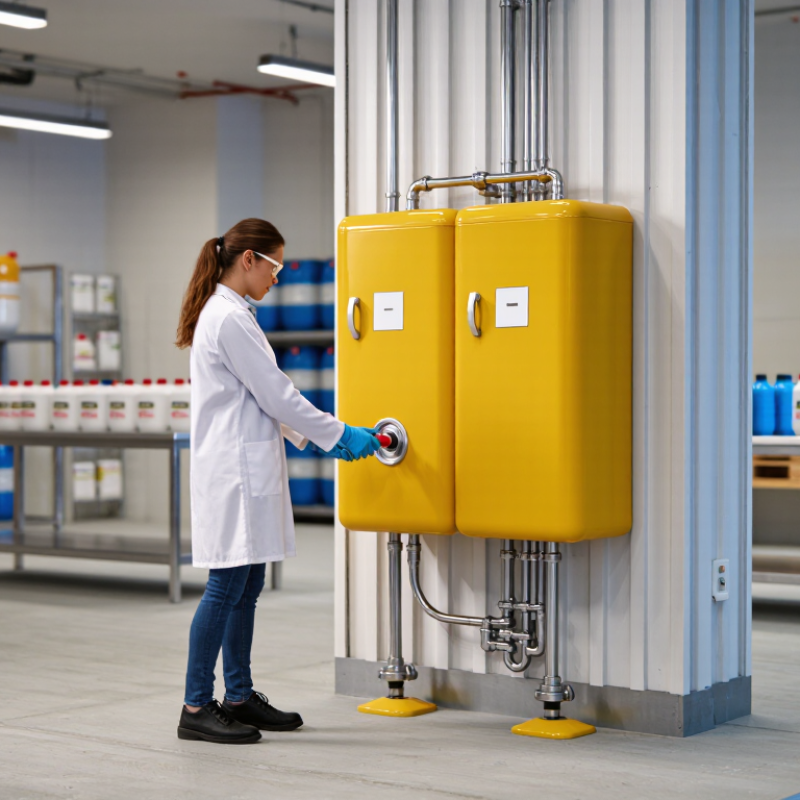
| Plumbed eyewash station | Connected to a building’s potable-water supply. | Provides a continuous supply while the unit is operating; suitable for frequent-use or higher-risk locations. | Requires plumbing, installation, and regular activation checks. Water temperature and quality should be suitable for emergency flushing. | Fixed work areas with corrosive chemical exposure and a reliable water supply. | Confirm that the unit can deliver the required flow for the required duration, is accessible, and can provide tepid flushing fluid. ANSI/ISEA Z358.1 specifies at least 0.4 gallons per minute (1.5 L/min) for eyewash equipment for 15 minutes. |
| Self-contained gravity-fed station | Stores flushing fluid in an onboard tank and uses gravity to deliver it. | Does not need a permanent water connection; can be installed where plumbing is unavailable. | Has a finite fluid supply. The tank must be filled, inspected, cleaned, and serviced according to the manufacturer’s instructions; fluid replacement intervals vary by product. | Remote or temporary work areas where a suitable plumbed supply is not available. | Check the unit’s rated flow and flushing duration, tank capacity, fluid type, replenishment schedule, and suitability for the site’s temperature conditions. |
| Portable pressurized self-contained station | Stores flushing fluid in a pressurized container. | Can be moved between work areas and does not require fixed plumbing. | Limited by stored-fluid capacity and pressure. Requires pressure checks and fluid servicing as specified by the manufacturer. | Mobile tasks, temporary work zones, or locations where permanent installation is impractical. | Verify the specified flushing duration and flow, pressure-monitoring method, fluid requirements, and inspection schedule before purchase. |
| Personal eyewash bottles | Small bottles of flushing fluid held at or near the worker. | Can provide immediate flushing while the person reaches emergency equipment; easy to position near a task. | Limited fluid volume and duration. Bottles generally do not replace a compliant emergency eyewash station where one is required. | Supplemental first-flush access near a workbench, vehicle, or task area. | Use only as a supplement where required. Check that bottles are accessible, sealed, within their stated service life, and compatible with the intended use. |
| Combination shower and eyewash unit | Usually connected to a building water supply; some configurations may use a self-contained supply. | Provides body and eye flushing at one location when chemical exposure may affect both. | Needs adequate supply and space. Confirm that the selected unit is designed to operate both components simultaneously and that both remain accessible. | Areas where splashes or spills could expose both the eyes and the body. | Check the flow requirements for each component, simultaneous operation, drainage, access, and tepid-water provision. Follow the applicable standard and product instructions. |



 Close