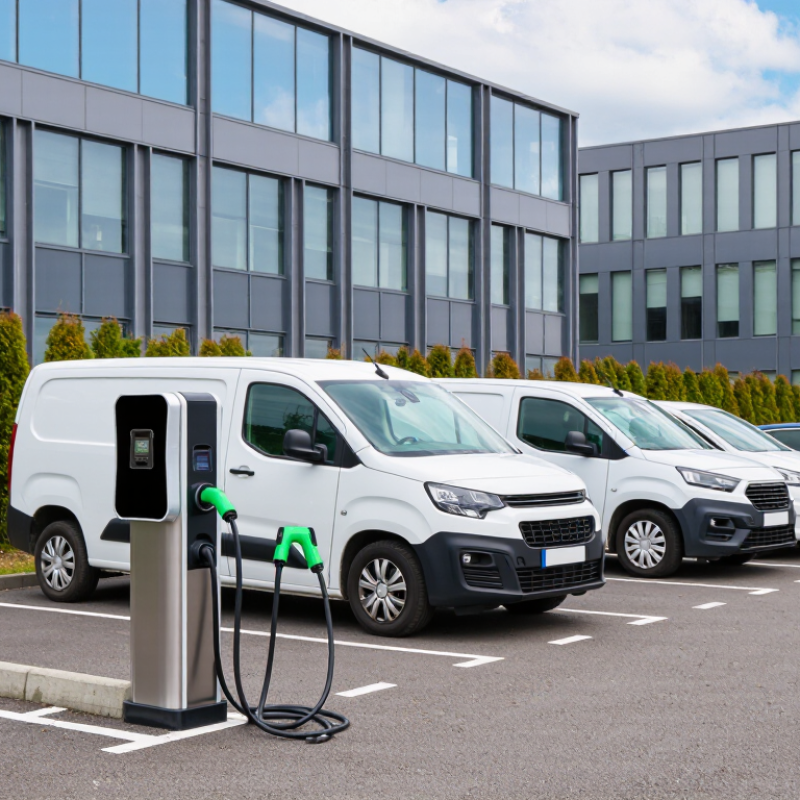
| Vehicle Type | Which electric vehicles will use the site? | Passenger cars, vans, buses, trucks, or mixed fleet | AC charging for parked vehicles; DC charging for vehicles requiring short turnaround times | Check the vehicle’s maximum AC and DC charging acceptance rate before specifying charger output. | High |
| Daily Energy Demand | How much energy must be delivered each day? | Number of vehicles × average daily mileage × vehicle energy consumption | Size the total charging capacity around the daily energy requirement rather than charger power alone. | Include reasonable allowance for charging losses, seasonal conditions, and operational variation. | High |
| Parking Duration | How long are vehicles normally parked at the property? | Average dwell time, earliest departure, latest arrival, and operating hours | AC charging is generally suitable for stays of several hours; DC charging is better for short dwell times. | A lower-power charger may meet demand when vehicles remain parked overnight or throughout a work shift. | High |
| Required Charging Speed | How quickly must a vehicle be ready for its next trip? | Required energy per session and available charging time | Common commercial AC options range from approximately 7 to 22 kW; DC systems commonly start around 20 kW and extend much higher. | Actual charging speed is limited by the vehicle, supply capacity, temperature, battery state, and charger configuration. | High |
| Number of Charging Ports | How many vehicles may need to charge at the same time? | Current fleet size, employee demand, visitor demand, and projected utilization | Provide enough ports for peak demand, or use managed charging to serve more vehicles with a limited electrical connection. | Consider queueing, simultaneous charging, maintenance downtime, and future vehicle adoption. | High |
| Electrical Capacity | Can the existing electrical service support the planned load? | Service voltage, available current, transformer capacity, panel capacity, and spare capacity | Use load management or staged installation where the existing service cannot support full rated output. | Electrical upgrades, protection equipment, trenching, and utility work can materially affect project cost and schedule. | High |
| Load Management | Can charging power be adjusted according to site demand? | Building load profile, peak demand periods, and charging priorities | Choose chargers that support dynamic load management, scheduled charging, or power sharing. | Managed charging can reduce simultaneous peak load and may defer an expensive electrical-service upgrade. | High |
| Installation Environment | Where will the equipment be installed? | Indoor or outdoor location, temperature, moisture, dust, sunlight, and flood exposure | Select equipment with an enclosure and environmental protection level appropriate for the site. | Outdoor installations may require weather protection, drainage, lighting, bollards, and corrosion-resistant materials. | High |
| Connector Compatibility | Which charging connectors are required by the vehicles? | Vehicle connector types, regional standards, and fleet replacement plans | Specify compatible AC and DC connectors, with suitable cable length and cable management. | Connector requirements vary by vehicle and market; confirm compatibility before ordering hardware. | High |
| Access and Payment | Who will use the chargers and how will access be controlled? | Employees, fleet operators, customers, visitors, or the general public | Use authentication, user groups, access cards, mobile access, or payment capability according to the operating model. | Private fleet sites may prioritize simple access control, while public sites may require pricing and payment functions. | Medium |
| Network Connectivity | Is remote monitoring or centralized management necessary? | Cellular, Wi-Fi, Ethernet availability, uptime expectations, and data requirements | Choose connected chargers when remote diagnostics, usage reporting, access control, or tariff management is needed. | Confirm network coverage, cybersecurity controls, software compatibility, and data ownership requirements. | Medium |
| Operating Cost | What are the expected electricity and demand-related costs? | Energy tariff, time-of-use periods, demand charges, utilization, and maintenance budget | Use scheduled or managed charging to shift consumption toward lower-cost periods where permitted. | Electricity pricing structures vary by location; evaluate total operating cost rather than energy price alone. | High |
| Installation and Civil Works | What site work is required before commissioning? | Cable distance, parking layout, foundations, conduit, trenching, signage, lighting, and barriers | Choose a layout that minimizes cable runs while maintaining safe vehicle and pedestrian movement. | Construction work, permitting, accessibility requirements, and traffic control can be significant portions of the project budget. | High |
| Safety and Compliance | What electrical, building, fire, and accessibility rules apply? | Local codes, inspection requirements, emergency procedures, protection devices, and accessibility standards | Use certified equipment and installation practices that meet the requirements of the project location. | Final requirements should be confirmed with a qualified electrical professional and the relevant authorities. | High |
| Reliability and Maintenance | What availability is required for business operations? | Operating hours, service response expectations, spare parts, preventive maintenance, and warranty coverage | Select equipment with monitoring, fault reporting, replaceable components, and a defined service process. | For fleets, charger downtime can disrupt schedules; plan redundancy when a single charger is operationally critical. | High |
| Future Expansion | How will charging demand change over the next three to five years? | Expected fleet growth, employee EV adoption, site expansion, and increased charging utilization | Install suitable electrical pathways and reserve capacity for additional ports or higher power later. | Phased deployment can control initial investment while avoiding costly redesign and repeated civil work. | Medium |
| Return on Investment | What business value should the charging program deliver? | Fuel savings, fleet productivity, customer retention, employee benefits, charging revenue, and incentives | Compare capital cost, energy cost, maintenance, utilization, and expected financial or operational benefits. | A charger with the highest rated power is not always the most cost-effective option for the business. | High |



 Close