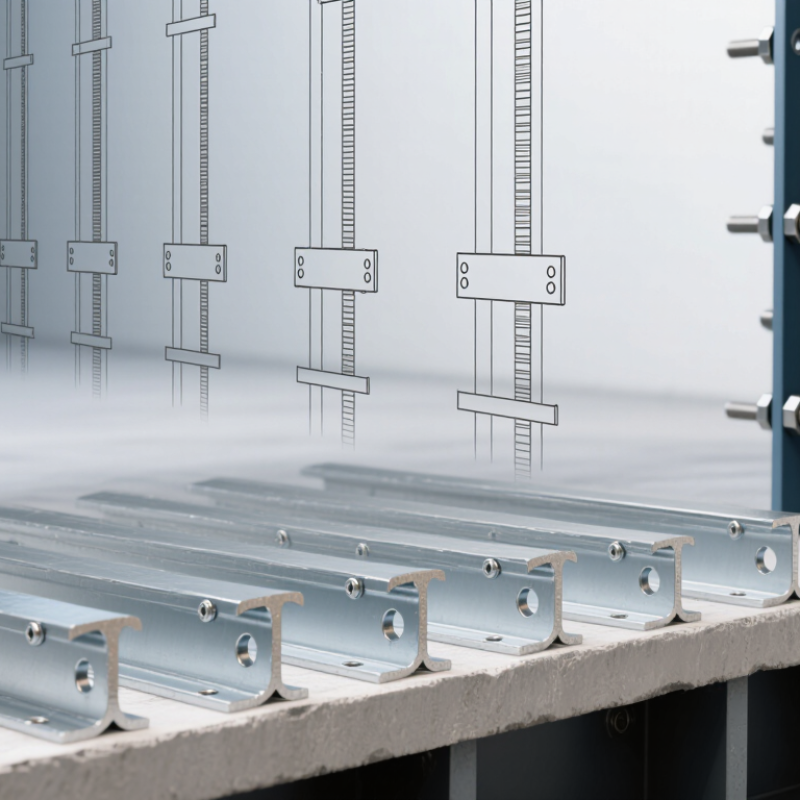
| Guide rail compatibility | Rail profile, dimensions, fastening arrangement, and bracket contact points | The bracket secures the guide rail to the building structure and helps keep the rail in its intended position. | Compare the bracket drawing and rail dimensions with the elevator design documents; do not assume different rail profiles are interchangeable. |
| Loads and design requirements | Specified forces, support reactions, safety factors, and applicable elevator code or project requirements | Brackets and their connections transfer guide-rail forces to the supporting structure. Required capacity depends on the complete elevator design. | Use project calculations and approved component data. There is no single load rating suitable for every elevator installation. |
| Bracket spacing | Specified distance between rail supports and any limits stated for the rail and bracket system | Support spacing affects rail stiffness, alignment, and the forces carried by each support. | Follow the approved layout and manufacturer’s engineering data; spacing must not be selected by appearance alone. |
| Building substrate | Concrete, structural steel, or another approved support; substrate condition and anchor or weld details | A bracket is only as reliable as its attachment to the building. Anchors and welds transfer loads from the bracket into the structure. | Confirm that the substrate, anchors, edge distances, embedment, and installation method match the approved structural design. |
| Adjustment and alignment | Permitted adjustment range, slot direction, and access for rail alignment during installation | Adjustment features can help installers position rails accurately before final tightening or fixing. | Choose an arrangement that supports the specified alignment procedure and can be securely fixed after adjustment. |
| Material and corrosion protection | Bracket material, coating or finish, and exposure to moisture or corrosive conditions | Suitable materials and protective finishes help limit corrosion and preserve the bracket and connection over time. | Select the finish for the installation environment and check compatibility with the rail, fasteners, and structural support. |
| Installation access and clearance | Shaft clearances, fixing access, nearby components, and required working space | The bracket must fit within the shaft arrangement without interfering with the car, counterweight, or other elevator equipment. | Check coordinated shaft drawings and confirm that fasteners can be installed and inspected safely. |
| Inspection and maintenance | Visibility of fasteners, access for inspection, and any project maintenance requirements | Accessible connections make it easier to check for looseness, damage, corrosion, or changes that could affect the rail support. | Avoid layouts that conceal critical connections where practical; follow the elevator maintenance and inspection plan. |



 Close