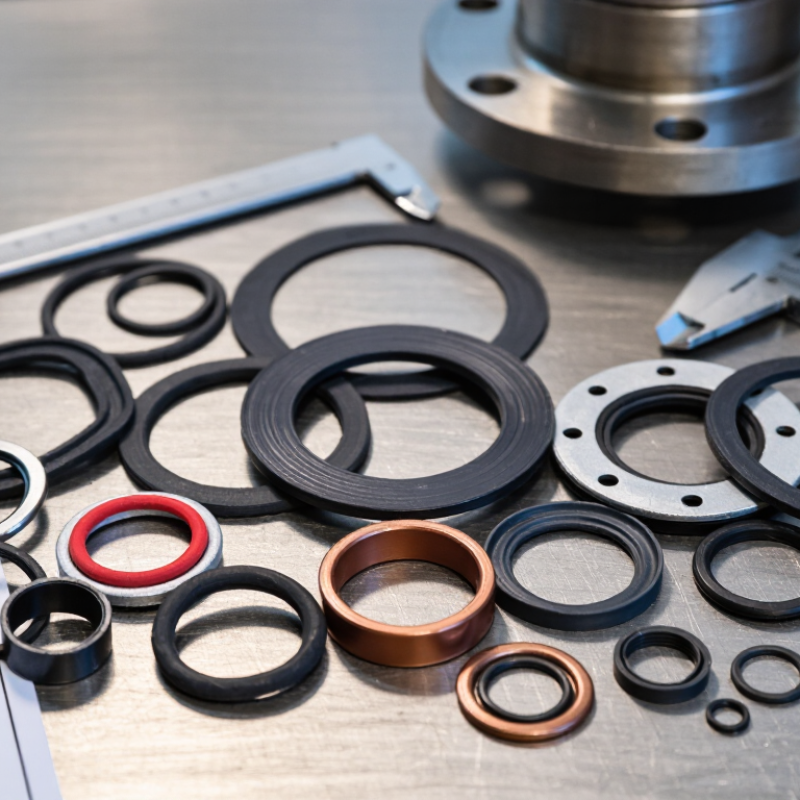
A gasket ring should fit the joint and the job, not just the nominal pipe size. Check the groove dimensions, surface condition, and required compression before ordering. A ring that is too thick may twist during installation; one that is too thin can leave a leak path. Small details matter. Confirm that the material suits the fluid, temperature, and cleaning chemicals. If any of these conditions are uncertain, verify them against equipment records or a qualified supplier’s data.
Installation affects service life. Clean the seat with a lint-free cloth and remove old residue without scratching the sealing surface. Keep the ring free of grit, and avoid stretching or rolling it into place. Tighten fasteners in the specified sequence and to the equipment maker’s torque guidance. More force is not always better. Over-compression can damage a seal, though it is easy to overlook when a joint still appears secure.
Plan replacement around actual duty, not a calendar guess alone. Record the installation date, operating conditions, and any leaks, swelling, cracks, or flattening found during inspection. Use those observations to set a review interval, then adjust it after maintenance findings. A ring may need replacement sooner after heat spikes or frequent shutdowns. Waiting until leakage appears can disrupt operations, but replacing every ring too early also wastes sound material. A fixed schedule is a starting point, not proof that the seal is healthy.



 Close