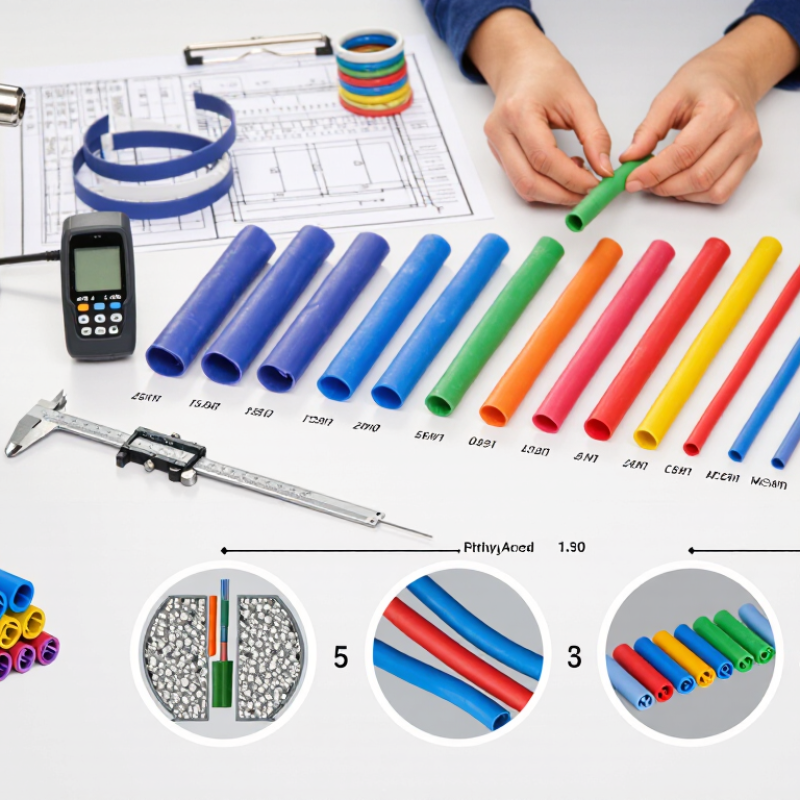
Define the application before comparing sleeve dimensions. Is the sleeve providing electrical insulation, abrasion protection, strain relief, or moisture resistance? Each duty changes the required wall thickness, recovery ratio, and material. Record the substrate diameter, sharp edges, nearby chemicals, and installation clearance. Then map the real operating range: normal temperature, brief heat spikes, cold starts, vibration, oil exposure, and sunlight. NOAA’s 2023 Annual Global Climate Report put global average temperature 1.18°C above the twentieth-century average. That figure is not a local design temperature; it is a reminder to use site-specific extremes, not assumptions. IEC 60068-2-14 describes temperature-change testing, useful when thermal cycling is part of service. Small details matter.
Tips: Separate installation temperature from continuous service temperature. Check both against the sleeve’s documented limits, along with recovery temperature and compatibility with the underlying material. For outdoor use, assess UV exposure; for machinery, inspect the actual fluid and cleaning agents. A sleeve that fits cold may loosen after heating—or become too tight after recovery. Measure twice.
Capture the assembly, not just the sleeve. Note whether it covers a connector, a cable splice, or a moving joint, and leave room for installation tools. Define pass/fail checks, such as no exposed conductor, no lifted edge, and no movement after cooling. This feels fussy, but it prevents a “close enough” selection from becoming a field problem.



 Close