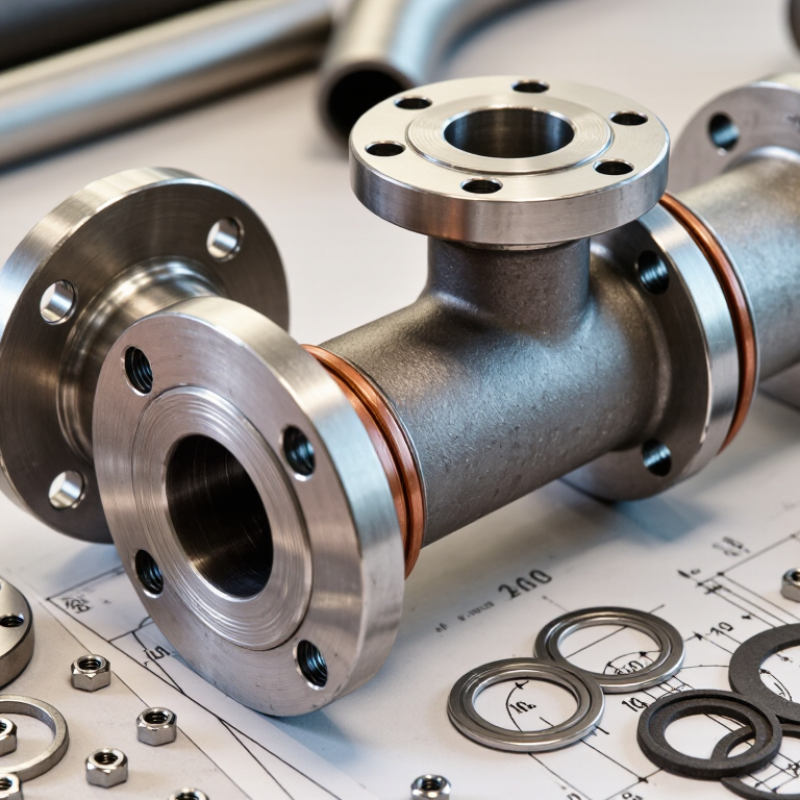
Before choosing a joint flange, write down the real operating envelope: normal and peak pressure, temperature range, fluid composition, flow cycling, and any start-up or shutdown shocks. Include the pipe material, gasket type, bolt material, and corrosion allowance. A flange rating is not a stand-alone pressure limit; allowable pressure changes with temperature and material. ASME B16.5 covers NPS 1/2 through 24 and pressure classes 150 through 2500, but the correct class must be checked against its tables and the actual service conditions.
Details matter. A warm, wet line carrying chlorides may need a different material choice from a dry-air line at the same pressure. The 2016 NACE IMPACT study estimated global corrosion costs at US$2.5 trillion, or 3.4% of global GDP, and reported that corrosion-control practices could reduce costs by 15–35%. That is a broad economic estimate, not a flange-specific prediction. Still, it underlines why fluid chemistry and inspection history belong in the selection record. A field note can be humbling: the nominal pipe size is not the whole story.
Then identify the governing construction code and flange standard for the project. ASME B16.5 and EN 1092-1 use different systems; do not assume their dimensions or ratings are interchangeable. Confirm facing, bolt-hole pattern, gasket seating requirements, and material traceability with the project specification. If conditions sit near a rating boundary, ask the responsible engineer to verify the calculation. That extra check may feel slow. It is cheaper than guessing.



 Close