| Manual or Bench-Top Forming Machine | About 5–20 boxes per minute | Low; operators typically load blanks and handle finished boxes | Prototypes, small businesses, short production runs, and product testing | Lower initial investment, compact footprint, and straightforward operation | Labor requirements, consistency between operators, tooling options, and whether heating and forming are controlled separately |
| Semi-Automatic Forming Machine | About 20–40 boxes per minute | Partial; forming is powered, while feeding or collection may require manual handling | Small to medium production runs with a limited range of box sizes | Greater repeatability than manual equipment without the complexity of a fully integrated line | Actual cycle rate for the intended box, operator workload, changeover time, and safety controls |
| Automatic Single-Station Forming Machine | About 30–60 boxes per minute | High; automatic feeding, forming, and discharge are commonly integrated | Regular production of one or a small number of standard box designs | Reduced manual handling and more consistent production during longer runs | Blank-feeding reliability, compatible material specifications, tooling cost, and the time needed to change formats |
| Automatic Multi-Station or Rotary Forming Machine | About 60–150 boxes per minute | High; multiple forming operations run in sequence with automated transfer | Medium to high-volume production of compatible box styles | Higher potential output and continuous production when feeding and downstream handling are well matched | Product-specific speed, maintenance needs, tooling complexity, footprint, and the effect of material or box-size changes on output |
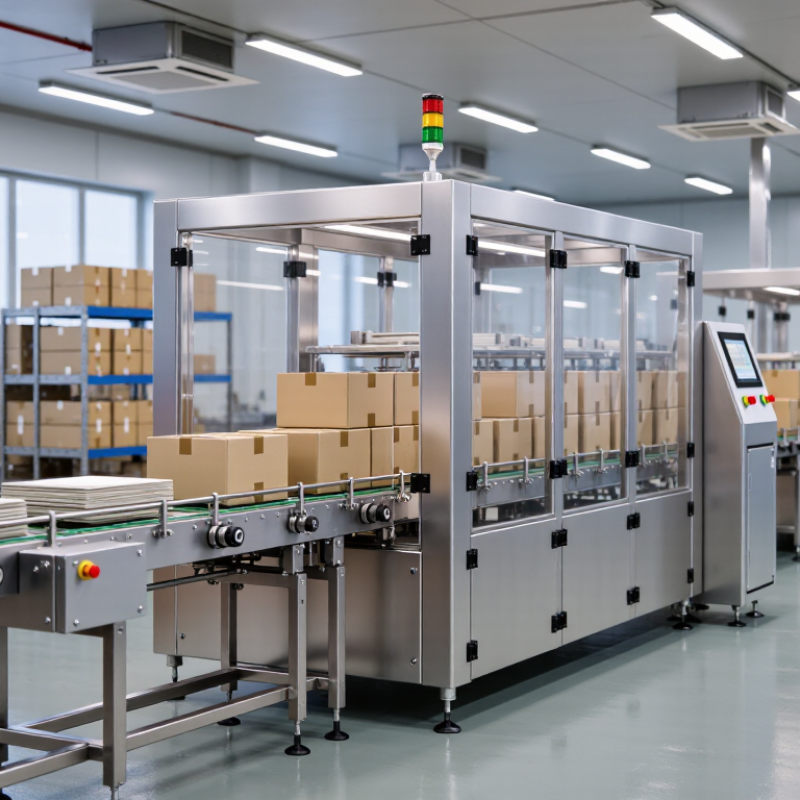
| Integrated Box-Making Line | Varies by line configuration; verify the complete line rate | Very high; may combine blank feeding, forming, inspection, counting, and packaging | Large-scale production with standardized products and coordinated downstream processes | Can reduce transfers between separate machines and support consistent end-to-end production | Line balancing, floor space, utility requirements, control-system integration, staffing, and service support |



 Close