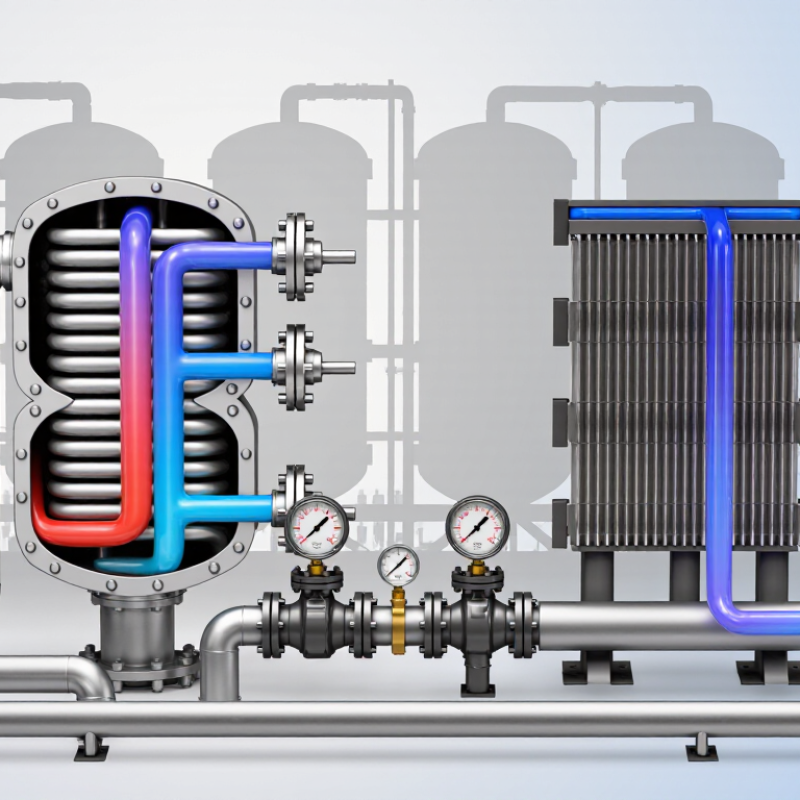
| Shell-and-Tube | A bundle of tubes sits inside a cylindrical shell; one fluid flows through the tubes and the other through the shell. | Robust construction; suitable for a wide range of pressures and temperatures when properly designed; can handle many liquid, gas, and condensing duties. | Requires space and can be heavy. Fouling, cleaning access, tube material, and corrosion allowance should be assessed for the service. | Process plants, power generation, oil and gas processing, and utility services. |
| Gasketed Plate-and-Frame | Thin corrugated metal plates form alternating flow channels, with gaskets directing the fluids. | High heat-transfer efficiency and compact size; plate count can often be adjusted, and the unit can be opened for inspection and cleaning. | Gasket material and operating limits must match the fluids, temperature, and pressure. Narrow channels may be unsuitable for some heavily fouling or particle-laden fluids. | Building heating and cooling, food processing, and liquid-to-liquid duties with compatible fluids. |
| Welded Plate | Plate channels are joined by welding rather than relying on removable gaskets; designs include fully welded and semi-welded arrangements. | Avoids process-side gasket limitations and provides a compact plate-based design for duties that need higher containment than a conventional gasketed unit. | Cleaning and repair options vary by design. Confirm pressure, temperature, fluid compatibility, and inspection requirements with the equipment designer. | Industrial process heating and cooling, including selected services involving refrigerants or fluids that are not suitable for process-side gaskets. |
| Double-Pipe | One pipe is placed inside another, creating separate passages for the two fluids; units may be connected in series or parallel. | Simple configuration; useful for smaller duties and can be arranged to provide counter-current flow. | Large duties may require substantial piping and floor space. Evaluate pressure drop, maintenance access, and the required heat-transfer area. | Small process streams, pilot systems, and applications where a simple tubular arrangement is practical. |
| Spiral Plate | Two metal sheets are formed into spiral channels, typically creating a separate passage for each fluid. | A single-channel flow path can be beneficial for some viscous or fouling fluids; available designs may allow access for cleaning. | Check the specific design’s pressure limits, materials, cleaning method, and suitability for solids or fibrous material. | Wastewater, pulp and paper, and selected process services with viscous or fouling streams. |
| Material Selection | Common options include carbon steel, stainless steel, and duplex stainless steel, selected for the parts exposed to each fluid. | Matching materials to the process can help manage corrosion, mechanical requirements, and service life. | No grade is universally corrosion-proof. Consider fluid chemistry, chlorides, temperature, erosion, cleaning chemicals, fabrication, and applicable design codes. | All applications; material choice depends on the fluid on each side and the operating environment. |
| Selection Checklist | Define both fluids, flow rates, inlet and outlet temperatures, allowable pressure drop, operating and design pressure and temperature, fouling tendency, cleaning method, available space, maintenance needs, materials, and applicable codes. Have a qualified designer verify thermal and mechanical performance for the actual operating conditions. |



 Close