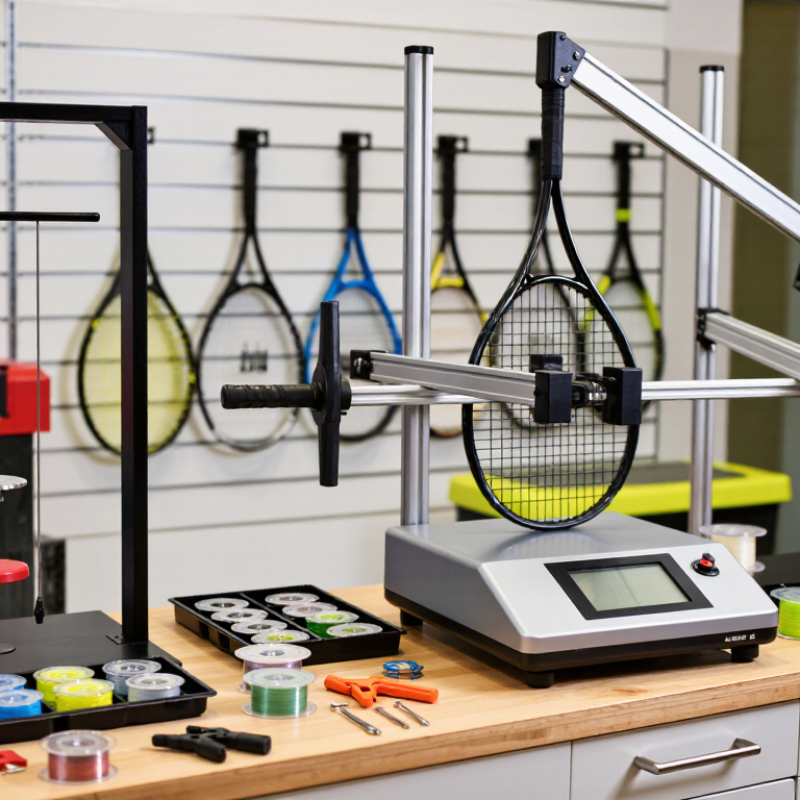
| Drop-weight | A weighted bar applies tension through gravity; the bar must be level for the intended setting. | Often about 10–90 lb (4.5–41 kg), depending on the model. | Results depend on correct bar alignment, smooth movement, and consistent technique. Verify settings with a suitable tension calibrator. | Stable base, smooth tension arm, secure mounting system, and clamps that hold string without slipping. | Keep the bar, track, clamps, and gripper clean. Check clamp hold and inspect for wear regularly. | Home stringers and users who value simple operation and do not mind a slower workflow. |
| Spring-crank (lockout) | A spring mechanism pulls string to the selected setting, then locks out when that tension is reached. | Often about 10–90 lb (4.5–41 kg), depending on the model. | Tension can change as string stretches after lockout. Pull smoothly and use a consistent delay before clamping. | Smooth crank action, repeatable lockout, easy-to-read adjustment scale, and a stable frame mount. | Clean the gripper and clamps; check calibration periodically and inspect the spring and moving parts for wear. | Regular recreational use where a faster process than a drop-weight machine is desired. |
| Electronic constant-pull | A motor or electronic drive continues adjusting the pull to maintain the selected tension until the string is clamped. | Commonly about 10–90 lb (4.5–41 kg), though the available range varies by model. | Can provide repeatable pulls when correctly calibrated. Check readings at several settings with a suitable tension calibrator. | Clear controls, dependable pull cycle, appropriate pull speed settings, and a secure mounting and clamping system. | Keep clamps and gripper clean; follow the manual for calibration, inspection, and care of electrical components. | Frequent stringing or users who prioritize speed, convenience, and consistent pulling. |
| Electronic machine with programmable functions | An electronic tension head may offer selectable pull speeds, pre-stretch, or other settings in addition to constant pull. | Varies by model; many machines cover a broad range suitable for common tennis stringing tensions. | Extra settings do not guarantee greater accuracy. Confirm calibration and use the same settings and technique for repeatable results. | Check that functions are easy to understand, settings can be repeated, and the machine has accessible support and documentation. | In addition to cleaning and calibration, follow the manual for software, electrical, and service checks. | High-volume users or stringers who will make practical use of programmable options. |
| Mounting and support system | The frame supports the racquet while mounting posts and supports hold it in position during stringing. | Not applicable; confirm compatibility with the racquet sizes and shapes you string. | A secure, even mount helps reduce frame movement. Tighten supports as instructed without overtightening. | Look for stable support points, convenient adjustment, and access to shared or blocked grommet areas. | Keep contact surfaces clean and inspect adjustment points and supports for looseness or damage. | Every user; mounting stability matters regardless of tension-head type. |
| Clamp and gripper system | Clamps hold tensioned string while the next pull is made; the gripper draws and holds string during a pull. | Not applicable; performance depends on condition, adjustment, and string type. | Slippage or excessive clamping pressure can affect results and damage string. Test grip using the strings you commonly use. | Check for smooth movement, secure holding, suitable clamp spacing, and easy adjustment. | Remove residue with an appropriate cleaning method; inspect gripping surfaces and adjust clamps when needed. | Every user; clamp quality and condition directly affect ease of use and consistency. |



 Close