2026 How to Choose the Right Towable Boom Lift for Your Needs?
Choosing the right Towable Boom Lift can be challenging. With various models and features, understanding your needs is crucial. These lifts are designed for easy transportation and versatile access to heights. However, not all lifts are created equal. You may find yourself overwhelmed by choices and specifications.
Consider the weight capacity and height range required for your projects. Different jobs may demand different levels of reach and support. Additionally, think about the terrain where you'll use the Towable Boom Lift. Some models are better suited for rough surfaces while others excel on smooth ground. Evaluating these factors helps narrow down your options.
It's easy to overlook the importance of budget. Towable Boom Lifts come in various price ranges. Spending too little may compromise quality. Yet, spending excessively without justification can lead to financial strain. Reflect on your requirements and choose wisely. Your choice directly impacts productivity and safety on the job.
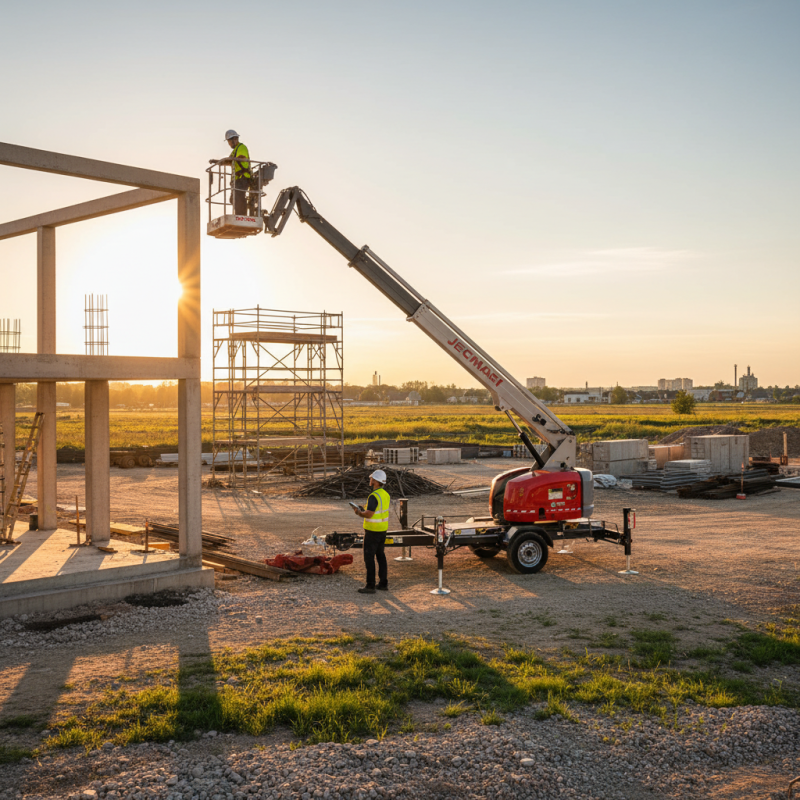
Factors to Consider When Selecting a Towable Boom Lift
When selecting a towable boom lift, various factors play a critical role. First, consider the working height. You'll find models offering heights ranging from 30 to over 60 feet. Choosing one that matches your specific projects is crucial. According to industry reports, nearly 40% of job site accidents occur due to improper equipment selection. This statistic highlights the importance of understanding lift capacities thoroughly.
Another essential factor is the weight and transportability. Many towable boom lifts weigh between 1,500 to 5,000 pounds. Ensure your vehicle can handle this weight, along with any trailer or towing equipment needed. Sometimes, mobility can be a double-edged sword. While some lifts are designed for easy transport, they might lack stability on uneven ground. Always assess your work environment carefully.
Furthermore, think about the platform space. Some lifts offer more spacious platforms, which can support multiple workers or tools. The space can be limited, though, on more compact models. Balancing size and capability can be difficult. Industry data suggests that nearly 30% of operators underestimate their space requirements. Reflect on your unique needs to avoid potential frustrations on the job.
2026 How to Choose the Right Towable Boom Lift for Your Needs?
| Factor | Description | Importance Level |
| Working Height | The maximum height the lift can reach safely. | High |
| Weight Capacity | The maximum load the lift can support. | High |
| Power Source | Electric or gas-operated for specific job site requirements. | Medium |
| Platform Size | Size of the platform for accommodating workers and tools. | Medium |
| Maneuverability | Ease of movement in tight spaces. | High |
| Set-Up Time | Time required to deploy the lift for operation. | Medium |
| Safety Features | Presence of safety mechanisms such as guardrails and emergency shut-offs. | High |
| Transportability | Ease of towing and compatibility with vehicles. | Medium |
Types of Towable Boom Lifts and Their Applications
When considering a towable boom lift, it's essential to understand the different types available and their specific applications. There are two main categories: articulating and telescopic boom lifts. Articulating boom lifts are flexible and can reach over obstacles. They are ideal for tasks like tree trimming and maintenance on buildings. Their design allows for better accessibility in tight spaces.
Telescopic boom lifts, on the other hand, provide straightforward vertical reach. These lifts are perfect for construction sites where height is crucial. They extend straight up and offer a stable platform. However, they may not perform well in confined areas. It's essential to evaluate the site and the job requirements before making a choice.
Selecting the right model can be challenging. Consider the lift's weight capacity, height, and reach. Sometimes, users underestimate the conditions. The terrain's stability, and wind conditions also play a significant role. Reflecting on the specific job demands is key. Each project has unique needs and choosing the right lift can impact efficiency and safety.
Weight Capacity and Reach Specifications Explained
When choosing a towable boom lift, weight capacity and reach are vital factors. The right lift should accommodate your specific tasks. For instance, many models have a capacity ranging from 500 to 1,500 pounds. Knowing how much weight your project requires will guide you toward the correct lift. This ensures safety and efficiency during operation.
Reach specifications also play a crucial role. Typical boom lifts can reach heights between 30 to 60 feet. If your project requires working at significant heights, ensuring the lift can safely exceed that height is essential. Consider how far the boom extends horizontally as well. Some models allow for outreach up to 20 feet. This can be especially useful for accessing difficult spots without moving the lift frequently.
Tips: Always verify the lift’s specifications. There might be inconsistencies in reported data. Comparing different models can reveal unexpected limitations. Check for stability ratings and ground conditions, too. It's not just about reaching new heights; it's about doing so safely and effectively. Choosing wisely can save time and reduce risks in construction projects.
Safety Features and Compliance Standards for Towable Boom Lifts
When selecting a towable boom lift, safety features are crucial. Understanding compliance standards is equally important. Always check for features like stabilizers, emergency stop buttons, and proper locking mechanisms. These elements ensure that the lift operates safely and supports the operator effectively.
Tips: Always inspect safety features before use. Look for visible wear and signs of malfunction. Familiarize yourself with emergency protocols. Knowing how to react can save lives.
Compliance standards often vary by region. Some areas may have strict regulations. Research local laws to avoid costly penalties. Ignoring compliance can lead to accidents or legal issues. Safety comes first, and cutting corners is never wise.
Tips: Regularly review safety manuals. Ensure your team understands compliance. Hold safety briefings to keep everyone informed. Being proactive can reduce risks significantly.
Rental vs. Purchase: Which is Best for Your Needs?
When considering a towable boom lift, deciding between rental and purchase is crucial. Rentals offer flexibility. You can rent a lift for a specific project. This makes sense for short-term use or occasional tasks. You avoid high upfront costs, and maintenance is typically included.
However, purchasing might be the better option for regular use. If your projects require constant access to a boom lift, owning one can save money over time. You’ll have full control over the equipment. This means you can schedule maintenance as needed without relying on rental availability.
Tips: Always assess the frequency of use. How often will you need the lift? Consider storage and transportation logistics if you purchase. Don’t rush into decisions; take time to evaluate your actual needs. Balancing costs with convenience is key. Remember, the right choice depends on unique project demands. Think critically about your options before committing.

 Close
Close