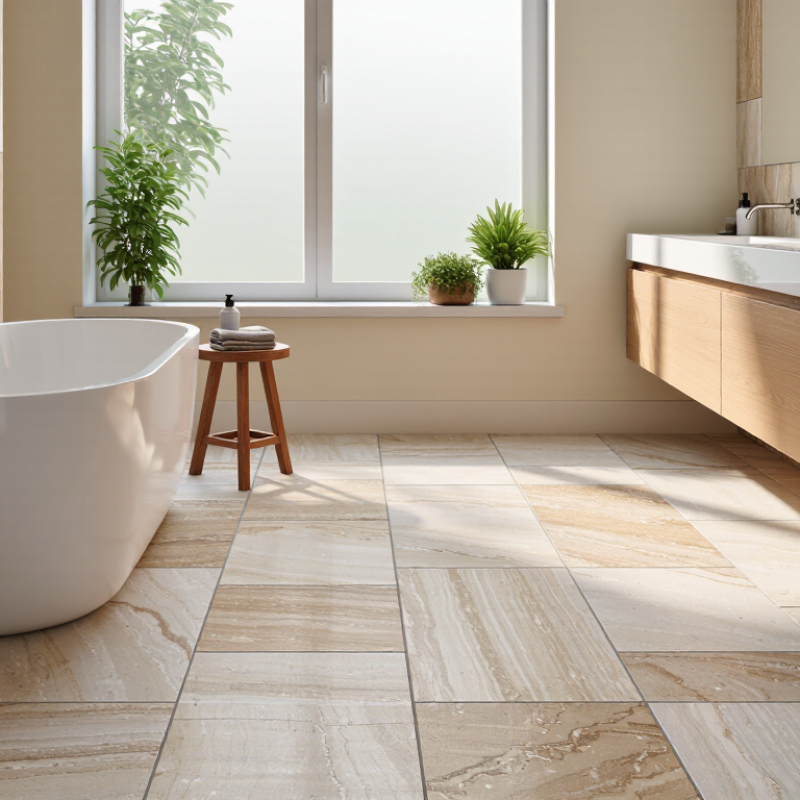
| Color | Ivory and cream | Light warm tones, often with subtle beige bands and natural variation. | Interior floors, bathrooms, wall cladding, and bright, neutral schemes. | Inspect several pieces together; veining and shade can vary between tiles and batches. |
| Color | Beige and classic | Tan to light brown tones with visible linear veins and occasional small cavities. | Floors, fireplaces, feature walls, and traditional or Mediterranean-inspired spaces. | Ask whether the material is supplied filled or unfilled, since this changes its appearance and surface texture. |
| Color | Silver and gray | Cool gray, taupe, or silver tones; some selections contain warm beige veining. | Contemporary interiors, bathrooms, entryways, and accent walls. | View a dry sample under the project’s lighting; gray tones can appear warmer or cooler in different settings. |
| Color | Walnut and dark brown | Deeper brown shades with pronounced bands and stronger natural contrast. | Feature areas, fireplaces, floors, and spaces designed around richer earth tones. | Variation may be more noticeable across a large installation; review a representative layout before ordering. |
| Trade grade | Premium or select | Often sorted for a more consistent appearance, with fewer visible defects or pronounced variations. | Prominent floors, feature walls, and projects requiring a more controlled visual selection. | “Premium” and “select” are supplier terms, not universal stone-grade standards. Confirm written sorting criteria and inspect the actual lot. |
| Trade grade | Standard or commercial | Typically allows a broader range of natural color variation, veining, and filled cavities. | General flooring, wall applications, and projects where natural variation is acceptable. | Grade labels vary between suppliers. Request samples from the production batch and clarify acceptable variation before purchase. |
| Surface finish | Polished | Smooth, reflective surface that can deepen color and make veining more prominent. | Interior walls, decorative details, and dry areas where a glossy appearance is desired. | Can show scratches and etching; polished stone may be slippery when wet. Check suitability for the intended floor use. |
| Surface finish | Honed | Smooth, matte or low-sheen surface with a more understated look. | Interior floors, bathrooms, countertops, and contemporary spaces. | Often chosen to reduce glare, but it is still porous and acid-sensitive. Use appropriate stone care products. |
| Surface finish | Tumbled | Softened edges and a visibly textured, aged appearance; frequently supplied with open or filled voids. | Rustic floors, backsplashes, patios, and traditional designs. | Texture and open cavities can collect dirt. For wet or exterior floors, verify slip performance and suitability for local conditions. |
| Surface finish | Brushed | Lightly textured surface with a soft, worn appearance and less sheen than a polished finish. | Interior floors, outdoor paving where the selected stone is suitable, and relaxed natural-style schemes. | Texture varies by producer. Confirm the finish on a full-size sample and check maintenance requirements. |
| Surface treatment | Filled | Natural voids are filled with a cement-based or resin filler to create a more continuous surface. | Many interior floors, walls, and other applications where a smoother surface is preferred. | Filling does not make travertine waterproof or maintenance-free; filler color and durability can vary. |
| Surface treatment | Unfilled | Visible natural cavities remain open, highlighting the stone’s porous structure. | Rustic walls, selected exterior uses, and projects that intentionally feature a more textured surface. | Open holes may trap debris or require suitable installation detailing. Confirm the intended use with the stone supplier and installer. |
| General suitability | Wet areas and maintenance | Travertine is a calcium-carbonate stone and can be etched by acidic substances such as vinegar or citrus juice. | Bathrooms, kitchens, and other areas when the finish, installation, and care plan are appropriate. | Use a stone-compatible cleaner and consider a suitable impregnating sealer. For floors, request test data for the actual finish and check local slip-resistance requirements. |



 Close