What are the Different Types of Ball Bearings and Their Uses?
Ball Bearings play a crucial role in the machinery of modern industry. According to a recent report from the International Federation of Robotics, around 80% of industrial machines depend on ball bearings for efficient operation. These components reduce friction and support heavy loads, enhancing machine performance. With industries expanding, the demand for various types of ball bearings has surged.
There are different types of ball bearings, each serving specific functions. For example, single-row deep groove ball bearings are widely used in electric motors and automotive applications. On the other hand, angular contact ball bearings are essential in high-speed environments, like spindles. Misunderstandings can arise regarding which type to use, leading to inefficiencies.
However, not all applications suit every type of ball bearing. Choosing the wrong one can lead to mechanical failures. It’s essential to understand the strengths and limitations of each type. The right choice can enhance durability and performance but may require careful analysis and sometimes costly trials. The complexities of ball bearings remind us of their importance in everyday industrial processes.
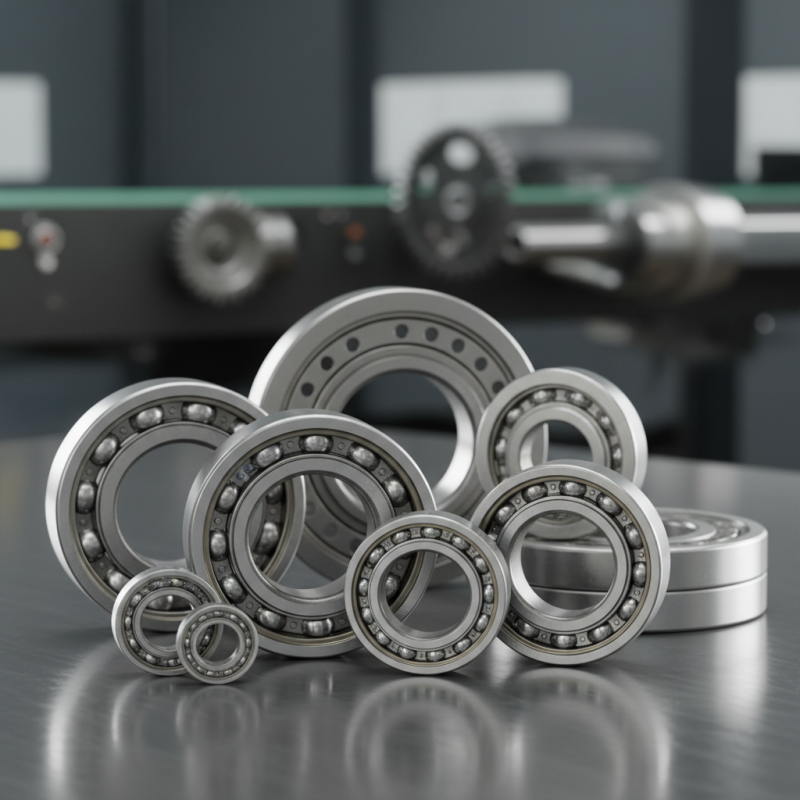
Types of Ball Bearings: An Overview of Main Categories
Ball bearings are essential components in numerous machines. They reduce friction between moving parts, enhancing their efficiency. There are several types of ball bearings, each designed for specific applications. Understanding these categories can help in selecting the right bearing for various tasks.
The most common types include deep groove, angular contact, and thrust ball bearings. Deep groove bearings can handle radial and axial loads. They are versatile and found in electric motors and automotive applications. Angular contact bearings, on the other hand, are designed for high-speed operations, making them ideal for gearboxes and machine tool spindles. Thrust ball bearings support axial loads, often used in applications like cranes and automotive steering systems.
It’s important to consider operating conditions when choosing a bearing type. Sometimes, unexpected load conditions can lead to premature failure. Regular maintenance checks can help ensure their longevity. Understanding these details is crucial. Choosing the wrong type might affect overall performance. Reflecting on these aspects can lead to better decisions in engineering and design.
What are the Different Types of Ball Bearings and Their Uses? - Types of Ball Bearings: An Overview of Main Categories
| Type of Ball Bearing | Description | Common Uses |
| Deep Groove Ball Bearing | Versatile bearings suitable for radial and axial loads. | Electric motors, household appliances, and automotive applications. |
| Angular Contact Ball Bearing | Designed to handle axial loads in one direction and can accommodate thrust loads. | Machine tool spindles and high-speed applications. |
| Self-Aligning Ball Bearing | Allows for misalignment due to shaft deflection or mounting errors. | Industrial machinery and agricultural equipment. |
| Thrust Ball Bearing | Specifically designed to handle axial loads in one direction. | Swinging doors, gear systems, and lifting equipment. |
| Miniature Ball Bearing | Small-sized bearings for precision applications. | Cameras, watches, and small motors. |
Applications of Deep Groove Ball Bearings in Various Industries
Deep groove ball bearings are widely used across various industries due to their versatility and efficiency. They can handle radial and axial loads, making them suitable for applications such as electric motors, automotive components, and conveyor systems. According to a recent report from the International Journal of Industrial Engineering, the growing demand for electric vehicles is expected to fuel the ball bearings market, with a projected growth rate of 5.2% annually through 2027.
In manufacturing, deep groove ball bearings play a critical role. They reduce friction and enhance machine performance, leading to less downtime. Industries such as aerospace and robotics rely heavily on these bearings. A study by the Bearing Manufacturing Association noted that defects in bearings can lead to 30% more maintenance costs each year. This statistic highlights the importance of selecting high-quality bearings.
However, it's crucial to acknowledge some challenges. While deep groove ball bearings are robust, they can still fail under certain conditions. Overheating due to inadequate lubrication leads to premature failure in 20% of the cases. This often results in significant operational losses. Proper selection and maintenance of these bearings are paramount to extending their lifespan and ensuring reliability.
Exploring Angular Contact Ball Bearings and Their Unique Benefits
Angular contact ball bearings are designed to handle both radial and axial loads. They have a specific angle at which balls contact the raceway. This unique feature allows them to be more efficient in applications with high-speed demands. Industries such as automotive and aerospace utilize these bearings for their enhanced performance.
These bearings come in various designs to suit specific needs. The contact angle can range from 15 to 40 degrees. A higher angle increases axial load capacity but may reduce speed. According to industry reports, the market for angular contact ball bearings is expected to grow by over 5% annually. This growth is driven by the increasing demand for efficient machinery.
Tips: When selecting angular contact ball bearings, consider the load and speed requirements. Ensure proper installation to maximize lifespan. Regular maintenance checks can prevent premature wear. Inspect for noise and vibration, which can indicate underlying issues.
Understanding Self-Aligning Ball Bearings and Their Usage Scenarios
Self-aligning ball bearings play a crucial role in various applications, particularly in rotating machinery. They are designed with two rows of balls and a common spherical raceway. This unique design allows them to align themselves to the shaft and housing. This feature is invaluable when dealing with shaft misalignment caused by installation errors or thermal expansion.
These bearings are widely used in industrial machinery, such as conveyor systems and electric motors. According to industry reports, self-aligning ball bearings are favored for their ability to reduce friction. This results in improved operational efficiency, which can lead to cost savings. In scenarios where there is a high load and potential shaft misalignment, these bearings excel. However, they can be sensitive to contamination, which may affect their performance over time.
Despite their benefits, there are considerations. Their load capacity is relatively lower compared to other bearing types. This limitation may not be ideal for high-load applications. Regular maintenance is necessary to ensure longevity. Over time, dirt and debris can compromise their functionality. Continuous monitoring and timely lubrication can mitigate these issues, enhancing overall performance.
The Role of Thrust Ball Bearings in High-Load Applications
Thrust ball bearings are essential in high-load applications. They are designed to handle axial loads effectively, which makes them ideal for situations where forces act along the shaft. This design is crucial in industries such as construction machinery and automotive assemblies, where heavy components must work smoothly together.
These bearings consist of a washer and ball elements, allowing them to support significant weights. The friction generated is lower compared to other bearing types. However, they are not suitable for radial loads. This limitation can pose challenges in certain applications. Users must ensure they correctly implement thrust bearings to avoid premature wear.
Tips: Choose the right size to match load requirements. Proper alignment can extend the bearing's life. Regular maintenance is vital. Check for signs of wear and replace if necessary. Using the correct lubricant can also enhance performance, but be cautious not to over-grease.



 Close
Close 
