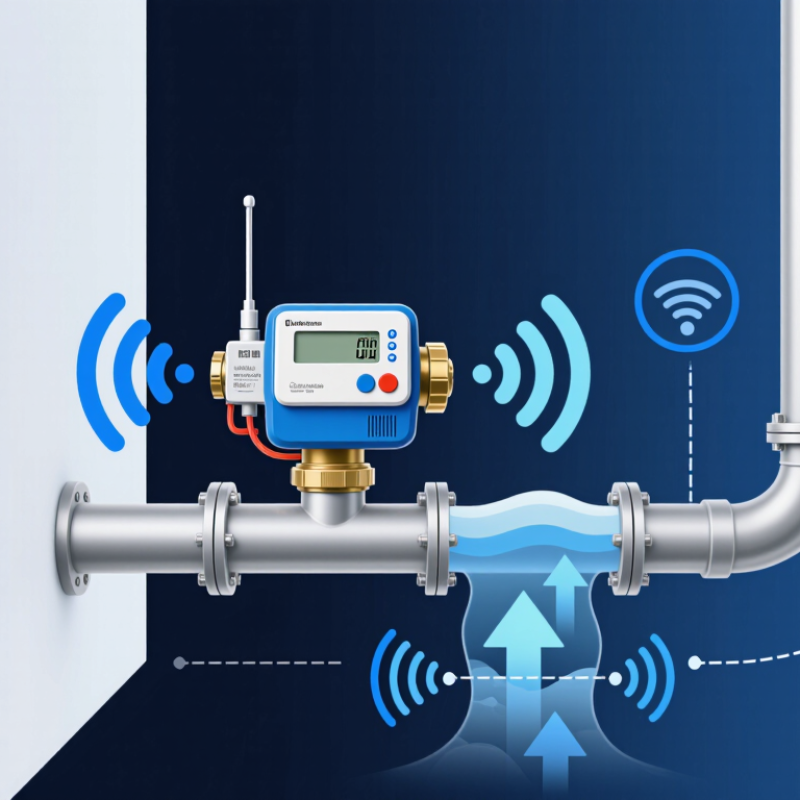
| Primary Measurement | Water volume, commonly recorded in litres or cubic metres | A flow-sensing element measures the amount of water passing through the meter. The electronic register converts the measured flow into a cumulative volume reading. |
| Flow-Sensing Technologies | Mechanical, ultrasonic, or electromagnetic sensing | Mechanical meters use moving parts, while ultrasonic meters calculate flow from the travel time of sound waves. Electromagnetic meters determine flow from the voltage generated as conductive water moves through a magnetic field. |
| Measurement Output | Digital display and electronically stored readings | The digital register presents the current cumulative consumption and can store readings for later transmission, analysis, or billing. |
| Reading Frequency | On-demand, scheduled, or interval-based readings | Depending on the configuration, the meter may record data at regular intervals and send summaries to a local gateway, utility network, or customer portal. |
| Communication Methods | Radio, cellular, Wi-Fi, or low-power wide-area communication | Wireless communication enables remote meter reading and reduces the need for manual site visits. The selected method depends on coverage, power requirements, and network design. |
| Leak Detection | Continuous or repeated low-flow pattern monitoring | A prolonged, uninterrupted flow or unusual consumption pattern can indicate a leaking toilet, faucet, service line, or other plumbing fixture. |
| Reverse-Flow Detection | Electronic detection of backward water movement | The meter can identify reverse flow caused by installation issues, pressure changes, or backflow conditions and may record it as an operational event. |
| Tamper Monitoring | Cover opening, magnetic interference, removal, or abnormal movement alerts | Built-in event monitoring can help identify physical interference or unauthorized handling of the meter and provide a timestamped alert. |
| Power Supply | Battery-powered operation or external electrical power | Many residential smart meters use long-life batteries to support installation in locations without a nearby electrical outlet. Communication frequency and network conditions affect battery life. |
| Typical Battery Service Life | Approximately 10–20 years for many battery-operated designs | Actual service life varies according to meter type, transmission schedule, signal strength, temperature, battery capacity, and local operating conditions. |
| Measurement Accuracy | Often within approximately ±1% to ±5% over the specified operating range | Accuracy depends on the meter design, flow rate, installation position, water quality, calibration, and compliance with applicable metering standards. The manufacturer’s certified specification should be used for a particular model. |
| Installation Position | Usually installed on the incoming water service line | Correct pipe diameter, flow direction, straight-pipe requirements, accessibility, and protection from freezing are important for reliable measurement and maintenance. |
| Data Security | Authenticated communication and encrypted data transmission where supported | Security controls help protect consumption data and reduce the risk of unauthorized access. Specific protections depend on the communication network and system configuration. |
| Main Benefits | Remote reading, faster issue detection, improved billing data, and consumption visibility | Smart metering can reduce manual reading costs, provide more frequent consumption information, support water conservation, and help utilities respond to leaks or abnormal usage. |
| Key Limitation | Performance depends on installation quality, network coverage, power availability, and system maintenance | A Digital Smart Meter does not eliminate the need for correct installation, periodic inspection, communications management, and verification of measurement performance. |



 Close