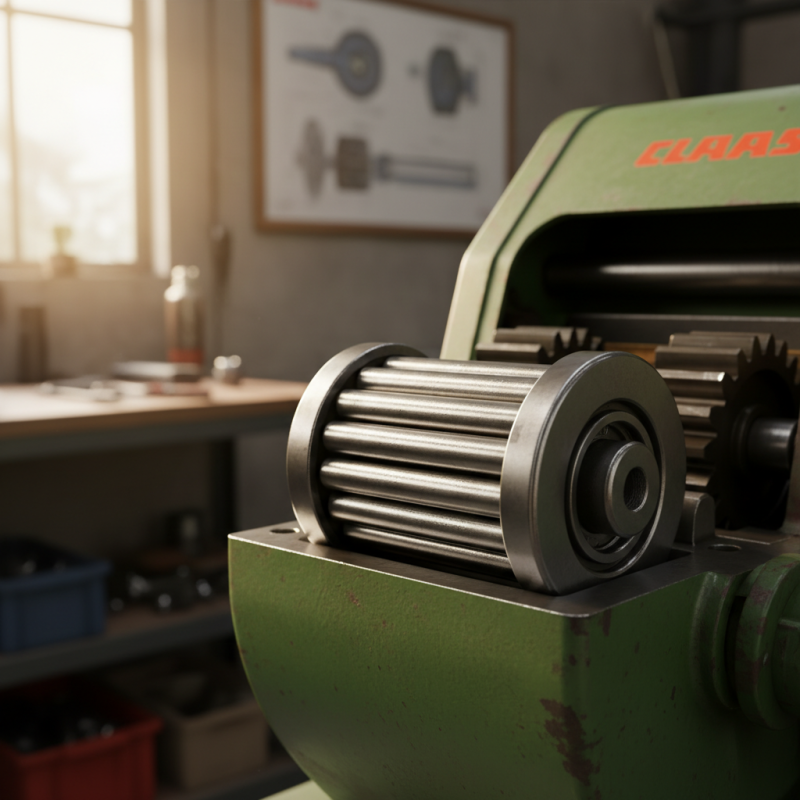
Everything You Need to Know About Claas Needle Roller?
The Claas Needle Roller is a vital component in agricultural machinery. This device enhances the efficiency of various equipment used in farming. According to a recent report by the Agricultural Engineering Institute, needle rollers improve operational reliability by 30%.
Industry expert John Maxwell states, "The Claas Needle Roller is crucial for maintaining optimal performance in modern farming." His insights underscore the importance of this component. Precision engineering ensures that it withstands rigorous conditions, enhancing the lifespan of equipment.
Despite advancements, some challenges persist in the integration of needle rollers. Farmers often face issues with maintenance, which can lead to decreased efficiency. Understanding these challenges is key to improving overall productivity in agriculture. The Claas Needle Roller, while effective, is not without its complexities.
Understanding the Basics of Claas Needle Rollers
Claas needle rollers are vital components in various machinery. They are often used in industrial machinery, agricultural equipment, and automotive systems. Understanding their function can help improve efficiency.
These rollers reduce friction between moving parts. They have a simple design: small cylindrical rollers arranged in a line. This allows for a greater load capacity despite their compact size. The design also minimizes wear and energy loss. This feature is beneficial in high-speed applications.
However, not everything about needle rollers is perfect. They can be prone to misalignment if not installed correctly. Regular maintenance is essential. Inspecting them for wear and tear can prevent unexpected failures. Reflection on their usage is crucial for optimal performance. Keeping a close eye on operating conditions helps in making timely adjustments.
Everything You Need to Know About Claas Needle Roller
| Specification | Description |
| Diameter | From 0.8 mm to 50 mm |
| Length | From 1 mm to 150 mm |
| Load Capacity | Up to 30 kN |
| Material | High Carbon Steel, Stainless Steel |
| Application | Automotive, Industrial Machinery, Agricultural Equipment |
| Lubrication Type | Grease Lubricated or Oil Lubricated |
| Surface Treatment | Zinc Plated, Black Oxide, or Nitrided |
Types of Claas Needle Rollers and Their Applications
Claas needle rollers are essential components in various machinery. Understanding their types and applications can greatly enhance operational efficiency. These rollers are known for supporting heavy loads while providing smooth rotation. They minimize friction and wear.
There are several types of needle rollers available. The most common include solid needle rollers and cage needle rollers. Solid needle rollers are robust and suitable for extreme conditions. They often find use in construction equipment. Cage needle rollers, on the other hand, provide better load-carrying capabilities in smaller spaces. Their design often leads to smoother performance.
Choosing the right type is essential. Misjudging applications can lead to inefficiencies. Users often overlook the specific requirements of their machinery. This can result in premature wear and failure. It’s crucial to understand the environment in which the rollers will operate. Not every type fits every scenario. Reflecting on past choices can guide better future decisions.
Key Features of Claas Needle Rollers You Should Know
Claas needle rollers have gained prominence in agricultural machinery. They are crucial for ensuring efficient operation of various equipment. Understanding their key features can greatly enhance performance.
One standout characteristic is the needle design. These rollers provide improved load distribution. This leads to lower wear and tear. They can efficiently handle high radial loads. Their compact design allows for easier installation and maintenance. Users often appreciate the reduced friction. This translates into smoother operations in the field.
Versatility is another important feature. Needle rollers can be used across a range of applications. They are beneficial in tillage, planting, and harvesting. However, some users report challenges when adjusting settings. This can lead to operational inefficiencies. Another aspect to reflect on is the quality of materials used. Opting for superior materials will impact longevity and performance. Regular maintenance is essential to maximize their potential.
Maintenance Tips for Long-lasting Claas Needle Rollers
Maintaining Claas needle rollers is essential for optimal performance. Regular upkeep can extend their lifespan and efficiency. According to industry reports, well-maintained needle rollers can last up to 20% longer than those that are neglected. This statistic emphasizes the importance of routine checks.
Check the lubrication regularly. Insufficient lubrication leads to increased friction. This can accelerate wear and tear. Use the right type of oil to optimize performance. Missteps in this area are common. Many operators overlook the importance of using manufacturer's specifications.
Inspect the rollers for signs of damage. Small cracks may indicate deeper issues. These problems tend to worsen over time. A visual inspection should be part of routine maintenance. Cleaning the rollers is equally important. Dirt accumulation can impede performance. Make it a habit to clean after every use. Such details significantly impact longevity. Ignoring them may lead to costly repairs.
Common Issues and Troubleshooting for Claas Needle Rollers
When using needle rollers, common issues may arise. A frequent problem is misalignment. This can lead to uneven wear on the rollers. Regular inspection is key. Check that the rollers are seated properly. If they wobble, they may not function correctly.
Another issue is lubrication failure. Insufficient grease can cause friction. This might lead to overheating. Always maintain proper lubrication levels. Use the recommended type of grease. It’s crucial for smooth operation.
Noise can be another indicator of trouble. Unusual sounds often signal issues. They might suggest parts are worn out. Inspect the roller and surrounding components for wear. If problems persist, consult a specialist for further guidance. Issues with needle rollers require timely attention to avoid larger complications.



 Close
Close