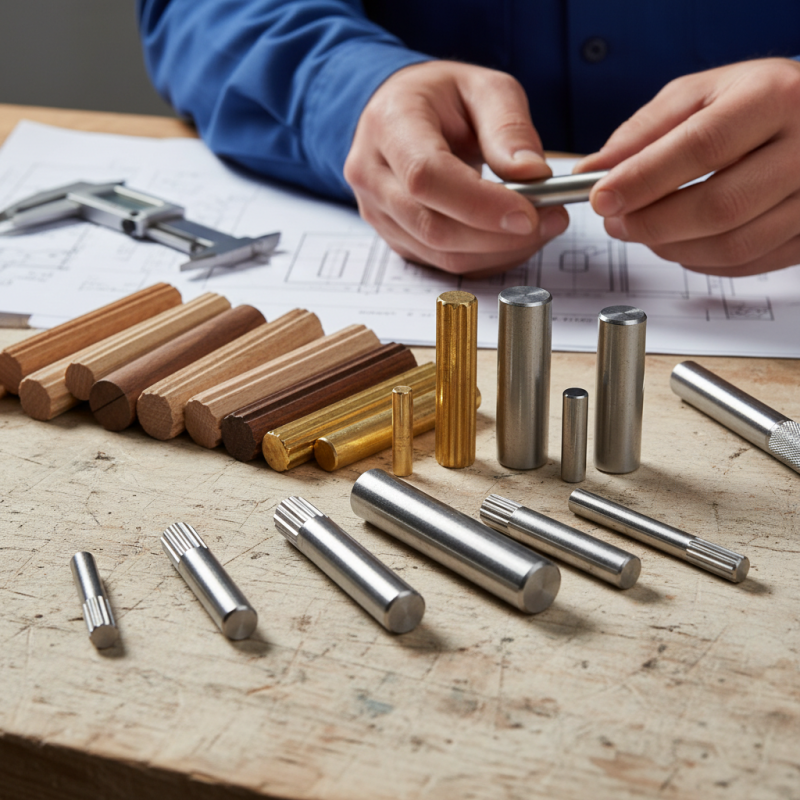
10 Essential Tips for Choosing Double-Ended Dowel Pins?
Choosing the right Double-Ended Dowel Pins can significantly impact the quality of your projects. Industry expert James Harper states, “The right dowel pin affects alignment and stability.” This insight highlights the importance of careful selection.
When selecting double-ended dowel pins, consider material types, dimensions, and load requirements. Different projects require specific characteristics. A wooden pin may not offer the strength needed for heavy-duty use. It’s crucial to analyze the intended application.
Common mistakes include overlooking tolerances or using mismatched pins. This can lead to misalignment and project failure. Careful evaluation of the options available is essential for long-term success. Making the right choice today can save you time and resources in the future.
Understanding Double-Ended Dowel Pins and Their Applications
Double-ended dowel pins are versatile fasteners used in a variety of applications. They offer stability and alignment for components in furniture, machinery, and cabinetry. These pins feature a cylindrical shape with a uniform diameter, making them easy to insert into pre-drilled holes. Their design allows for secure connections without protruding parts, enhancing the aesthetics of assembled items.
When choosing double-ended dowel pins, consider the material. Common options include steel, aluminum, and plastic. Each material serves different purposes and environments. For instance, metal pins provide strength in industrial applications, while plastic pins work well in lighter furniture. Length is also critical. A pin that is too short may not secure properly, whereas one that is excessively long might cause damage.
Reflect on your specific needs. The right pin enhances durability and joint strength. Precision is key, as misalignment can lead to failure. Ensure that you measure the diameter and depth of the holes accurately. Remember, a well-chosen dowel pin can make a significant difference in the longevity of your project.
Key Factors to Consider When Selecting Double-Ended Dowel Pins
When selecting double-ended dowel pins, several key factors come into play. The size and length are crucial. Ensure the pin fits your project’s specifications. Measure the hole diameter accurately. An improper fit can lead to structural failures. Choose the right materials as well. Options range from steel to plastic, each suitable for different applications. Steel is durable, while plastic can reduce friction.
Another vital factor is the pin's tolerance. High precision is essential for tight joints. A slight deviation can hinder the assembly process. Also, consider the surface finish. A smooth finish can ease insertion and improve the overall result. Nevertheless, balancing cost and quality can be challenging. Cheaper pins may seem appealing but often lack reliability.
Don't forget to assess availability and supplier reputation. It's tempting to go for low-cost options, but reliability matters more. Seek out reviews or recommendations to ensure you are getting a quality product. Sometimes, feedback may reveal hidden issues, suggesting a need for a more thoughtful choice. Taking these factors into account will lead to a more satisfactory outcome for your projects.
Material Types for Double-Ended Dowel Pins: What to Choose
When selecting double-ended dowel pins, the choice of material is crucial. Common options include stainless steel, brass, and plastic. According to industry reports, stainless steel alloys are preferred for their strength and resistance to corrosion. They excel in high-stress applications, making them ideal for construction. Brass, while softer, offers excellent machinability and aesthetic appeal, fitting well in decorative projects.
Plastic dowel pins, though less durable, are lightweight and resistant to chemical reactions. They are often used in applications where weight is a concern. A report by the American Society for Testing and Materials (ASTM) reveals that nylon and polyethylene variants are notable because they reduce friction. This can enhance the longevity of assembled structures.
Choosing the right material also depends on environmental conditions. Understanding the operational environment is essential. For instance, in humid conditions, stainless steel may outlast brass. However, in a dry, low-stress environment, the cost-effectiveness of plastic might be a better fit. Engineers must assess both the mechanical properties and the surrounding conditions to ensure optimal performance.
Size and Length: How to Determine the Right Fit
When selecting double-ended dowel pins, size and length are crucial factors. The right fit ensures stability in assembled components. A study by ASTM International highlights that pin length affects the load capacity. Using a pin that is too short can result in a failure during operation. Experts suggest measuring the diameter of the hole and the material thickness to find the right length.
Length should exceed the combined thickness of the materials being joined. Ideally, half of each end of the pin should fit securely into the respective pieces. A report from the Manufacturing Industry Standards indicates that dowel pins should extend at least 1/16 inch beyond the surface of the materials. This ensures proper engagement without risking breakage.
The diameter also plays a vital role in performance. A pin that is too large can cause splitting, while one that's too small may lead to loosening over time. Regular inspections are recommended to ensure pins maintain their integrity. Remember, even the best materials suffer from wear and tear. Observing these details can help prevent costly failures in your projects.
10 Essential Tips for Choosing Double-Ended Dowel Pins: Size and Length - How to Determine the Right Fit
| Tip Number | Tip Description | Recommended Size Range | Common Applications |
| 1 | Determine the correct diameter based on hole sizes. | 3mm - 12mm | Furniture assembly, Cabinet making |
| 2 | Consider the length for proper joint fit. | 20mm - 100mm | Door frames, Picture frames |
| 3 | Evaluate the material for durability and strength. | Steel, Brass, Plastic | Heavy machinery, Toys |
| 4 | Choose coated dowel pins for corrosion resistance. | N/A | Outdoor furniture, Marine applications |
| 5 | Take into account the load-bearing requirements. | Varies based on size | Structural supports, Frameworks |
| 6 | Look for self-aligning designs for ease of use. | N/A | Assembly lines, Automated processes |
| 7 | Check for manufacturer specifications and tolerances. | Varies by manufacturer | Precision equipment, Custom joints |
| 8 | Select dowel pins that complement your design aesthetics. | N/A | Decorative items, Arts and crafts |
| 9 | Consider ease of installation and removal. | N/A | Modular furniture, Removable fixtures |
| 10 | Assess environmental conditions for suitability. | N/A | Custom builds, Outdoor installs |
Evaluating Quality and Manufacturing Standards for Dowel Pins
Choosing high-quality double-ended dowel pins requires careful evaluation of manufacturing standards. A report from the American Society for Testing and Materials (ASTM) indicates that the tolerance levels of dowel pins should be within ±0.005 inches. Failure to meet this can lead to misalignment in assembly. Precision in diameter and length is crucial because small discrepancies can affect overall functionality.
Testing standards are essential when assessing dowel pins. The International Organization for Standardization (ISO) recommends rigorous quality checks. This includes hardness testing and tensile strength measurements. Pins that fail these tests can lead to unreliable performance. It's not uncommon for manufacturers to cut corners, resulting in products that don't meet industry standards.
Material selection also plays a critical role. Look for pins made from high-grade steel or stainless steel for durability. Low-quality materials can lead to premature failure under stress. Reports show that 30% of dowel pins in the market do not meet ideal corrosion resistance criteria. This can lead to increased maintenance costs over time. Always investigate the source and specifications before making a purchase.
Quality Evaluation of Double-Ended Dowel Pins



 Close
Close