Essential Tips for Understanding Artificial Lift Technologies?
Artificial Lift Technologies play a crucial role in optimizing oil and gas production. According to the World Petroleum Congress, nearly 90% of oil wells require some form of artificial lift. This highlights the importance of understanding these technologies in today’s energy landscape. Experts like Dr. Emily Thompson, a leading figure in this field, state, “Effective artificial lift is essential for maintaining production efficiency.”
In recent years, advancements in technology have reshaped industry practices. Many companies are adopting new Artificial Lift Systems, which can significantly reduce operational costs and improve recovery rates. However, challenges remain. Selecting the right system for specific conditions can be complex and often requires trial and error.
As the demand for efficient energy sources grows, knowledge of artificial lift options becomes vital. Every oil field has unique challenges that demand innovative solutions. A clear understanding of these technologies can lead to better decision-making. The ongoing evolution in artificial lift systems presents both opportunities and obstacles for industry stakeholders.
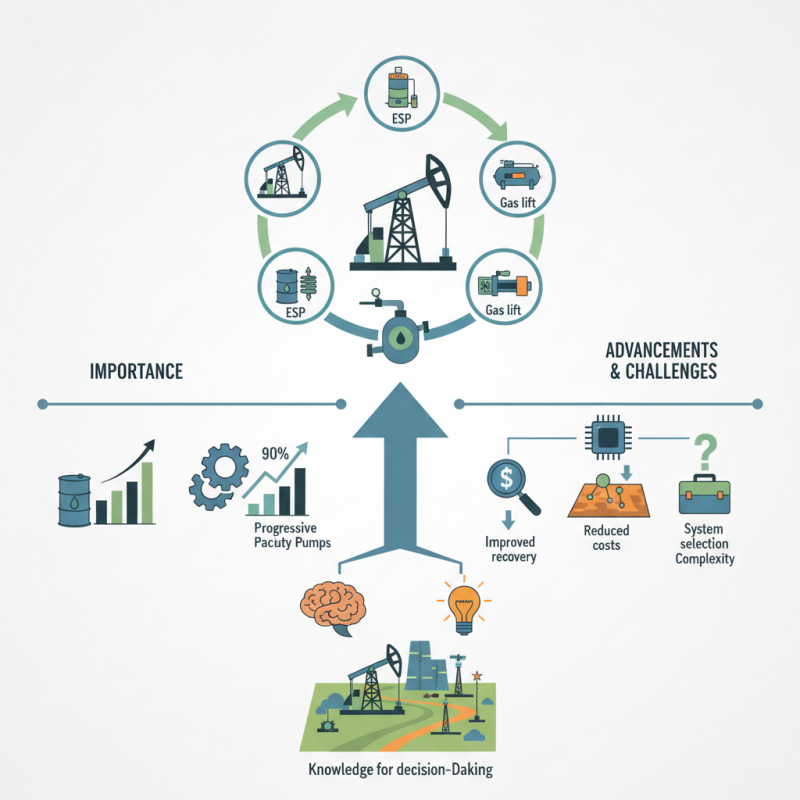
Overview of Artificial Lift Technologies in Oil Production
Artificial lift technologies play a crucial role in oil production. They help extract oil from reservoirs that cannot flow naturally to the surface. These methods are essential, especially in mature fields where pressure decreases. Common types include rod pumps, gas lift, and electric submersible pumps. Each has its own advantages and drawbacks.
When navigating these technologies, consider a few tips. Regular maintenance is vital to extend the lifespan of your equipment. Neglecting minor issues can lead to larger, costly problems. Analyze data from your production regularly. Understanding patterns can reveal inefficiencies that, when addressed, improve output. It’s not uncommon to overlook minor anomalies, but these can impact overall production.
Keep in mind that selecting the right lift method is essential. What works for one field may not suit another. Make sure to evaluate reservoir conditions carefully. Ignoring these details can lead to inefficiencies. Remember, artificial lift is a complex decision, and learning from mistakes is part of the process.
Types of Artificial Lift Systems: An In-Depth Examination
Artificial lift systems play a crucial role in enhancing oil and gas production. These technologies help lift fluids from the wellbore to the surface when natural pressure is insufficient. There are several types of artificial lift systems, each with distinct mechanisms and applications.
One common type is the beam pump, also known as the sucker rod pump. It is a mechanical device that efficiently lifts fluids in vertical wells. Reports indicate that beam pumps account for approximately 85% of artificial lift usage in the United States. This system is known for its reliability and cost-effectiveness, but it can face challenges in wells with high gas-to-oil ratios.
Another popular option is electric submersible pumps (ESPs). These pumps can handle larger volumes and are suitable for production at deeper well depths. ESPs often show efficiencies above 70%, according to industry data. However, they can be expensive to install and operate.
Tip: Always assess the specific conditions of your well before selecting a lift system.
Progressive cavity pumps (PCPs) are notable for their versatility. They can provide smooth and consistent flow, which is beneficial for complex reservoir conditions. However, maintenance can be a challenge due to wear and tear on the rotors.
Tip: Regular monitoring and maintenance can mitigate these issues, prolonging the pump's life.
In conclusion, understanding the various types of artificial lift systems is essential for optimizing production and maximizing well recovery rates. The choice of system should reflect well characteristics and operational considerations.
Key Factors Influencing the Selection of Artificial Lift Methods
Artificial lift technologies are crucial in enhancing oil and gas production. Selecting the right method depends on several factors. Reservoir characteristics play a significant role. For instance, formation pressure and fluid viscosity impact the choice. A report from the Society of Petroleum Engineers noted that more than 80% of U.S. oil production utilizes some form of artificial lift. Understanding these dynamics is vital.
Cost efficiency is another key factor. Operators must evaluate installation and maintenance costs. Some methods, while effective, can be expensive to maintain. A study highlighted that the average operational cost of different artificial lift techniques varies significantly, from $0.50 to $2.00 per barrel. Hence, selecting the most cost-effective option can drive profitability.
Lastly, the scale of operations cannot be overlooked. In smaller fields, simpler systems might suffice. However, larger operations may require more robust solutions. The challenge lies in balancing efficiency with complexity. Many operators struggle with this dilemma, often reflecting on missed opportunities for optimization. As the industry evolves, continuous reassessment of these factors will be imperative.
Operational Challenges and Maintenance of Artificial Lift Systems
Artificial lift systems play a crucial role in the oil and gas industry. However, operational challenges can arise during their deployment. One common issue is equipment wear and tear. Submersible pumps face significant stress over time. This affects their efficiency and lifespan. Regular monitoring is essential. Operators must be vigilant about performance metrics. A small anomaly can signal a larger issue.
Maintenance is another key challenge. Workover operations can be costly and time-consuming. Some operators overlook routine checks due to tight budgets. This can lead to unexpected failures. It is crucial to develop a proactive maintenance schedule. Implementing condition-based monitoring can help. It offers insights into the system’s health. Operators can then make informed decisions about repairs.
Training personnel is often neglected. Many team members lack comprehensive knowledge of artificial lift technologies. This gap can lead to mistakes in operations. Operator error can exacerbate existing issues. Investing in training programs can bridge this knowledge gap. A skilled team can significantly reduce downtime and increase efficiency. Reflecting on these aspects is vital for long-term success.
Future Trends and Innovations in Artificial Lift Technologies
Artificial lift technologies are evolving rapidly. As oil reservoirs deplete, innovative solutions are needed. The future holds promise with advancements in various technologies, such as electric submersible pumps and gas lift systems.
Integration of digital technology is crucial. Smart sensors can improve oil recovery. Real-time data allows for better monitoring and optimization. However, reliance on technology also brings its challenges. Systems can fail unexpectedly, leading to financial losses. Efficient response strategies need development.
Renewable energy sources are gaining attention. Combining artificial lift systems with solar or wind energy is a potential game changer. These solutions may reduce environmental impacts, yet feasibility remains a concern. Striking a balance between innovation and sustainability is essential for progress in this field.
Essential Tips for Understanding Artificial Lift Technologies
This chart illustrates the efficiency percentages of various artificial lift technologies, highlighting their performance in the oil extraction process. Understanding these efficiencies is crucial for selecting the appropriate technology based on specific operational requirements.



 Close
Close 
