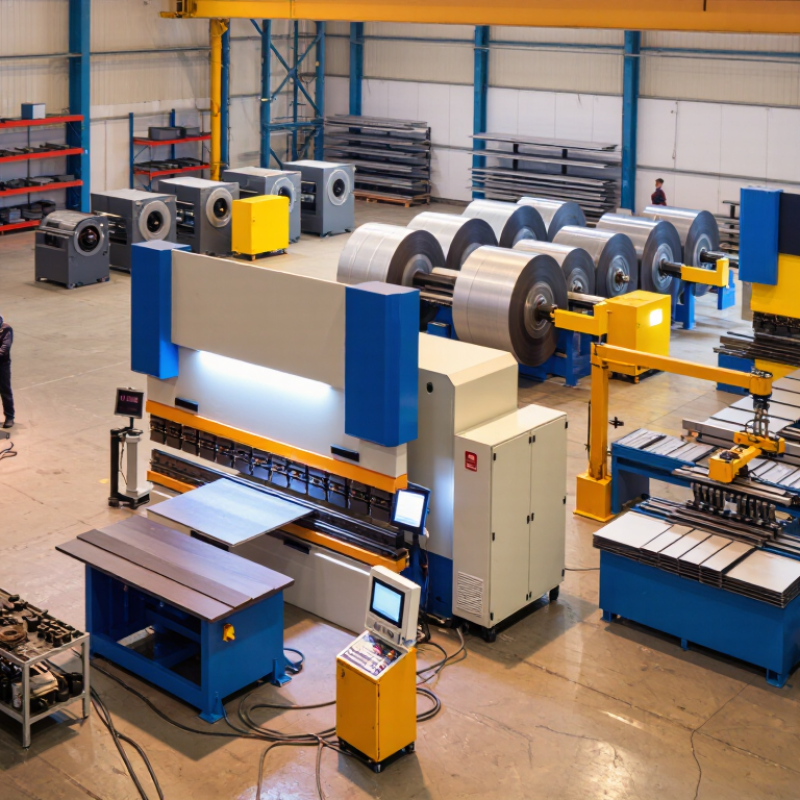
| Press Brake | A punch presses sheet or plate into a die to form straight bends. Machines may use hydraulic, electric, or mechanical drive systems. | Sheet metal and plate, commonly steel, stainless steel, and aluminum. | Enclosures, brackets, panels, cabinets, and structural sheet-metal parts. | Well suited to accurate, repeatable straight bends. Tooling, material thickness, bend length, and springback affect the result. |
| Panel Bender | Clamping and bending tools form sheet edges, often with automated handling and tool movement. | Thin to medium-gauge sheet metal, including steel and aluminum. | Electrical cabinets, appliance panels, doors, and large sheet-metal enclosures. | Can be efficient for repeated panel work and multiple bends. Part size, flange geometry, and production volume influence suitability. |
| Folding Machine | A clamping beam holds the sheet while a folding beam rotates to bend the projecting edge. | Sheet metal and thin plate, often used for long, straight folds. | Roofing and cladding components, trays, channels, ductwork, and long panels. | Useful for long bends and parts with delicate surfaces. The machine’s working length and folding capacity limit part dimensions and thickness. |
| Three-Roll Plate Bending Machine | Three rollers progressively curve plate as it passes between the rolls; roller adjustment controls the bend radius. | Metal plate and sheet, including carbon steel, stainless steel, and aluminum. | Cylinders, tanks, shells, cones, and curved architectural components. | Designed for curved profiles rather than sharp, straight bends. Pre-bending capability and minimum roll diameter vary by machine configuration. |
| Tube and Pipe Bender | A die and bend tooling guide tube or pipe around a defined radius; some machines use mandrels to support the inside wall. | Round, square, or rectangular tubing and pipe, depending on tooling and machine design. | Exhaust systems, handrails, frames, furniture, and fluid-handling assemblies. | Tube diameter, wall thickness, bend radius, and material affect ovality and wrinkling. Tooling must match the workpiece geometry. |
| Angle Roll Bender | Adjustable rolls progressively curve structural sections as the workpiece passes through the machine. | Angles, channels, flat bars, and selected beams or other profiles. | Curved frames, arches, rings, railings, and structural or architectural profiles. | Different profile shapes require suitable roll arrangements. Section orientation and strength can affect distortion and the achievable radius. |
| Rotary Draw Bender | A rotating bend die draws the tube around a fixed radius; a pressure die supports the tube during forming. | Metal tubing, including thin-wall tubing when appropriate support tooling is used. | Vehicle tubing, roll cages, furniture frames, and precision tubular assemblies. | Produces controlled, repeatable bends. Bend radius, tube wall thickness, and the need for a mandrel depend on the material and geometry. |



 Close