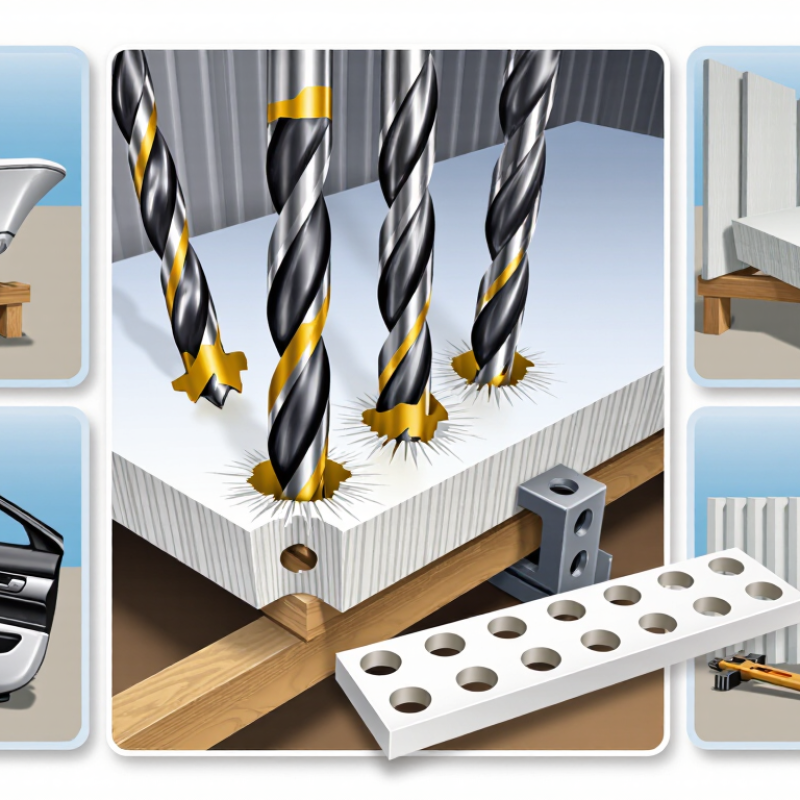
Fiberglass is not especially hard to cut, but its glass fibers are abrasive. As a drill bit passes through the laminate, countless tiny fibers rub against the cutting edge. The resin helps hold the material together, yet it does not shield the edge from that wear. HSS, or high-speed steel, can drill fiberglass, especially for occasional holes. Its edge, however, tends to round sooner than a carbide edge. The change may be gradual. A bit that once made clean holes can begin to require more pressure and leave fuzzy edges.
Carbide resists abrasion better, so it often keeps a sharp cutting edge longer in repeated fiberglass work. That does not make every carbide bit the right choice. Carbide is hard but less forgiving of bending, vibration, or a tilted drill. A steady setup matters. Use a sharp bit, support the panel, and avoid forcing the cut; excess pressure can crack or chip a brittle laminate. Clear dust often, since fine glass particles can obscure the hole and irritate skin or lungs. A small amount of edge fuzz is not always a sign of poor technique, either. Fiberglass varies in thickness and resin content, so results can be less tidy than expected. Inspect the hole and the bit, rather than judging by drilling time alone.



 Close