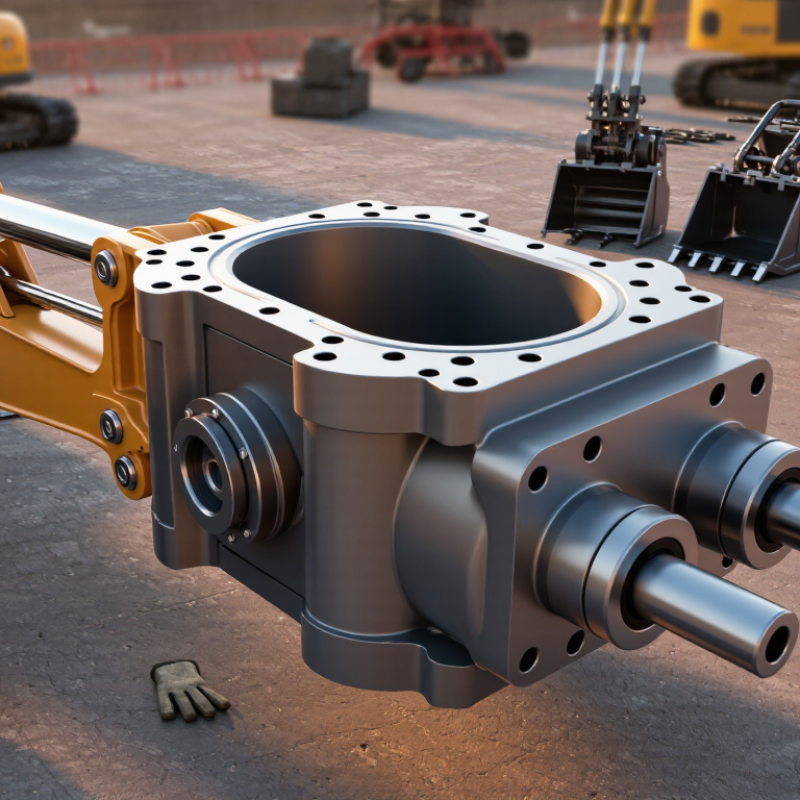
| Primary Function | The FR209E type coupler body forms the main structural housing of a railway automatic coupler and transfers tensile and compressive draft forces between connected vehicles. | Confirm that the body is the approved configuration for the vehicle, coupler system, mounting arrangement, and service load. | Maintain the coupler as a complete approved assembly. Do not modify, weld, drill, or machine the body without documented engineering approval. | Replace when the body no longer meets the applicable drawing, inspection standard, or structural safety requirements. |
| Visual Condition | Detects visible damage before it develops into a loss of coupling strength or unsafe operation. | Look for cracks, fractures, deep gouges, deformation, excessive corrosion, impact marks, loose components, and evidence of contact with the track or obstruction. | Perform a visual inspection during scheduled vehicle examinations and after abnormal impacts, derailments, dragging equipment, or severe coupling events. | Any suspected crack, fracture, major deformation, or distortion in a load-bearing area normally requires immediate removal from service and technical assessment. |
| Crack Detection | Identifies surface or near-surface discontinuities that may not be visible during a routine visual check. | Use an approved non-destructive testing method suitable for the body material and the inspection location, especially around fillets, mounting areas, and highly loaded sections. | Testing frequency should follow the vehicle maintenance plan, service severity, inspection history, and applicable railway requirements. | A confirmed crack in a critical load-bearing region is generally a replacement condition unless an approved repair procedure specifically permits repair. |
| Wear Surfaces | Ensures that the coupler continues to engage, lock, articulate, and transmit loads correctly. | Measure wear at the knuckle interface, lock-contact areas, pivot or bearing locations, carrier contact points, and other specified wear surfaces. | Record measurements against the approved maintenance limits rather than relying only on appearance or free movement. | Replace the worn component or the complete body, as required by the approved repair standard, when measured wear exceeds the allowable limit. |
| Alignment and Geometry | Maintains correct coupler height, centerline position, angular movement, and compatibility with the adjoining vehicle. | Check body distortion, mounting-hole condition, centerline alignment, coupler height, vertical swing, and interference with the draft gear or carrier. | Measure geometry after impact events, mounting work, abnormal wear, or any report of difficult coupling or uncoupling. | A body that cannot be returned to the specified geometry through approved adjustment should be replaced. |
| Lubrication and Corrosion Control | Reduces friction and corrosion at moving interfaces and helps prevent sticking of the locking and release mechanism. | Check lubricant condition, blocked lubrication points, water contamination, rust scale, and contamination from dust or brake residue. | Clean and lubricate only the specified locations with the approved lubricant at the prescribed service interval. Avoid excess lubricant on locking faces where it can attract abrasive material. | Severe corrosion, pitting, or material loss in a load-bearing area requires engineering evaluation and may require body replacement. |
| Mounting and Fasteners | Keeps the coupler body securely connected to the draft system and preserves the intended load path. | Inspect mounting brackets, pins, bolts, retainers, holes, bushes, locking devices, and signs of fretting or relative movement. | Check torque, security, and fit using the approved maintenance procedure. Replace damaged or stretched fasteners with correctly specified parts. | Elongated holes, damaged mounting faces, severe fretting, or persistent looseness can indicate body distortion and should be assessed before reuse. |
| Functional Coupling Test | Confirms that the coupler can couple, lock, remain secured, and release as intended. | Verify automatic engagement, lock indication, manual release, free movement, and secure retention under the approved test method. | Carry out functional checks after maintenance, component replacement, adjustment, or any reported coupling irregularity. | Failure to lock, unexpected release, restricted movement, or repeated operating defects requires investigation and may justify complete coupler replacement. |
| Post-Incident Assessment | Determines whether hidden damage exists after high-energy or abnormal loading. | Inspect after derailment, collision, hard coupling, wheel-climb event, emergency braking with suspected impact, or contact with fixed infrastructure. | Remove the vehicle from normal service until the coupler, draft gear, carrier, and adjacent structure have been examined and released by qualified personnel. | Replacement is preferred when damage history, deformation, or inspection results create uncertainty about residual structural integrity. |
| Traceability and Records | Provides evidence that the coupler body has been inspected, maintained, and accepted for service. | Record identification details, inspection date, measured wear, non-destructive test results, repairs, replacement parts, and responsible personnel. | Retain records according to the applicable railway safety management system and statutory retention requirements. | Do not install a body with unknown history, unreadable identification, missing inspection records, or uncertain material and heat-treatment documentation. |
| Final Replacement Decision | Balances structural safety, service reliability, repair cost, downtime, and compliance requirements. | Consider cracks, distortion, wear limits, corrosion, repeated failures, incident history, repair authorization, and availability of approved replacement parts. | Use the latest approved technical documentation and have the decision made or verified by qualified railway maintenance personnel. | Replacement is normally the safest option when the body has critical cracking, permanent deformation, excessive wear, unauthorized modification, or failed inspection. |



 Close