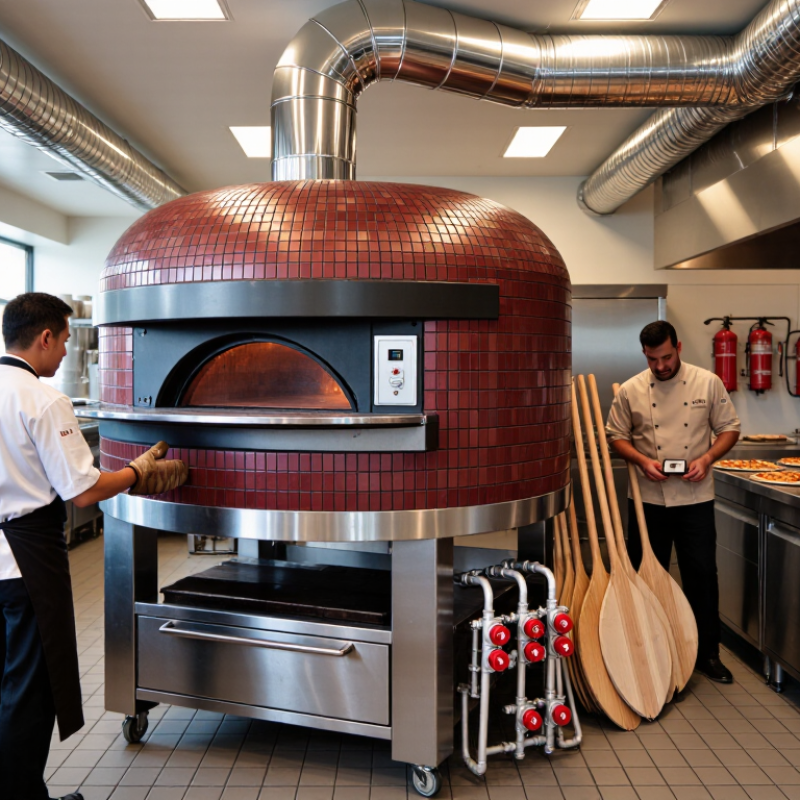
| 1. Verify burner performance | Ask for the burner’s rated heat input, control range, ignition method, and operating instructions. Confirm whether the oven has one burner or multiple independently controlled burners. | Burner output and control affect heat-up time, temperature adjustment, and how evenly heat can be managed. Performance also depends on oven size, insulation, and installation conditions. | Request test data for the exact oven configuration and check that the rating is stated in a clear unit, such as kW or BTU/h. |
| 2. Match the fuel type | Confirm whether the oven is configured for natural gas, LPG, or another specified gas supply. Check the required inlet pressure and approved gas connection details. | Natural gas and LPG have different supply characteristics and require the correct burner setup. An appliance configured for one fuel should not be assumed suitable for another. | Tell the supplier the fuel available at the installation site and have a qualified gas professional confirm the connection and setup before use. |
| 3. Check regional compatibility | Review local requirements for gas appliances, installation, ventilation, electrical supply, and product conformity. Requirements vary by country and sometimes by local authority. | A technically suitable oven may still need documentation, installation changes, or approval to meet local rules. | Before ordering, ask which compliance documents are supplied and confirm requirements with the local authority or a qualified installer. |
| 4. Size the cooking chamber | Compare the internal cooking surface, usable opening, and intended batch size with the food and cookware you plan to use. | Oven capacity is not determined by external dimensions alone. The opening and usable floor area affect loading, access, and cooking workflow. | Check the internal dimensions and ask for a layout drawing showing the cooking area and burner position. |
| 5. Assess insulation and heat retention | Ask what insulation materials are used around the cooking chamber and how the oven is designed to retain heat. Review any stated warm-up or recovery data with its test conditions. | Insulation influences heat loss and temperature stability. Results vary with construction, ambient conditions, installation, and operating practices. | Compare like-for-like specifications and request the conditions behind any heat-up or fuel-consumption figures. |
| 6. Plan ventilation and installation | Check the specified clearances, ventilation or exhaust requirements, floor support, weather protection, and whether the oven is intended for indoor or outdoor installation. | Safe operation and reliable performance depend on installation that follows the appliance instructions and local building and gas rules. | Have the proposed location reviewed by a qualified installer before purchase, especially for enclosed or commercial spaces. |
| 7. Confirm servicing and spare parts | Ask for the operating and maintenance manual, warranty terms, service contact options, and availability of compatible replacement parts such as ignition and burner components. | Routine inspection and access to appropriate parts can reduce downtime and help keep the oven operating as intended. | Confirm how technical support and parts supply work in your destination country, and retain installation and maintenance records. |



 Close