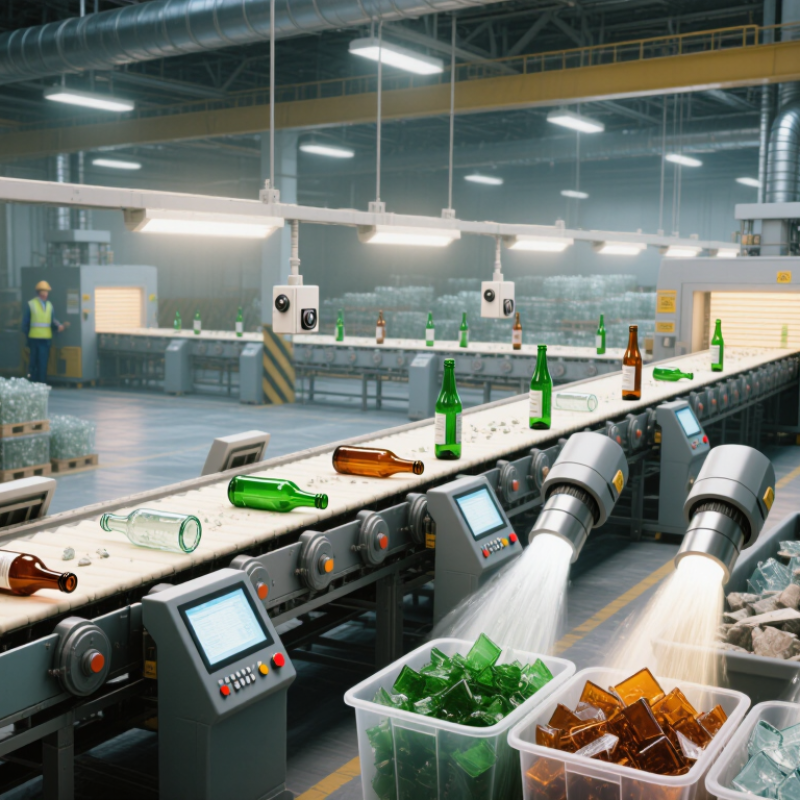
| 1. Receiving and inspection | Collected glass containers and other accepted glass items are delivered to a sorting or recycling facility. Loads may be checked for unsuitable materials. | Receiving area, conveyor, and manual inspection | The incoming material is prepared for processing. Accepted materials vary by facility and local collection program. |
| 2. Opening and screening | Bags are opened where applicable, and material is spread into a more even layer. Screens can separate items by size and remove some small debris. | Bag opener, vibrating screen, or trommel screen | A more consistent feed helps later sorting equipment identify and separate materials. |
| 3. Metal removal | Metal objects mixed with the glass are separated before or during glass processing. | Magnetic separator for ferrous metals; eddy-current separator for many non-ferrous metals | Recovered metals can be sent to metal recycling. Removing them helps reduce contamination in the glass stream. |
| 4. Glass separation | Glass is separated from other materials, and unwanted pieces such as ceramics, stones, and porcelain may be rejected. | Optical sorting using cameras and sensors, often paired with air jets; some facilities also use manual quality checks | Cleaner glass cullet is produced. Ceramics, stones, and porcelain are difficult to melt with container glass and are generally treated as contaminants. |
| 5. Color sorting | Where required, glass is sorted by color so that different color streams can be managed separately. | Optical color sensors and automated ejectors | Common streams include clear, green, and amber glass. The streams collected depend on the facility and the needs of the receiving glass manufacturer. |
| 6. Cullet preparation and quality check | Sorted glass may be crushed into cullet and checked for remaining non-glass material and unsuitable glass types. | Glass crusher, screening equipment, and quality-control checks | Prepared cullet can be supplied as a raw material. Specifications vary according to the intended end use. |
| 7. Collection and transport for reuse | Each accepted glass stream is gathered and stored separately before being moved to a glass-processing plant or another approved user. | Conveyors, storage bays, roll-off containers, or bulk transport vehicles | At a glass plant, suitable cullet can be combined with raw materials and melted to make new glass products, including containers. |
| Key purpose of the machine | A glass sorting machine identifies and separates glass by material type, color, or quality, helping reduce unwanted material in the recovered glass. | Often part of a larger recycling line rather than a standalone system | Effective sorting supports the collection of reusable glass cullet; actual recovery depends on input material, equipment, and quality requirements. |



 Close