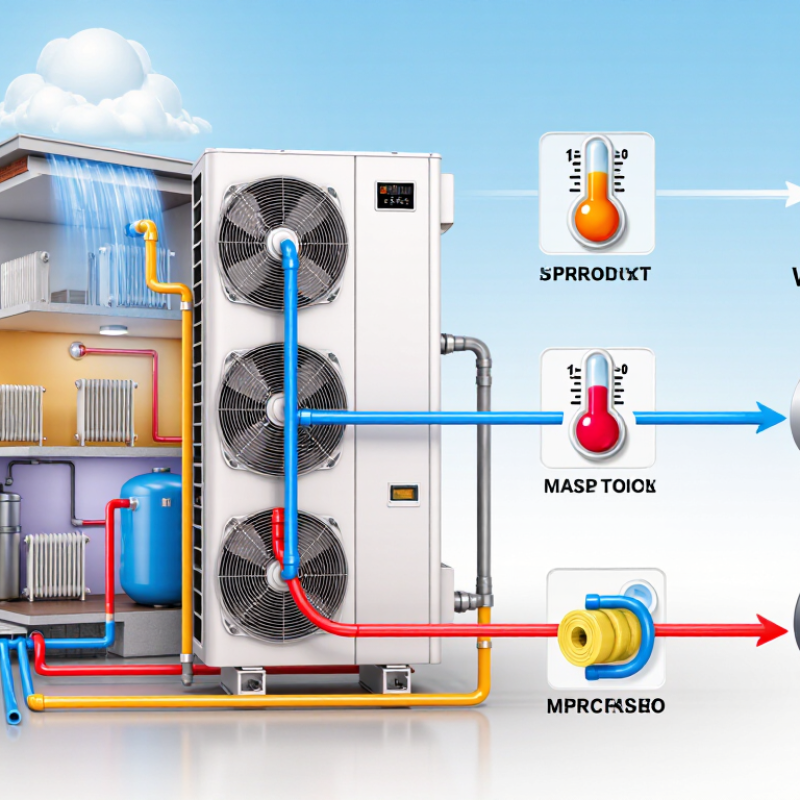
| Definition | A high-temperature heat pump is a vapor-compression heating system designed to deliver hotter water, air, or process heat than a standard low-temperature heat pump. | Many systems are designed for supply temperatures of approximately 70–90°C; specialized industrial systems can reach approximately 100–160°C, depending on design and operating conditions. | Higher delivery temperatures allow the system to serve applications that traditionally use boilers or other high-temperature heating equipment. |
| Primary Heat Sources | The system extracts low-grade thermal energy from outdoor air, ground loops, surface water, wastewater, industrial exhaust air, or process fluids. | Source temperatures may range from below 0°C for outdoor air to above 20°C for wastewater or industrial heat-recovery streams. | The available source temperature strongly affects heating capacity, efficiency, and the final temperature the heat pump can produce. |
| Step 1: Evaporation | A refrigerant absorbs heat from the source in the evaporator and changes from a low-pressure liquid into a low-pressure vapor. | The refrigerant boils at a temperature lower than the available heat-source temperature, allowing it to absorb energy even from relatively cool air or water. | This is the stage where renewable or recovered heat enters the heat-pump cycle. |
| Step 2: Compression | An electrically driven compressor raises the refrigerant’s pressure. Its temperature rises significantly as a result of compression. | Electrical input is converted into mechanical work, while the refrigerant’s pressure and temperature increase to levels suitable for heat delivery. | Compression is the key step that makes high-temperature heat production possible. |
| Step 3: Condensation | The hot, high-pressure refrigerant releases heat in the condenser to a water loop, air stream, or industrial process fluid. | Useful output temperatures commonly range from approximately 55–90°C in building systems, with higher temperatures possible in specialized industrial designs. | The condenser transfers both extracted environmental heat and compressor energy to the heating system. |
| Step 4: Expansion | An expansion valve reduces the refrigerant pressure and temperature before the refrigerant returns to the evaporator. | The pressure drop prepares the refrigerant to absorb heat again, completing the closed refrigeration cycle. | This continuous cycle enables repeated heat transfer without directly burning fuel at the point of use. |
| Heat Output | Heat may be delivered as hot water, hot air, steam, or directly to a process loop, depending on system architecture. | Common building outputs include hot-water supply temperatures of approximately 60–90°C; industrial outputs vary by equipment configuration. | The output format determines whether the heat pump can connect to radiators, domestic hot-water systems, drying equipment, or industrial processes. |
| Coefficient of Performance (COP) | COP is the ratio of useful heat delivered to electrical energy consumed. | A COP of 3 means approximately 3 units of heat are delivered for every 1 unit of electricity under the stated test conditions. High-temperature operation often produces a lower COP than low-temperature operation. | COP changes with outdoor temperature, source temperature, supply temperature, part-load operation, defrosting, and system design. |
| Temperature Lift | Temperature lift is the difference between the heat-source temperature and the delivered heat temperature. | For example, raising heat from 10°C to 80°C requires a larger temperature lift than raising it from 10°C to 45°C. | A larger temperature lift generally increases compressor work and reduces efficiency, so adequate source heat and lower return temperatures are valuable. |
| Refrigerant Circuit Design | High-temperature units may use a single-stage cycle, two-stage compression, economized compression, cascade circuits, or other enhanced-cycle arrangements. | Two-stage or cascade arrangements can divide the total temperature lift between multiple compression stages. | Advanced configurations can improve operating stability and efficiency when very high delivery temperatures are required. |
| Efficiency Influences | Performance depends on source temperature, supply and return temperatures, compressor efficiency, heat-exchanger sizing, controls, and defrost requirements. | Efficiency is normally higher when the heat source is warmer and the required supply temperature is lower. | System design should be evaluated using seasonal performance rather than a single laboratory COP value. |
| Typical Applications | High-temperature heat pumps can provide space heating, domestic hot water, district heating, heat recovery, drying, washing, pasteurization, and other process heat. | They are particularly suitable where useful waste heat is available or where existing heating distribution systems require higher water temperatures. | Applications with steady heat demand and accessible waste heat can provide favorable operating conditions. |
| Relationship with Existing Systems | A high-temperature heat pump may supply an existing hydronic heating network, preheat water for a boiler, or operate alongside a backup heater. | Hybrid operation can use the heat pump for most normal loads and supplementary heating during peak demand or extreme conditions. | Integration can reduce fuel consumption while retaining the reliability of existing high-temperature equipment. |
| Advantages | Potential benefits include reduced direct fossil-fuel use, recovery of otherwise wasted heat, compatibility with some high-temperature heating systems, and lower on-site combustion emissions. | Actual energy and emissions savings depend on the electricity mix, system efficiency, operating schedule, and replaced heating technology. | Performance should be assessed using site-specific energy data and seasonal operating conditions. |
| Key Limitations | Very high supply temperatures can reduce efficiency, increase compressor stress, and require specialized components, controls, and refrigerant management. | Cold outdoor conditions, high flow temperatures, poor insulation, undersized heat exchangers, or frequent defrosting can reduce seasonal performance. | Correct sizing, hydraulic balancing, insulation, and temperature optimization are essential for reliable operation. |
| Maintenance Considerations | Routine service may include checking refrigerant circuits, filters, pumps, valves, sensors, heat exchangers, electrical connections, and control settings. | Maintenance intervals depend on equipment type, operating hours, water quality, air quality, and local regulations. | Regular maintenance helps preserve capacity, efficiency, safety, and operating life. |



 Close