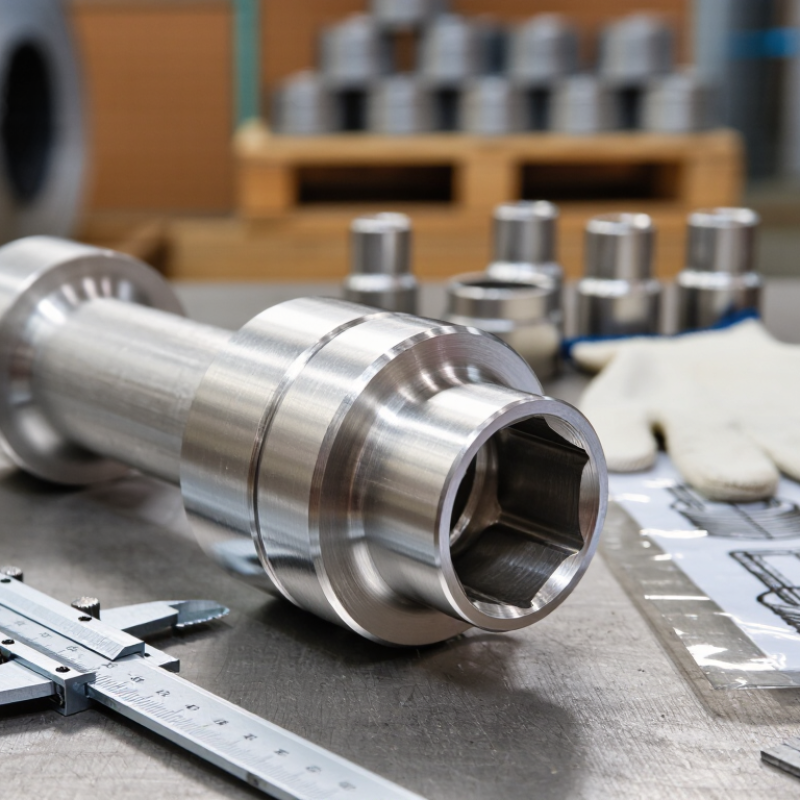
| Terminology | “Socket weld stub end” is not a commonly defined standard fitting name. A stub end is usually a short pipe-end component used with a lap-joint flange, while a socket-weld fitting has a recessed socket into which the pipe is inserted and fillet-welded. | Confirm the intended connection from the piping drawing and purchase description. Do not treat a socket-weld fitting and a lap-joint stub end as interchangeable. | Early design review, procurement, and replacement of existing piping. |
| Connection type | A socket-weld joint is made by inserting the pipe into the fitting socket and applying a fillet weld around the outside of the joint. A lap-joint stub end is paired with a loose lap-joint flange and is generally joined to the pipe by butt welding. | Specify the connection end clearly: socket weld, butt weld, threaded, or another end type. Check that the mating component has the matching end connection. | Branches, small-bore pipe runs, equipment connections, and flange interfaces. |
| Applicable dimensional standard | ASME B16.11 covers dimensions and ratings for forged socket-welding and threaded fittings. ASME B16.9 covers factory-made wrought butt-welding fittings; it is not the socket-weld fitting standard. | Identify the governing standard and edition in the project specification. If a nonstandard component is intended, request its controlled drawing and dimensional tolerances. | Engineering checks, fabrication, inspection, and interchangeability. |
| Nominal size and schedule | Socket-weld fitting selection is based on nominal pipe size (NPS) and the applicable pipe outside diameter and wall thickness. The pipe schedule describes pipe wall thickness; it does not by itself define the fitting pressure rating. | Match the fitting size to the specified pipe size and verify the socket dimensions against the fitting standard and manufacturer’s data. | Fit-up, bore alignment, and correct joint preparation. |
| Pressure class | ASME B16.11 socket-weld fittings are commonly designated by classes such as 3000, 6000, and 9000. These are fitting class designations, not direct pressure values in psi; allowable pressure depends on size, material, temperature, and applicable code. | Select the class required by the piping design and confirm the pressure-temperature limits for the exact material and size. | Process lines subject to operating pressure and temperature requirements. |
| Material | Forged fitting materials may include carbon steel, stainless steel, and alloy steel grades, depending on the service and applicable material specification. | Specify the material grade, product specification, and any required impact testing or corrosion-related requirements. Confirm compatibility with the connected pipe and service fluid. | Corrosive, high-temperature, low-temperature, or general utility service. |
| Typical use | Socket-weld fittings are commonly used for small-diameter piping where a compact welded connection is suitable. They are not automatically appropriate for every fluid, size, or operating condition. | Check the project piping code, service restrictions, fatigue or vibration exposure, and inspection requirements before choosing the joint type. | Small-bore process and utility piping, subject to project design rules. |
| Weld preparation and fit-up | The pipe is inserted into the socket and fillet-welded. Socket-weld joint fit-up and welding details must follow the applicable code, approved procedure, and project requirements. | Use qualified welding procedures and personnel. Verify insertion, alignment, weld size, and any specified gap or inspection criteria against the governing documents. | Shop fabrication, field installation, and quality control. |
| Flanged connection alternative | Where a removable flange connection is needed, a lap-joint stub end and lap-joint flange may be considered. This is a different arrangement from a socket-weld fitting. | Check flange facing, dimensions, material, pressure class, and compatibility with the mating flange. Confirm whether the design requires a loose rotating flange. | Equipment interfaces and piping locations where flange rotation or easier alignment is useful. |
| Documents to request | Purchase documentation typically identifies the fitting type, size, class or rating, material, applicable standard, end connection, and inspection or certification requirements. | Resolve ambiguous wording such as “socket weld stub end” before ordering. Request a datasheet or drawing when the intended geometry is not unambiguous. | Purchasing, receiving inspection, and traceability. |
| Important: Confirm the component name and connection type with the project engineer. A socket-weld fitting and a lap-joint stub end are different piping components, and their dimensions and standards should not be substituted for one another. |



 Close