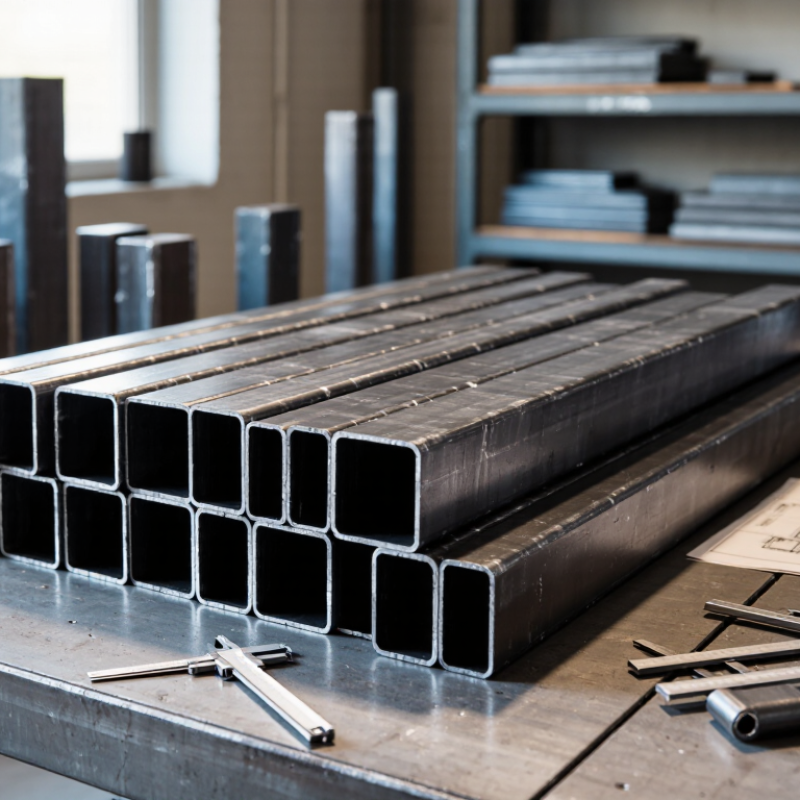
| Black mill finish (uncoated) | Dark grey to black surface, often with mill scale; appearance and surface condition can vary. | No applied protective coating. | Low when exposed to moisture or weather. Mill scale is not a dependable long-term corrosion barrier. | Usually economical and readily available; can be prepared for a specified coating system. | Best for dry, indoor conditions or where a separate protection system will be applied. Clean and prepare the surface before painting; remove loose scale, rust, oil, and contaminants. |
| Shop-applied primer | Usually red, grey, or another primer color; not necessarily black. | Often approximately 20–75 μm dry film thickness (DFT), depending on the primer and specification. | Limited to moderate; intended mainly as temporary protection or as the base for a compatible paint system. | Can reduce flash rust during storage and handling and provide a base for later coating. | A primer alone may not provide durable outdoor protection. Confirm compatibility with the finishing coats, and check whether the primer must be removed from weld areas. |
| Zinc-rich primer with paint topcoats | Primer is commonly grey; the final color depends on the chosen topcoat. | A complete multi-coat system is commonly around 150–300 μm DFT; the specified build varies with exposure and product selection. | Moderate to high when correctly specified, applied to properly prepared steel, and maintained. | Provides a repairable barrier system; suitable for many fabricated structures and can be applied in a range of colors. | Performance depends on surface preparation, film thickness, application quality, and maintenance. Edges, welds, and damaged areas need particular attention. |
| Hot-dip galvanizing | Typically silver-grey; the surface may be bright, matte, or spangled. | Often approximately 45–85 μm or more, depending on steel thickness and the applicable specification. | High for many outdoor exposures because the zinc coating provides a barrier and sacrificial protection. | Coats accessible internal and external surfaces of properly vented hollow sections; generally offers durable protection with relatively low routine maintenance. | The section must be designed with suitable vent and drain openings for galvanizing. Welding or cutting after galvanizing damages the coating locally and requires repair. Appearance can vary. |
| Powder coating | Uniform colored finish; black is commonly available. | Often approximately 60–120 μm, depending on the powder and specification. | Moderate to high when pre-treatment, coverage, and curing are appropriate for the exposure. | Provides an even decorative finish and a tough surface; often used for finished products and components. | Requires controlled pre-treatment and curing facilities. Damage and cut edges can expose steel; field repairs may not match the original finish. Hollow-section interiors may not receive the same protection. |
| Duplex system: galvanizing plus paint | Painted color over a galvanized base; black topcoats are possible. | Combines the specified zinc coating with a paint system, often approximately 100–250 μm DFT of paint in addition to the zinc layer. | High when the paint system is compatible with the galvanized surface and applied and maintained correctly. | Adds color and a further barrier; may extend service life compared with either system alone in suitable conditions. | Requires correct preparation of the galvanized surface and compatible coatings. More steps and inspection are needed than for a single finish. |



 Close