| Moisture-removal capacity | Rated water removal per day and the conditions used for the rating. | Match capacity to the room area, humidity load, climate, and intended use; compare ratings tested under the same conditions. | Capacity ratings can vary with temperature and test conditions, so a single figure may not predict performance in every space. |
| Drainage method | Whether condensate drains by gravity or requires a condensate pump. | Choose gravity drainage when a suitable downhill route is available. Use a pump-capable unit when water must be lifted to the discharge point. | A drain arrangement that does not suit the site can lead to standing water, leaks, or interrupted operation. |
| Drain-line layout | Route, fall, line length, connections, and access to the discharge point. | Follow the installation instructions for the required slope, pipe size, and maximum lift. Keep the line secure and avoid kinks or obstructions. | Drainage requirements differ by design; the manufacturer's installation instructions determine the correct setup. |
| Overflow protection | High-water shutoff, overflow alarm, or another listed condensate protection feature. | For concealed or hard-to-see installations, prioritize a model with suitable overflow protection and consider a compatible leak sensor. | An unnoticed blockage or pump failure can allow condensate to damage ceilings and nearby finishes. |
| Filter maintenance | Filter type, cleaning or replacement instructions, and access-panel clearance. | Select a unit whose filter can be reached and serviced safely without removing permanent building components. | A dirty filter restricts airflow and can reduce performance; maintenance frequency depends on the unit and operating conditions. |
| Coil and drain-pan cleaning | Access for inspection and cleaning of the evaporator coil, drain pan, and condensate outlet. | Check that the service panel and installation location allow routine inspection and cleaning as directed in the manual. | Dust and debris can impair airflow or contribute to drainage problems if maintenance is neglected. |
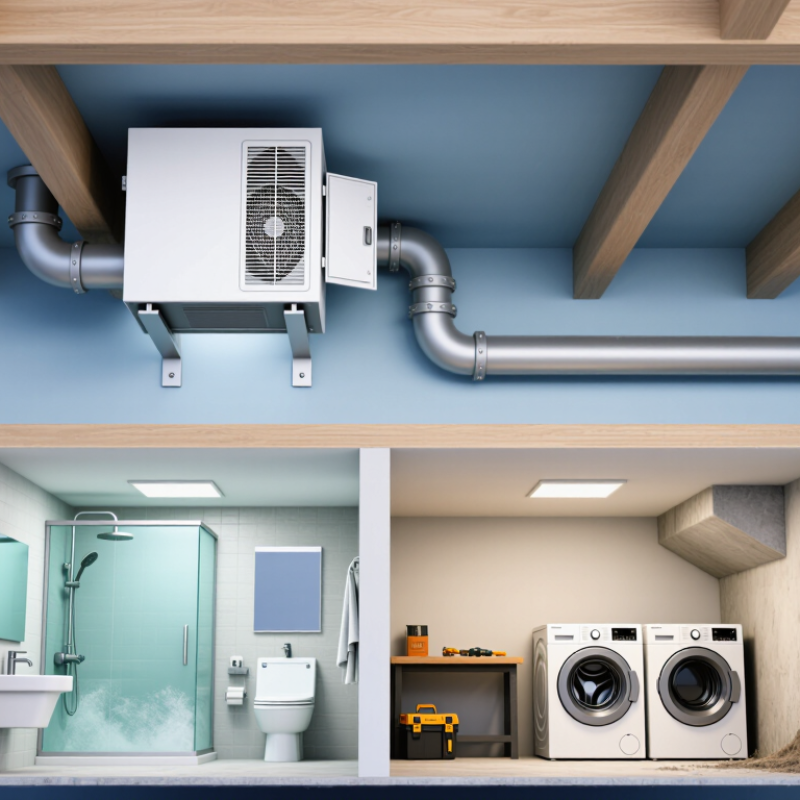
| Ceiling support and clearance | Unit weight, mounting requirements, service clearances, and nearby building materials. | Confirm the structure can support the installed unit and that mounting follows the product instructions; use qualified installation help when needed. | Secure support and adequate access help reduce the risk of movement, damage, and difficult servicing. |
| Electrical safety | Voltage, current, required circuit, grounding, disconnecting means, and installation location. | Verify the unit's electrical specifications and follow local electrical codes. Have a qualified electrician assess the installation where required. | Correct wiring and protection are essential, particularly in damp areas; requirements vary by location and installation. |
| Humidity control | Built-in humidistat, adjustable setpoint, and automatic restart or operation controls. | Choose controls that make it easy to set and monitor the desired indoor humidity; confirm that controls are accessible after installation. | Automatic control can help maintain a more consistent humidity level without continuous manual adjustment. |
| Service access and documentation | Availability of installation instructions, maintenance guidance, parts information, and access to the unit. | Review the manual before purchase and plan an accessible route for inspection, cleaning, and repairs. | A ceiling-mounted unit should remain serviceable throughout its working life, not just fit the space at installation. |



 Close