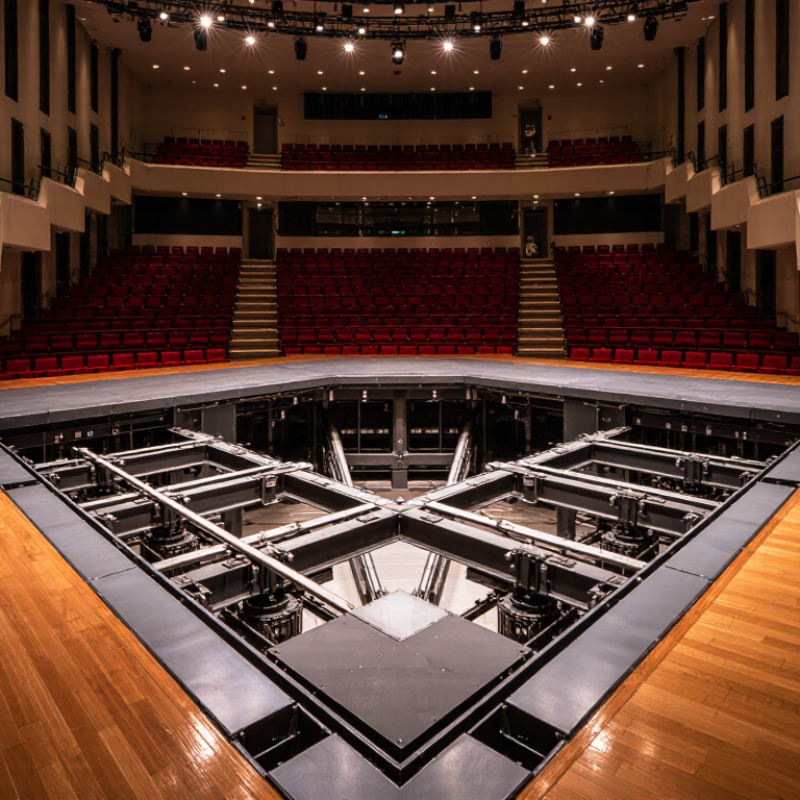
| Hydraulic scissor lift | A hydraulic cylinder moves linked scissor arms, raising or lowering a platform vertically. | Well suited to substantial loads and work-platform applications; the platform can provide a broad support area. | The mechanism needs space beneath the platform. Lift speed and positioning depend on the hydraulic system and controls; hoses and seals require inspection. | Work-positioning tables, loading and unloading, assembly stations, and material handling. | Check rated load, platform dimensions, lowered height, stroke, duty cycle, guarding, and whether the load is evenly distributed. |
| Electromechanical screw lift | An electric motor turns a lead screw or ball screw. A nut or carriage travels along the screw to move the platform. | Offers controlled, repeatable motion and can integrate readily with automated control systems. | Speed, load, and service life depend on screw type, support, lubrication, and duty cycle. A screw is not automatically self-locking; holding may require a brake. | Automated workstations, adjustable fixtures, synchronized lifts, and applications requiring controlled positioning. | Check load direction, screw speed, travel, positioning accuracy, back-driving risk, motor brake, and synchronization needs. |
| Telescopic-column lift | Nested column sections extend using an internal drive such as a screw, belt, or chain mechanism, depending on the design. | Can provide a long vertical stroke from a relatively compact retracted height; multiple columns can support a platform. | Load capacity, stiffness, and side-load tolerance vary by column design. Uneven loading or poor alignment can affect smooth movement. | Height-adjustable work surfaces, medical or laboratory equipment, ergonomic stations, and compact lifting systems. | Check the specific drive system, column count, stroke, retracted height, stability, side-load rating, and synchronization method. |
| Pneumatic bellows lift | Compressed air expands a flexible bellows to raise a platform; releasing or controlling the air lowers or positions it. | Simple lifting arrangement with no sliding column drive in the bellows itself; can suit applications where a compliant support is useful. | Air compressibility makes precise position control more challenging than with many screw-driven systems. A regulated air supply and suitable load restraint are important. | Ergonomic pallet positioning, load leveling, and applications needing compliant vertical support. | Check air pressure and supply, load range, stroke, lateral stability, height variation under changing load, and safe behavior on air loss. |
| Mast-and-chain lift | A motor and gearbox drive a chain over sprockets to move a guided carriage along a mast or mast assembly. | Can provide substantial vertical travel while guiding a carriage; suitable for lifting loads to elevated positions. | Requires adequate mast support and guarding. Chain, guides, brakes, and limit devices need regular inspection; installation conditions affect stability. | Vertical transfer systems, storage and retrieval equipment, and lifting platforms with guided travel. | Check rated load at the required height, mast anchoring, chain and brake provisions, travel limits, guarding, and installation clearances. |



 Close