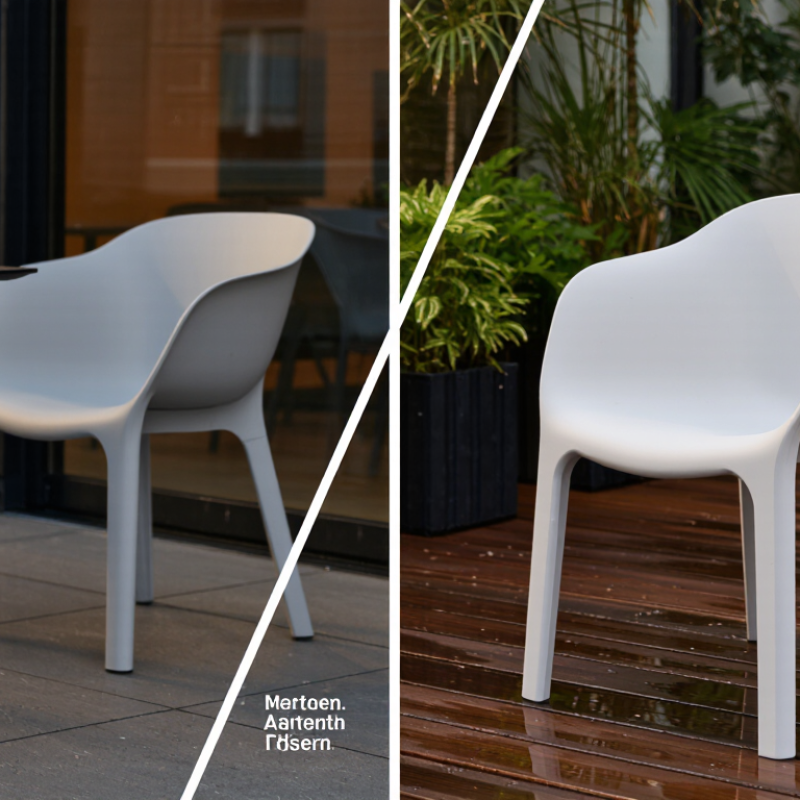
Choosing a rotomolding chair starts with the material, not just its shape. Polyethylene grades can vary in stiffness, toughness, and behavior after repeated use. ASTM D638 tensile testing measures how a plastic specimen stretches and resists pulling before it breaks. For chair design, results can help compare material batches and assess whether a seat or leg may flex under load. Check the test method, specimen preparation, and conditioning; numbers from different setups may not be directly comparable.
ASTM D256 measures impact resistance using a notched specimen struck by a pendulum. It offers a useful comparison of how materials handle a sudden blow, such as a chair edge hitting a hard floor. A higher impact value may indicate better resistance in that test, but it does not guarantee that a finished chair will never crack. The molded wall, corners, cooling, and UV exposure matter too. Tests are clues, not the whole story.
Ask suppliers for D638 and D256 data tied to the specific resin grade, then compare it with real-use checks: loaded seating, repeated handling, and cold-condition impacts. Look closely at stress points around the legs and seat transitions. A chair that feels slightly flexible may be more comfortable, though that impression alone is not proof of strength. I would want both test results and a finished-part evaluation before choosing.



 Close
Close