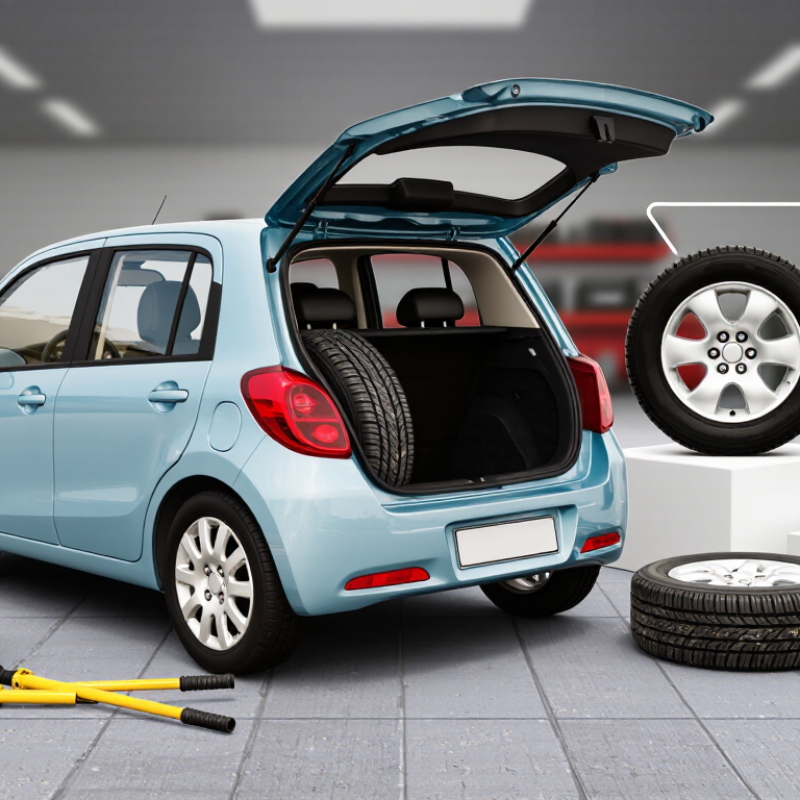
| Full-Size Matching Spare | Designed to match the vehicle’s regular tire in size, load capacity, and speed rating. | Store securely in the designated compartment or cargo area. Protect it from moisture, chemicals, and prolonged direct sunlight. | Use the pressure listed on the vehicle placard or owner’s manual. Check pressure at least monthly and before long trips. | Usually suitable for normal driving when correctly matched and properly inflated. | Replace when the tread reaches the legal wear limit, the tire is damaged, or the rubber shows significant aging or cracking. |
| Full-Size Temporary Spare | Matches the wheel diameter or general tire size but may differ in tread design, width, or performance rating. | Secure it to prevent movement. Confirm that the wheel, tire, and fasteners fit the vehicle before relying on it. | Inflate according to the spare-tire pressure label or owner’s manual; do not assume the regular tire pressure applies. | Drive conservatively until the regular tire is repaired or replaced. Handling and braking may differ. | Inspect regularly for age, cracking, corrosion, and damage, even if it has never been used. |
| Compact Temporary Spare | Provides short-term mobility after a puncture or tire failure while saving space and weight. | Keep it in its intended storage well with the retaining hardware fitted. Avoid placing heavy cargo on top of it. | Often requires a higher pressure than regular tires. Follow the pressure printed on the spare or specified in the owner’s manual. | Use only for temporary travel. Observe the maximum speed and distance limits printed on the tire or stated by the vehicle manufacturer. | Replace if damaged, underinflated for an extended period, excessively aged, or past the manufacturer’s service recommendation. |
| Run-Flat Replacement Tire | Allows limited travel after a loss of air pressure when the vehicle is equipped for run-flat operation. | Store and fit only as approved for the vehicle. A standard spare may not be included or may not fit the available storage area. | Check pressure with a gauge because visual inspection may not reveal pressure loss. The tire-pressure monitoring system must be operational. | Follow the tire’s emergency distance and speed limits. Ride comfort and handling can change after pressure loss. | Have the tire inspected after driving deflated. Replace it if the manufacturer does not permit repair after pressure loss or if internal damage is suspected. |
| Inflation-Sealant Kit | Temporarily seals some small tread punctures and reinflates the tire; it does not replace a spare tire. | Store the compressor, sealant, hose, and power cable together. Keep the sealant within its expiration date. | Use only according to the kit instructions. Check the repaired tire pressure again after driving the specified short distance. | Temporary use only. Do not use for sidewall damage, large cuts, bead damage, or a tire that has come off the wheel. | Replace expired sealant cartridges and repair or replace the affected tire as soon as possible. |
| No Spare Tire Included | Some vehicles rely on roadside assistance, run-flat tires, or an inflation-sealant kit. | Verify what emergency equipment is present before a journey. Check the jack, wrench, towing eye, compressor, and sealant where applicable. | Maintain all regular tires at the pressure shown on the vehicle placard, normally located on the driver-side door area or in the owner’s manual. | Do not continue driving on a visibly damaged or severely underinflated tire unless a permitted emergency system specifically allows it. | Confirm replacement options, wheel compatibility, lifting points, and any required tire-pressure monitoring procedures. |
| Safety Check: Before choosing a spare, verify the correct wheel-bolt pattern, wheel offset, tire size, load rating, speed rating, brake-clearance fit, maximum speed, inflation pressure, and storage dimensions in the vehicle owner’s manual. The vehicle manufacturer’s instructions take priority over general guidance. |



 Close
Close