| Candy Type | Gummy candy, marshmallow, fruit pieces, chocolate-coated candy, or other approved confectionery | Product identity, ingredient list, allergen statement, and approved sample match the purchase order | Different candy structures react differently to freezing, drying, humidity, and handling. |
| Target Order Quantity | Define the initial order in kilograms or cases and provide an estimated monthly or quarterly volume | Supplier confirms available production capacity, minimum order quantity, and shipment quantity | Volume affects unit cost, production scheduling, packaging configuration, and freight efficiency. |
| Piece Size and Weight | Specify target dimensions, pieces per kilogram, and acceptable weight tolerance | Use a documented tolerance, such as ±10% for individual pieces and a defined average weight for each lot | Size consistency supports accurate labeling, portion control, and predictable retail presentation. |
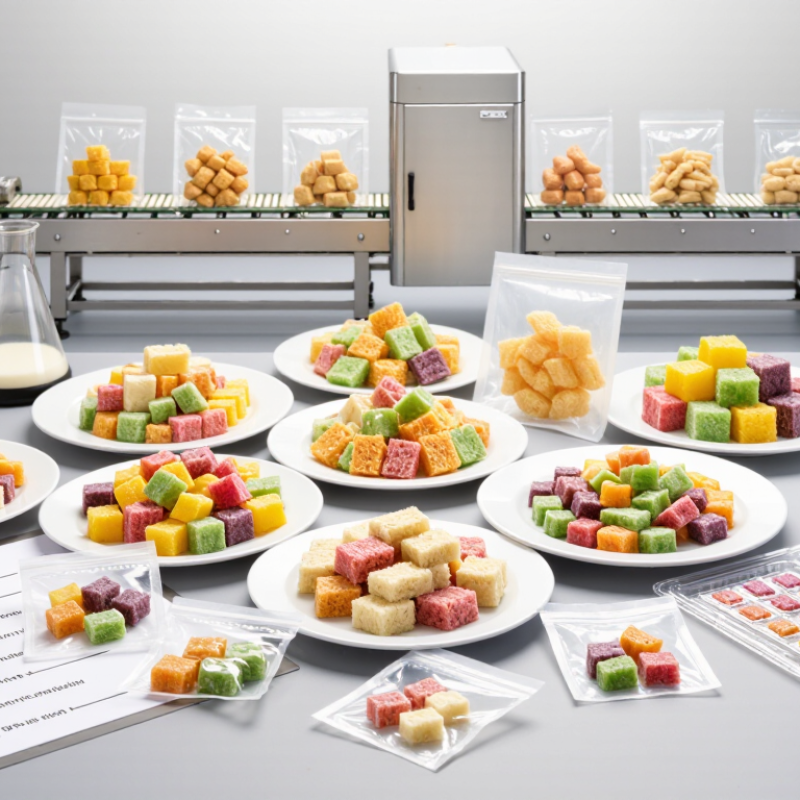
| Texture and Appearance | Light, crisp, expanded, and dry texture with the agreed color and shape | No excessive collapse, burning, wet spots, severe sticking, mold, foreign material, or unexplained discoloration | Sensory quality is one of the main reasons consumers purchase freeze-dried candy. |
| Moisture Content | Set a product-specific maximum, commonly around 2% to 5% for dry freeze-dried confectionery | Every production lot is tested using a documented method, with results recorded on the certificate of analysis | Low moisture helps preserve crispness, reduce clumping, and slow quality deterioration. |
| Water Activity (aw) | Target aw below 0.60; a lower limit may be selected for products requiring extended crispness | Test each lot with a calibrated water-activity meter and define the release limit in the specification | Water activity is more useful than moisture alone for evaluating microbial growth potential and texture stability. |
| Ingredients and Allergens | Provide the complete formula, sub-ingredients, allergens, additives, and dietary claims required for the destination market | Ingredient declaration and allergen controls comply with the applicable food regulations in the sales market | Formulation affects compliance, consumer suitability, labeling, and import clearance. |
| Packaging Format | Bulk food-grade inner bag placed inside a sealed, durable outer carton or case | Packaging is intact, heat-sealed or securely closed, clean, food-contact compliant, and suitable for dry products | Freeze-dried candy rapidly absorbs moisture when exposed to humid air. |
| Moisture and Oxygen Barrier | Use packaging with an appropriate moisture barrier; consider oxygen control for oxygen-sensitive ingredients | Packaging performance is supported by specifications or supplier documentation, and seals pass visual inspection | Barrier performance helps maintain texture, color, flavor, and shelf life during storage and transport. |
| Shelf Life | Request a documented shelf-life period, commonly 6 to 12 months when unopened and properly packaged | Remaining shelf life at delivery is agreed in advance, such as at least 75% of the stated shelf life | Shelf-life requirements influence inventory planning, freight timing, and retail distribution. |
| Lot Coding and Traceability | Each case and inner package should show a lot or batch code, production date, and best-before date where required | Supplier can trace ingredients, processing records, packaging materials, and shipment records to the lot code | Traceability supports recalls, complaint investigation, stock rotation, and regulatory compliance. |
| Food Safety Controls | Supplier should operate documented sanitation, hazard-control, allergen, foreign-material, and pest-control procedures | Review current food-safety documentation, audit information, and product testing records before approval | Preventive controls reduce contamination risks and support customer and regulatory requirements. |
| Case Pack and Logistics | Define net weight per case, case dimensions, gross weight, pallet pattern, stacking limits, and shipping temperature requirements | Cases arrive dry, clean, undamaged, correctly labeled, and suitable for warehouse handling | Accurate logistics data improves freight quotations, warehouse planning, and damage prevention. |
| Sampling and Approval | Approve a representative pre-production or production sample before placing the full bulk order | Compare taste, texture, appearance, dimensions, packaging, and test results against the approved reference sample | A written sample standard reduces disputes between purchase, production, and receiving teams. |
| Required Documents | Product specification, ingredient and allergen statement, certificate of analysis, packing list, invoice, and transport documents | Documents are complete, consistent with the shipment, and available before or at delivery as agreed | Correct documentation supports receiving inspection, customs processing, and product release. |


 Close
Close