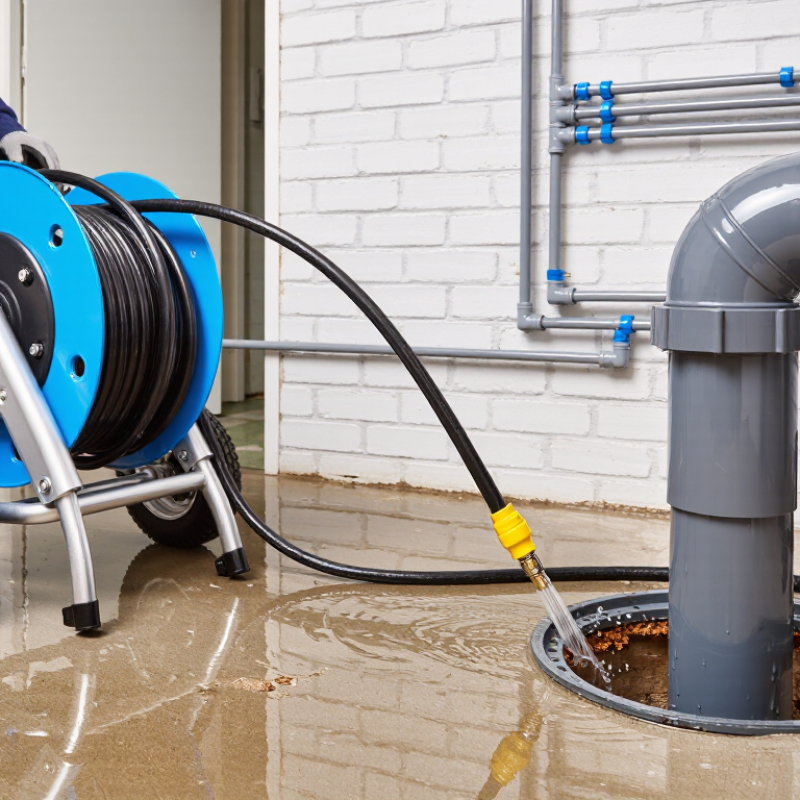
| High-pressure pump | Draws in water and delivers it at controlled pressure and flow to the hose. | Supplies the energy that lets nozzle jets loosen deposits and move debris through a pipe. | Machine capacity varies widely. Cleaning results depend on both pressure and water flow, as well as the pipe and blockage. |
| Jetting hose | Carries pressurized water through a flexible line inserted into the drain or pipe. | Allows the nozzle to travel into the line; rear-facing jets commonly help pull the hose forward and rinse loosened material back. | Hose size, length, and pressure rating must match the machine and job. Inspect for wear or damage before use. |
| Forward-jet nozzle | Directs one or more water streams toward material ahead of the nozzle. | Can help open a path through soft blockages and break up some accumulated debris. | The appropriate nozzle depends on the blockage, pipe condition, and machine capacity; it is not suitable for every obstruction. |
| Rear-jet nozzle | Directs water backward, often at an angle to the direction of travel. | Helps propel the nozzle through the pipe and wash loosened material toward an access point. | Commonly used for general drain cleaning. Jet pattern and nozzle size affect performance. |
| Rotating or specialized nozzle | Uses a rotating jet or a pattern designed for a particular cleaning task. | Can provide more targeted wall cleaning for certain deposits, subject to pipe compatibility. | Use only when the nozzle is appropriate for the pipe material, diameter, and condition. |
| Grease and sludge removal | A common application in suitable drain and sewer lines. | Water jets can loosen deposits from pipe walls, while the flow carries suspended material away. | The operator should assess the line and manage wastewater and debris appropriately. |
| Roots and hard obstructions | May require diagnosis and a method chosen for the obstruction and pipe condition. | Jetting can help clear some material, but it may not fully remove heavy root intrusion or solid objects. | A camera inspection or mechanical cutting may be needed. Damaged or fragile pipes require particular care. |
| Safe operation | Requires trained handling of high-pressure equipment and suitable protective measures. | Correct pressure, nozzle selection, and controlled hose handling help reduce the risk of injury or pipe damage. | Never point a jet at people or animals. Follow the equipment instructions, use appropriate PPE, and verify that the pipe can withstand the cleaning method. |



 Close