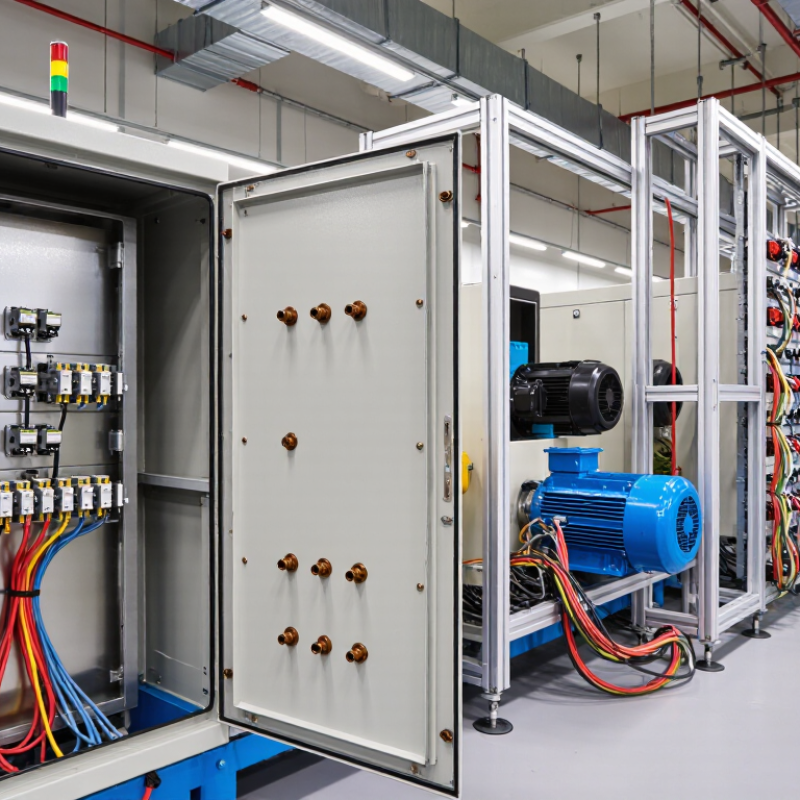
Industrial EMC performance depends on the whole installation, not one filter. A shielded cable can still carry interference through an unbonded connector or a long grounding lead.
IEC 61000-4-2 specifies electrostatic discharge test levels up to ±8 kV for contact and ±15 kV for air discharge. These levels help engineers compare equipment immunity, but they do not replace testing in the final installation.
For cables, select shielding and termination based on frequency, cable length, and connector design. A 360-degree shield connection usually provides a more reliable high-frequency path than a thin wire pigtail. Keep noisy power cables apart from sensor and communication lines; where routes must cross, a right-angle crossing can reduce coupling. Small gaps matter. Enclosures need conductive, continuous seams, with paint removed or conductive bonding provided at contact points. Ventilation openings and access doors can weaken shielding, so check them in the assembled cabinet.
Grounding should provide short, low-impedance bonds between doors, panels, and equipment—not merely a long path to earth. Filters work best at the enclosure entry, with unfiltered and filtered wiring kept physically separate. IEC 61000-4-4 evaluates immunity to electrical fast transients, a useful reminder that switching disturbances deserve attention alongside static discharge.
One practical weakness in many designs is assuming a component’s rating guarantees system performance. It doesn’t. Verify cable routing, bonds, and filter placement under realistic operating conditions, then document what still needs improvement.



 Close