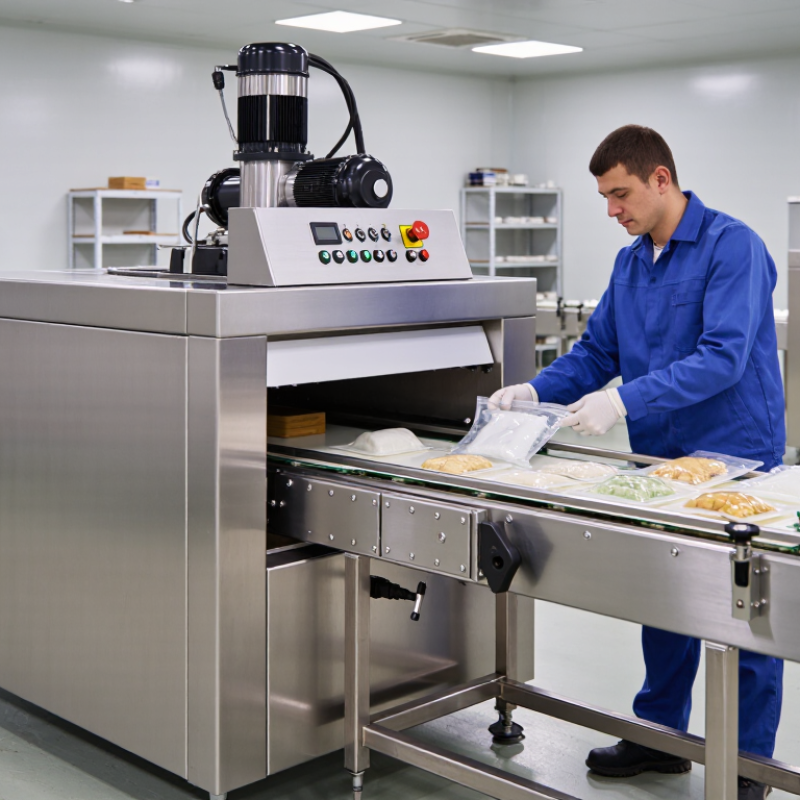
| Machine Type | Chamber vacuum packaging machine | The product and bag are placed inside a sealed chamber. Air is removed from both the bag and the chamber before the bag is heat-sealed. |
| Vacuum Pump Capacity | 20–40 m³/h nominal displacement | This pump range is commonly used for medium- to high-throughput chamber machines. Higher capacity generally supports faster evacuation, although actual speed also depends on bag volume, product shape, piping, and leakage control. |
| Typical Ultimate Vacuum | Approximately 1–3 mbar, depending on pump and system design | A lower absolute pressure removes more residual air, but the practical result depends on moisture, product porosity, packaging film, and the machine’s sealing performance. |
| Pump Technology | Oil-lubricated rotary vane pump is common | Rotary vane pumps provide stable vacuum performance and are suitable for continuous industrial operation. Oil condition, filtration, and regular maintenance directly affect service life. |
| Chamber Construction | Stainless steel working chamber, commonly grade 304 | Stainless steel provides corrosion resistance and supports hygienic cleaning. Grade 316 may be selected for applications exposed to aggressive chemicals or high salt content. |
| Chamber Working Area | Approximately 400–1,000 mm wide and 300–800 mm deep | The required chamber size depends on product dimensions, bag arrangement, production volume, and the number of packages processed per cycle. |
| Chamber Height | Approximately 80–250 mm for standard industrial models | A deeper chamber accommodates thicker products and larger bags. The usable height must also allow clearance for the sealing bars and chamber lid. |
| Sealing Bar Configuration | One or more bars; parallel or cross-bar layouts | Multiple bars increase output per cycle and can support different bag orientations. Bar placement should match the product layout and available chamber space. |
| Sealing Length | Approximately 400–1,000 mm per sealing bar | The sealing length must be longer than the open edge of the selected bag. Longer bars can improve productivity but may increase electrical load and machine size. |
| Seal Width | Typically 5–10 mm | A wider seal provides additional sealing area for demanding applications. The correct width depends on film structure, thickness, product contamination risk, and required seal strength. |
| Sealing Temperature | Typically 120–200°C, depending on packaging film | Temperature, sealing time, and pressure must be matched to the film. Excessive heat can damage the package, while insufficient heat may cause weak or incomplete seals. |
| Sealing Cycle Time | Approximately 1–4 seconds per sealing operation | Cycle settings depend on film type and thickness. Longer dwell times may be required for thicker multilayer films or bags with challenging sealant layers. |
| Complete Machine Cycle | Approximately 15–60 seconds per cycle | The complete cycle includes chamber closing, evacuation, optional gas flushing, sealing, cooling, and chamber venting. Product volume and moisture can significantly affect cycle time. |
| Gas-Flushing Capability | Optional nitrogen or carbon dioxide injection | Gas flushing can replace part of the removed air and is used to help protect products from oxidation or reduce package collapse. Gas selection must be compatible with the product and food-safety requirements. |
| Control System | PLC-based controller with digital HMI | The control system manages vacuum time or pressure, gas-flush time, sealing temperature, sealing duration, cooling time, and recipe storage. |
| Vacuum Measurement | Electronic pressure sensor or vacuum transducer | Pressure-based control provides more repeatable results than time-only control when product loads and bag volumes vary between cycles. |
| Operating Modes | Automatic, semi-automatic, and manual setup modes | Automatic mode supports repeatable production. Manual or setup modes are useful for commissioning, maintenance, troubleshooting, and packaging trials. |
| Electrical Power | Approximately 3–15 kW installed load | Total power depends on pump size, chamber dimensions, sealing-bar count, heaters, gas-flushing equipment, and optional conveyors or loading systems. |
| Compressed Air Requirement | Often 6–8 bar for pneumatic lids or sealing systems | Not every machine requires compressed air. Where pneumatic components are used, clean and dry plant air is needed for consistent operation and component reliability. |
| Safety Features | Lid interlock, emergency stop, over-temperature protection, and fault alarms | These features help prevent operation with an open chamber, protect heating elements, and alert operators to vacuum, sealing, sensor, or pneumatic faults. |
| Common Applications | Meat, seafood, cheese, prepared foods, medical supplies, hardware, and industrial parts | Vacuum packaging can reduce air exposure and package volume. The correct machine configuration must consider hygiene, product temperature, sharp edges, liquids, and regulatory requirements. |
| Recommended Maintenance | Daily cleaning; regular oil, gasket, filter, and sealing-wire inspection | Operators should remove product residue, inspect chamber seals, check sealing surfaces, and follow the pump manufacturer’s oil-change and filter-service intervals. |
| Primary Selection Criteria | Product size, bag dimensions, required throughput, film type, vacuum level, and available utilities | Machine capacity should be selected from the complete packaging process rather than pump capacity alone. Chamber layout, loading method, sealing configuration, and operator workflow also influence productivity. |



 Close