What Is an Investment Casting Foundry?
An Investment Casting Foundry produces precise metal components through the lost-wax casting process. It begins with a detailed wax pattern, often created from an engineered mold or digital design. Workers assemble patterns into trees, then apply several ceramic slurry layers. After drying, the shell is heated, and the wax drains away. Molten metal fills the remaining cavity.
This process can create complex shapes, thin walls, internal passages, and smooth surfaces. It reduces machining requirements when dimensions and process controls are carefully managed. Common materials include stainless steel, carbon steel, aluminum alloys, and heat-resistant superalloys. Each alloy requires suitable melting temperatures, shell systems, pouring methods, and inspection procedures. Experienced technicians monitor shell thickness, metal chemistry, mold temperature, and solidification behavior. Small variations matter.
A dependable Investment Casting Foundry also supports design review, prototype development, finishing, and quality documentation. Engineers may use coordinate measuring machines, radiographic testing, or dye penetrant inspection. These checks help identify shrinkage, porosity, cracks, and dimensional errors before shipment. However, no foundry is flawless. Wax distortion, ceramic cracking, or unexpected shrinkage can still occur. Careful teams investigate these issues instead of hiding them. That attitude improves repeatability and customer confidence. The best partner is not simply the one promising perfect castings. It is the foundry that explains limitations, verifies results, and improves its process with evidence. Understanding these capabilities makes supplier evaluation more practical, especially when performance, traceability, and long-term reliability are essential.
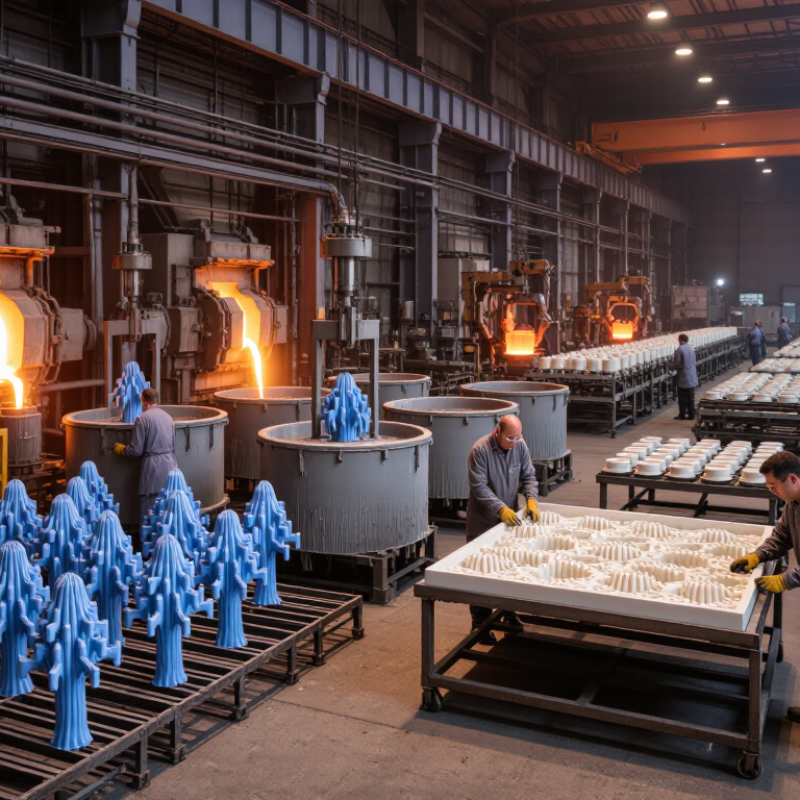
Definition and Role of an Investment Casting Foundry
What Is an Investment Casting Foundry?
An investment casting foundry is a specialized facility that produces metal components from detailed wax patterns. It combines pattern production, ceramic shell building, melting, pouring, finishing, and inspection under one controlled process. The method can reproduce thin walls, curved passages, fine lettering, and complex shapes that may require several parts when made differently.
Its role extends beyond pouring molten metal. Engineers select suitable alloys, review drawings, and consider shrinkage before production begins. Technicians inject wax into precision tools, assemble patterns, and build ceramic shells through repeated dipping and drying.
After dewaxing, the shell enters a furnace. Metal then fills the heated cavity, often at carefully monitored temperatures. Details matter.
A reliable foundry also checks dimensions, surface quality, internal soundness, and material composition. Records from each batch support traceability and help identify process changes. The process is precise, but not flawless. Small variations in shell thickness, wax temperature, or cooling speed can affect results. Experienced teams adjust controls and investigate defects instead of hiding them. That discipline builds dependable castings for demanding industrial applications. Even advanced equipment cannot replace thoughtful process review.
Key Equipment and Materials Used in the Foundry
What Is an Investment Casting Foundry?
An investment casting foundry converts wax patterns into precise metal components. Its core equipment includes wax injection presses, ceramic shell tanks, autoclaves, burnout furnaces, and melting units. Induction furnaces offer controlled heating and cleaner alloy handling. Vacuum furnaces help reduce gas porosity in demanding parts. Spectrometers verify chemical composition before pouring. Coordinate measuring machines inspect dimensions after finishing.
Materials determine shell strength and surface quality. Foundries commonly use paraffin or polymer wax, colloidal silica, zircon flour, fused silica, and alumina stucco. Stainless steel, nickel alloys, aluminum, and titanium serve different temperature and performance needs.
According to Modern Casting’s 2023 World Casting Census, global casting production reached about 183 million metric tonnes in 2022.
Investment casting represents a smaller segment, but its accuracy supports aerospace, medical, and energy applications. The U.S. Department of Energy identifies melting as roughly 55% of foundry energy use, making furnace efficiency a practical priority.
Tips:
Keep wax temperature stable. Small changes can distort thin sections. Measure shell moisture daily. Use test bars with each melt. Review rejected parts honestly; recurring defects often reveal weak process control. Perfect results are not guaranteed. Even experienced teams may overlook a minor shell crack before pouring. That mistake can become expensive quickly. Calibration records, operator experience, and independent inspection protect reliability better than equipment alone.
Industries and Products Served by Investment Casting
What Is an Investment Casting Foundry?
An investment casting foundry creates detailed metal parts from wax patterns and ceramic molds. Workers assemble wax patterns, build ceramic shells, remove the wax, and pour molten alloy into the cavity. After cooling, each casting is cut, cleaned, heat-treated, and inspected. The process can produce thin walls, fine surfaces, and complex internal shapes. It often reduces machining waste. However, results depend on alloy choice, shell strength, pouring temperature, and skilled process control.
Industries and Products Served by Investment Casting
Investment casting supports aerospace, medical equipment, energy, automotive, food processing, and industrial machinery. Typical products include turbine components, impellers, valve bodies, pump parts, surgical instruments, brackets, and precision housings. Designers use it when a part has curves, narrow passages, or difficult-to-machine features. Dimensional inspection may include coordinate measurement, visual checks, and non-destructive testing. Traceable material records also support reliable production decisions. The method is precise, but not magic. Some designs still need machining. That limitation deserves honest review.
Tips: Share the alloy, annual volume, critical dimensions, and surface requirements before requesting a quotation. Ask how the foundry controls wax defects, shell cracking, porosity, and final inspection. Request sample reports when quality matters. A drawing alone may not explain every production risk. Small gates, sharp corners, and uneven wall thickness can complicate casting. Early design feedback usually prevents expensive changes later.
What Is an Investment Casting Foundry?
Investment casting foundries produce complex, near-net-shape metal parts by creating a wax pattern, forming a ceramic shell, melting out the pattern, and pouring molten metal into the resulting mold. The process is widely used where intricate geometry, smooth surfaces, and reduced machining are important.
The chart counts representative product types commonly served by investment casting in each industry. It indicates application breadth rather than market share or production volume.



 Close

