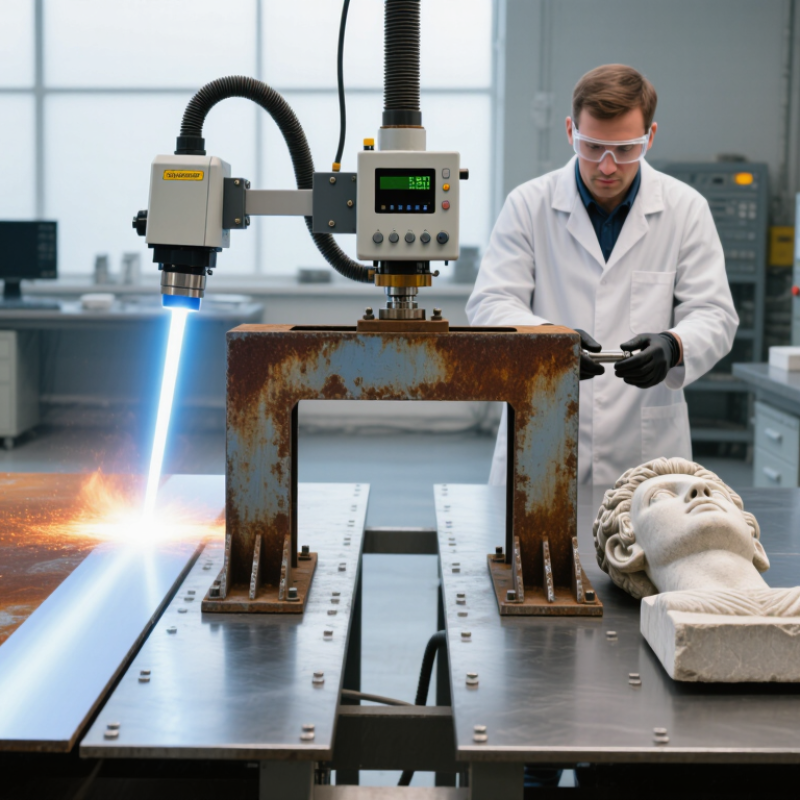
Laser cleaning equipment uses a focused beam of light to loosen or remove unwanted material from a surface. A typical system includes a laser source, a handheld or automated scanning head, controls, and protective equipment. Some setups also use extraction to capture dust or fumes released during cleaning. The beam can remove rust, paint, oil, oxide layers, or residue from tools, metal parts, molds, and selected stone surfaces. It usually works without abrasive contact, so it can reduce wear on the underlying material.
The operator adjusts settings such as power, pulse rate, and scan speed for the material and the layer being removed. For example, a rusty steel bracket may need different treatment from a thin painted panel. A small test area helps reveal whether the surface is changing too. This matters because excessive heat or an unsuitable setting can discolor, roughen, or damage the base material. The process is precise, but not effortless.
Laser cleaning is useful in maintenance, restoration, manufacturing, and preparation before coating or welding. It can reach corners and narrow grooves, though access depends on the scanning head and the part’s shape. Operators need training, suitable eye protection, and controls for nearby people and reflective surfaces. Extraction may be necessary, depending on what the laser removes. Results vary with the coating, substrate, and machine settings; clean-looking does not always mean damage-free.



 Close