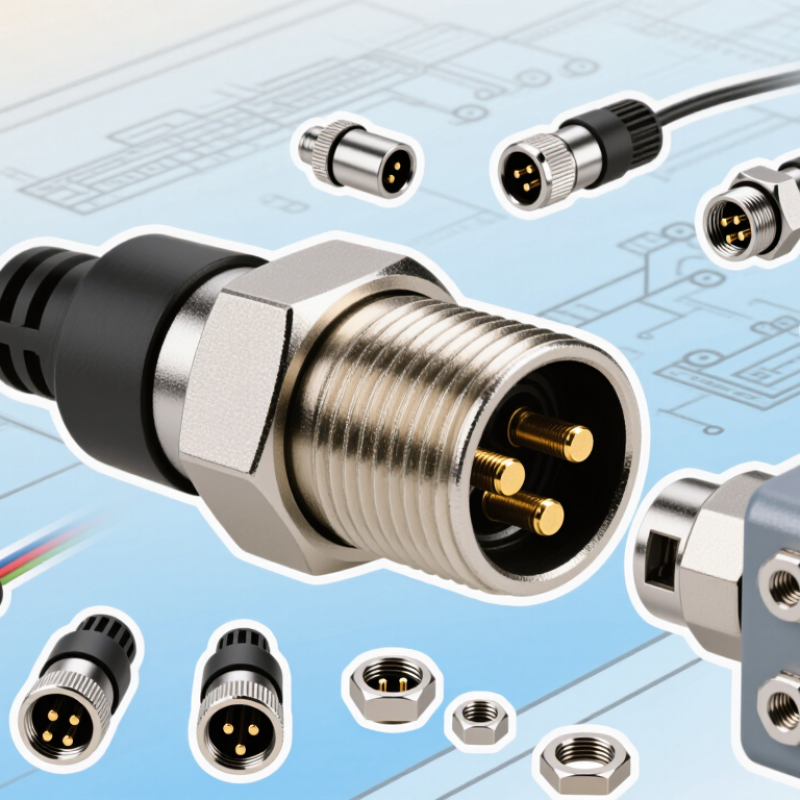
| Connector family | M12 circular connectors use a nominal 12 mm threaded coupling interface. | The M12 designation describes the coupling size; it does not by itself specify the connector’s electrical rating, pin count, or environmental protection. |
| Common coupling thread | M12 × 1 is commonly used for the threaded coupling. | Check the product drawing and mating-interface specification before assembly; the thread alone does not guarantee compatibility or sealing. |
| Power-connector coding | M12 power connectors are available in different codings, including L-, T-, S-, and K-coding. | Coding helps distinguish connector configurations and reduce mismating. Select matching plug and receptacle types for the intended application. |
| Contacts and ratings | Contact count, rated voltage, rated current, and wire range depend on the specific connector design and applicable specification. | Use the ratings stated for the exact connector, cable, and mating pair. Do not infer electrical capacity from the M12 size or IP rating. |
| IP67: first digit | The “6” indicates dust-tight protection under the IP code. | When tested as specified, dust ingress is prevented from entering the enclosure in a quantity that would interfere with operation or safety. |
| IP67: second digit | The “7” indicates protection against temporary immersion under the specified test conditions, generally up to 1 m for 30 minutes. | IP67 is not a claim of suitability for continuous underwater use, high-pressure washing, or every chemical and temperature condition. |
| Mating and sealing condition | An IP67 rating applies only in the configuration and conditions stated by the connector manufacturer. For many connector assemblies, the interface must be fully mated and correctly sealed. | Align the connector, engage the coupling correctly, and tighten it as specified. A loose or partially mated connection may not maintain the stated protection. |
| Unmated connectors | An unmated connector may require a suitable sealing cap to achieve its specified ingress protection. | Do not assume an open receptacle or plug remains IP67. Protect unused interfaces with the specified cap and seal. |
| Installation checks | Inspect sealing surfaces and gaskets for dirt, damage, displacement, or wear; follow the specified assembly and tightening instructions. | Contamination, damaged seals, incorrect assembly, or cable-entry problems can compromise protection even when the connector is marked IP67. |
| Application limits | IP67 describes ingress protection against dust and temporary immersion, not electrical performance or resistance to every environmental hazard. | Also verify temperature range, vibration resistance, chemical compatibility, cable requirements, and electrical ratings for the operating environment. |



 Close