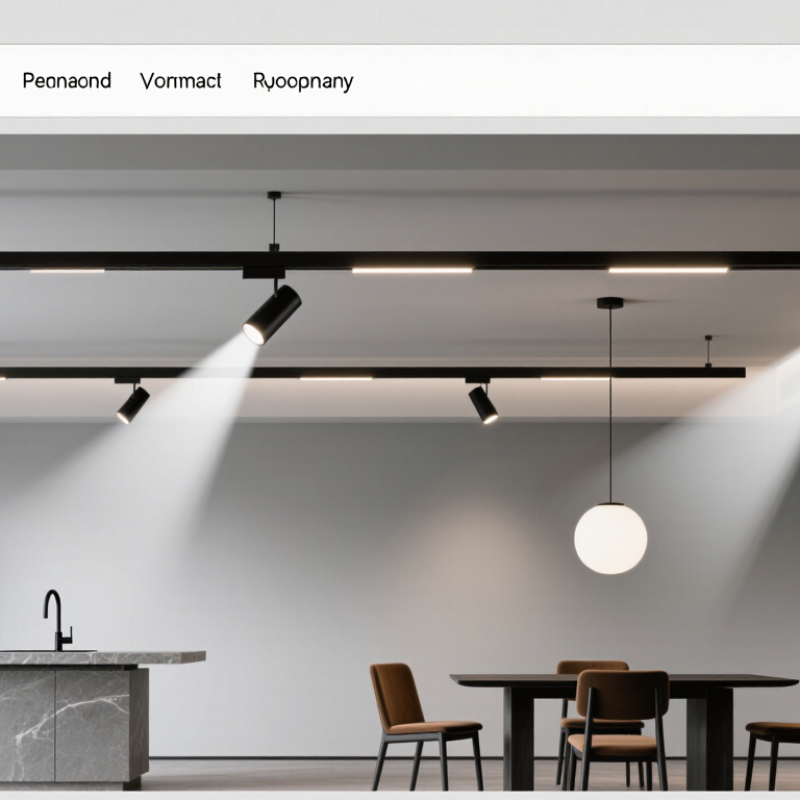
| Basic definition | A modular lighting system in which light fixtures attach to a track using magnetic force and connect to electrical contacts. | Fixtures can usually be moved or repositioned along a compatible track without rewiring each light. |
| Track | A linear housing that supports the fixtures and contains conductors that distribute electrical power. | Tracks are available in different system designs and may be surface-mounted, recessed, or suspended, depending on the product. |
| Magnetic attachment | Magnets help hold each compatible fixture in place on the track. | The magnetic connection supports installation and repositioning; electrical contacts on the fixture and track carry power. |
| Power supply | Many magnetic track systems use a driver to convert building mains electricity to the low-voltage output required by that system. | The driver must match the track’s specified input, output, and load requirements. Some system designs differ, so specifications should be checked before installation. |
| Electrical connection | Conductive contacts connect the fixture to the powered track. | Once a compatible fixture is correctly seated, the contacts complete the connection and supply power to its light source. |
| Fixture options | Depending on the system, fixtures may include spotlights, linear lights, or other module styles. | Different beam angles and fixture types can provide accent, task, or general illumination within one coordinated track layout. |
| Position and direction | Many fixtures can slide along the track, and some spotlights can be aimed. | Users can adjust light placement to suit a room layout, display, or work area, while following the fixture’s installation instructions. |
| Dimming | Dimming availability depends on the driver, fixtures, and control method used. | All components in the setup need to be compatible with the selected dimmer or control system. |
| Compatibility | Magnetic track products are not automatically interchangeable across systems. | Check the track and fixture specifications for matching system type, voltage, contact arrangement, and mechanical fit. |
| Typical benefit | A reconfigurable lighting layout with a clean, continuous track appearance. | It can make it easier to change fixture positions or types than a layout where each light is permanently wired at a fixed point. |



 Close