What is OEM Blade Grinder and How Does It Work?
In the competitive landscape of manufacturing, the "OEM Blade Grinder" emerges as a vital tool for precision and efficiency. Industry expert James Thompson, a leading consultant in manufacturing technology, states, "The quality of your blades can define the performance of your entire operation." This highlights the significance of using advanced grinding equipment like the OEM Blade Grinder.
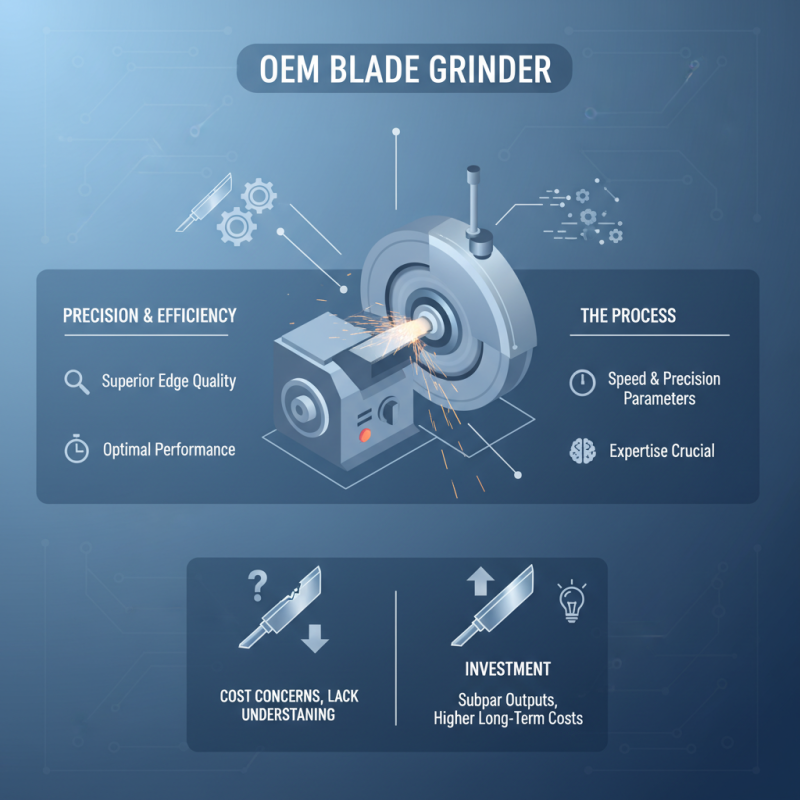
An OEM Blade Grinder is engineered to deliver superior edge quality for cutting tools. This precision machine ensures that every blade is finely honed, resulting in optimal performance. The grinding process is complex. It involves various parameters, such as speed and precision. Each setting can impact the final product quality, which means expertise is crucial.
Despite its advantages, some manufacturers still overlook the importance of investing in an OEM Blade Grinder. Cost concerns and lack of understanding are common barriers. However, neglecting this technology can lead to subpar outputs, grinding inefficiencies, and higher long-term costs. Reflection on these choices is essential for growth and improvement in the industry.
What is an OEM Blade Grinder?
An OEM Blade Grinder is a specialized tool for sharpening blades. It ensures precision and efficiency in maintaining cutting tools. The device is essential in industries like manufacturing and food processing, where sharp blades are crucial. According to a report by the National Tooling and Machining Association, well-maintained tools can lead to a 15% increase in productivity.
The grinder uses advanced technology to achieve consistent results. Operators load blades into the machine, which then automatically adjusts and sharpens them to desired specifications. This process not only saves time but also minimizes human error. An estimated 25% of companies report decreased operational costs after implementing automated grinding solutions.
However, not all grinders are created equal. Some machines may lack the capability to handle various blade types. This limitation can lead to operational inefficiencies. Additionally, regular maintenance of the grinder itself is critical. Neglecting this can cause inaccurate sharpening, resulting in wasted materials and increased downtime. Engaging with OEM Blade Grinders requires careful consideration to fully leverage their potential.
Key Components of an OEM Blade Grinder
An OEM blade grinder is a specialized machine designed for precision grinding of blades. Understanding its key components can help users appreciate how it operates and its importance in manufacturing.
The grinding wheel is paramount. Made from abrasive materials, it’s responsible for refining blade edges to achieve sharpness. This wheel spins at high speeds, requiring a sturdy motor. A reliable motor ensures consistent performance and longevity. Equally important is the cooling system, which prevents overheating during operations. Without proper cooling, the blades and machine can suffer damage.
Another critical component is the adjustable feed mechanism. This allows operators to control the blade’s angle and depth during grinding. Precision in adjusting these settings is vital for achieving optimal sharpness. Additionally, the frame and chassis of the grinder must be robust to minimize vibrations. Excessive vibrations can lead to inaccuracies and affect the quality of the grind. A balance between performance and stability is essential for effective grinding operations.
How OEM Blade Grinders Operate: A Step-by-Step Process
OEM blade grinders are essential tools in many industries. Understanding how these grinders operate can help optimize performance and efficiency. The functioning of these grinders involves several key steps.
Initially, materials are fed into the grinding chamber. Advanced sensors detect the thickness and type of material, ensuring proper adjustments. The grinding blades, which often operate at high RPMs, are designed for precision. Common materials processed include metals, plastics, and composites. According to industry reports, improper material handling can lead to a 15% increase in waste.
Once the material enters, blades rotate to achieve the desired size. Continuous monitoring maintains consistent quality. Challenging materials can complicate the grinding process. Operators sometimes face difficulties in achieving uniformity. A recent study noted that 32% of operators reported inconsistent results when handling varied materials. Continuous training on these specific challenges can enhance reliability and performance. Overall, the operational sequence of OEM blade grinders provides crucial insights into their efficiency and challenges.
OEM Blade Grinder Overview
Benefits of Using OEM Blade Grinders in Manufacturing
OEM blade grinders offer significant advantages in manufacturing. They enhance precision, allowing for a more consistent finish on products. According to recent industry reports, machines in this category can improve productivity by up to 30%. This boost is crucial for companies looking to optimize their operations and reduce waste.
Using OEM blade grinders can also lead to improved safety in the workplace. A more precise cut reduces the risk of accidents during the manufacturing process. Workers can focus on their tasks with fewer interruptions. Companies have noted a decrease in injury-related downtime by as much as 15% after implementing these grinders.
Tips: Regular maintenance is key. Schedule routine checks to ensure optimal performance. Pay attention to wear and tear on blades to avoid costly errors. Quality assurance processes are essential. They can catch potential flaws early, saving time and resources.
Investing in OEM blade grinders may require upfront costs, but the long-term benefits justify it. Enhanced efficiency and improved safety can lead to a more profitable operation. Companies must evaluate their needs and analyze potential ROI meticulously. Continuous adaptation is necessary to keep up with market demands and innovations.
What is OEM Blade Grinder and How Does It Work? - Benefits of Using OEM Blade Grinders in Manufacturing
| Feature | Description | Benefits |
| Precision Grinding | Offers high accuracy in grind settings for blade production. | Enhances product quality and consistency. |
| Versatility | Can grind various types of blades, including those for industrial use. | Increases manufacturing capabilities and flexibility. |
| Efficiency | Streams the grinding process, reducing cycle times. | Lowers production costs and boosts output. |
| Ease of Use | User-friendly interfaces allow for quick setup and operation. | Reduces training time and operational errors. |
| Durability | Designed for long-lasting performance with minimal maintenance. | Maximizes uptime and reduces replacement costs. |
Common Applications of OEM Blade Grinders in Various Industries
OEM blade grinders play a crucial role in various industries, particularly in manufacturing and metalworking. These machines are designed to sharpen blades, cutting tools, and other components, ensuring they maintain peak performance. With advancements in technology, the efficiency of these grinders has significantly improved, yielding better precision and faster processing times. In 2022, reports indicated that the global market for industrial blade sharpening equipment reached approximately $250 million.
Common applications of OEM blade grinders can be found in the woodworking industry. Here, they sharpen tools used in milling and cutting processes. For instance, saw blades benefit greatly from regular sharpening, resulting in cleaner cuts and extended tool life. The food processing industry also utilizes these grinders. A well-sharpened knife ensures food safety and enhances operational efficiency.
Tips: Regular maintenance of OEM blade grinders improves their performance. Keeping the equipment clean minimizes wear and tear. Additionally, operators should receive proper training on the machines. This ensures safe and optimal operation, reducing the risk of accidents or machine damage. Adopting these practices supports sustainability efforts in manufacturing. Remember, an improperly maintained grinder can lead to costly mistakes and downtime.



 Close
Close