Our company only collects the necessary data and respects your privacy, in accordance with the General Law for the Protection of Personal Data 13.709/2018. By continuing, you confirm that you have read and accepted the Privacy Notice.
Privacy Policy.
Choose a company Medal of Group Medal
Close
Medal Group
Pantone-Matched Air Fryer Housings: How Color Customization Works at the Factory Level
TL;DR
Send the factory the complete Pantone reference, a physical swatch, and a list of the exterior parts to match.
Evaluate any molded-in color or coating on the agreed housing material and finish, then approve the appearance on an assembled pre-production unit.
Define how the factory will judge color, gloss, and adjacent-part matching before mass production.
Keep a signed reference sample and use it for first-run inspection and future orders.
For a custom color air fryer OEM project, use the Pantone reference to start matching and the approved production-intent housing to release the order. The factory translates the target into a resin color or an exterior coating, makes samples, and checks the finished assembly under agreed lighting. The purchase specification then records the reference sample, the acceptable appearance range, and how subsequent lots will be checked. This matters on a matte housing because a flat chip can match the target while a curved surface or adjacent handle still looks different.
What should the buyer send the factory for a Pantone match?
Specify the full Pantone identifier and physical reference alongside a marked-up list of the parts that share the color. Include the color system and any suffix on the reference. A brand guide can also identify whether the housing should coordinate with its packaging or an appliance already on the shelf. Supply that physical sample if the visual relationship matters. Pantone provides polypropylene reference chips with glossy and matte areas for specifying colors on hard goods. Use the chip to communicate the target and a sample in the actual housing material to approve the result. See Pantone Plastic Standard Chips.
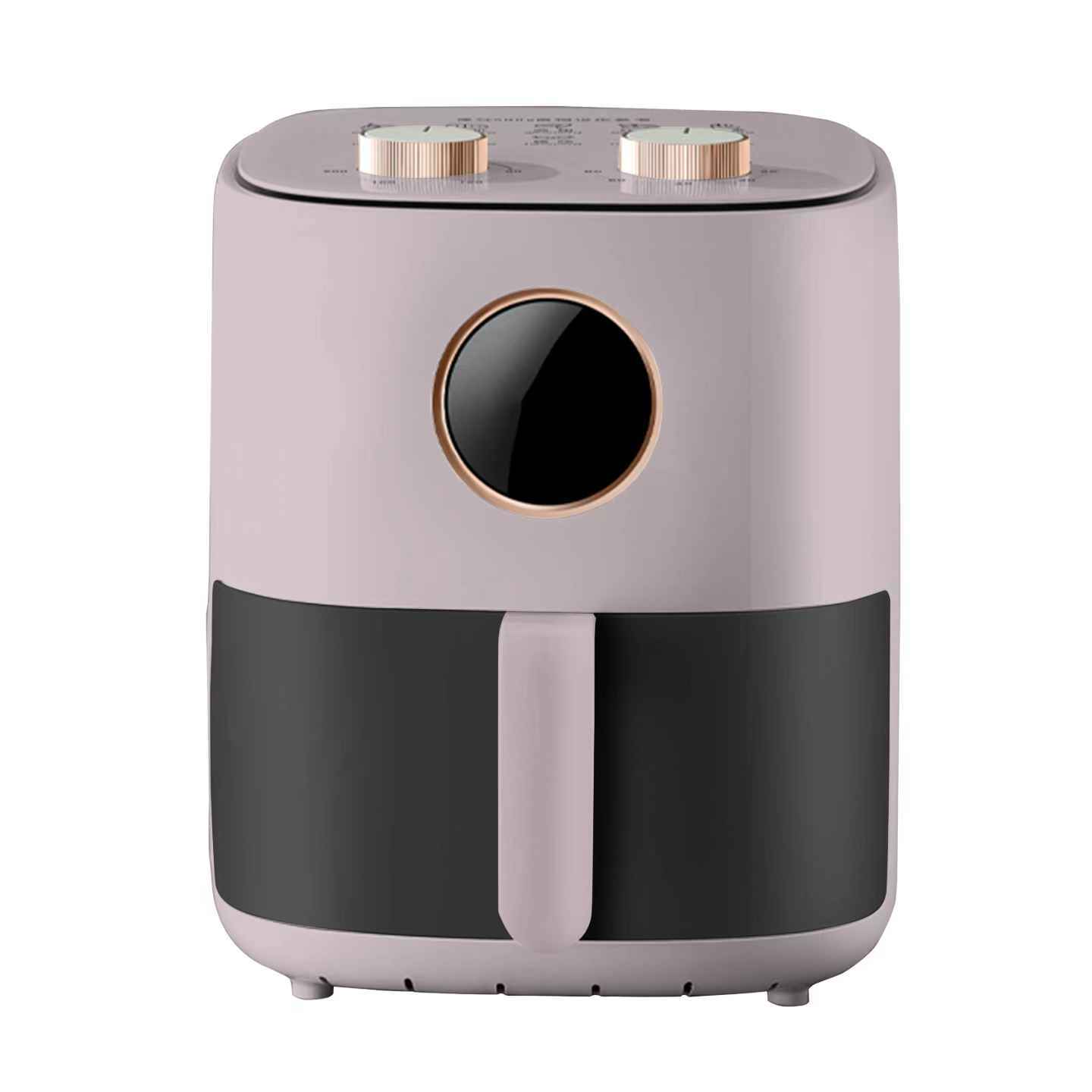
For a model-specific brief, start with Anzhi's YC-601 mechanical air fryer. The product page describes a matte ABS body and mechanical knobs. Mark which visible surfaces should carry the brand shade, such as the main housing, and which should retain their current color, such as the controls or handle. If those parts also need a match, ask for their substrates and finishes to be listed in the quote. The product page identifies the body material. The materials and finishes of the remaining parts need to be confirmed by component.
Anzhi's YC-601 product photo shows exterior parts that can be marked individually in a color brief, including the housing, top controls, and drawer handle.
Agree which physical sample takes precedence when the brand swatch, an existing product, and packaging differ. A printed carton and a textured plastic housing interact with light differently. A coordinated palette may be acceptable across the carton and appliance, while the brand may require a closer visual match between the shell and a trim piece on the same unit. Give each supplier the same approved reference and state which surfaces customers will see together.
How does the factory put the color on the housing?
For a molded-in color, sample the pigment formulation in the specified production resin and surface texture. A masterbatch is a concentrated blend of colorants in a carrier resin that can be metered into the base resin. Another route is to use pre-colored resin. Either route needs a trial that represents the production material and molding conditions. A change in the base resin, colorant loading, or molded texture can shift the appearance even when the same Pantone identifier stays on the order.
For a coated housing, approve the coating on the actual substrate with the intended preparation, film build, and cure. Coating can be evaluated when the brief calls for an appearance that the molded surface cannot reproduce directly. It adds a finishing operation and introduces failure modes such as rub-through or poor adhesion. Ask to see edges, seams, and other visible locations where coverage can vary. For an exterior that users regularly touch and wipe, agree on checks for adhesion, handling wear, cleaning exposure, and appearance after representative use.
Confirm route availability against the selected model and finish. Anzhi describes appearance customization as part of its services. For a YC-601 inquiry, ask which finishes and processes can be supported on the proposed parts and who owns the color formulation and approval records. See Anzhi's manufacturing and customization overview.
Color process options for an exterior housing
Decision factor
Molded-in color
Applied coating
Where the color resides
Colorant is distributed in the molded resin.
Color is applied as a film over the part.
How the finish is developed
Evaluate the color with the production resin and mold texture.
Evaluate the coating system on the specified substrate and texture.
What inspection should cover
Check shade, gloss, and visible molding variation across sampled parts.
Check shade, gloss, edge coverage, and the specified coating durability.
What can shift across lots
Resin and pigment batches, dosing, and molding conditions can influence appearance.
Substrate shade, application conditions, film build, and cure can influence appearance.
What drives scheduling
Confirm color material availability, changeover, and batch size.
Confirm coating availability, finishing capacity, and cure or handling time.
Which samples should be approved before production?
Use a flat trial plaque to refine the shade, then approve the actual housing because curvature, texture, and reflections affect perceived color. Have the supplier identify the plaque material and gloss. Review the plaque against the physical reference before requesting parts. At the housing stage, look at the front and sides at the angles a shopper would see on a shelf. Dark and light bands that move as the housing is rotated can point to reflections or gloss differences. Compare the same zones under consistent lighting before asking for a pigment change.
Approve the assembled air fryer when the housing, knobs, handle, and trim are expected to look coordinated. If two parts match alone but look different along a seam, inspect them together under the agreed light sources and from normal viewing angles. A slight shift on a rear panel may be acceptable while the same shift on a front seam is conspicuous. Define priority surfaces in the approval paperwork so inspectors can make the same decision the buyer made.
On the YC-601, include the markings around the mechanical knobs in the assembled review if the top panel changes color. Confirm that the timer and temperature markings remain readable from the normal operating position under the agreed lighting. If the artwork changes to maintain contrast, approve the printed markings on a finished panel and record the artwork revision with the color sample.
Retain duplicate signed reference samples for the buyer and factory, with an ID, approval date, model revision, and reference to the agreed material and finish. When acceptable variation is easier to show than to describe, add approved boundary samples that illustrate specific limits such as a slightly darker housing or a higher-gloss edge. Attach photographs to identify the areas being judged and keep physical samples available for the actual comparison.
How should the purchase specification define an acceptable match?
Pair numeric color measurement on suitable surfaces with a visual check of the assembled appliance. Delta E is a calculated distance between two sets of measured color coordinates. Record the formula, instrument setup, illuminant, observer setting, and measurement locations in the inspection plan, then agree on the permissible difference during sampling. If a curve or grain makes readings inconsistent, select a repeatable area or a controlled witness plaque and keep a visual check for the finished part. For the calculation and visual-appraisal methods, see ASTM D2244 and ASTM D1729.
Check the housing under agreed primary and secondary lighting when a close match must hold in both retail displays and kitchens. Metamerism is when two surfaces appear to match under one light source but differ under another because their spectral reflectance differs. If the front trim matches the shell in simulated daylight but shifts under lighting representative of the store, agree which lighting conditions determine acceptance before the order is released.
Specify gloss separately when matte appearance is part of the brand design. Adjacent pieces can have similar measured color yet appear different because they reflect light differently. Agree on the finish reference and, where measurable, the gloss geometry and test area. On textured or curved parts, use a repeatable measurement position and review the full front assembly visually. See ASTM's coating standards listing for D523 specular gloss measurement.
How can a buyer keep the color consistent across orders?
Compare first-off production parts with the signed master before releasing the run, and tie inspection records to the material lots used. Agree when to resample, such as after a material changeover, a new pigment or coating lot, or a shift to another mold cavity if the tool has multiple cavities. Confirm who can stop and hold suspect units, how affected cartons will be identified, and how the next acceptable run will be verified. For reorders, keep the approved master protected from strong light and handling damage so the reference itself stays suitable for comparison.
Review material and finishing changes for both appearance and appliance validation before approving them. A revised resin grade, new pigment package, or added coating can raise questions about heat exposure, cleaning resistance, marking legibility, and the documentation for the intended market. Ask the factory to identify the changed parts and applicable checks. An exterior color approval covers cosmetic appearance. Specify any changes to the cooking basket or food-contact surfaces separately and request evidence for those materials and intended uses.
Before quoting a launch and repeat order, ask for the minimum batch by color, the sample and approval schedule, material availability, and any commitments associated with a dedicated resin or coating batch. Get the quote to distinguish a shell-only change from matching multiple parts. If retail photography has an early deadline, schedule it after the assembled sample is signed off so the photographed finish reflects the approved appearance.
When a batch misses the shade target, compare the first affected parts with retained samples before changing the color formulation. A shift that follows a new resin lot points to different checks from a shift that appears only on a particular cavity or coating line. Ask for readings and visual observations from the same locations under the original inspection conditions. A record of when the mismatch first appeared helps the supplier determine which lots to hold and which parts to resample.
What should go in the first OEM inquiry?
For a custom-color air fryer quote, send the model, target market, expected volume by color, full Pantone identifier, and a marked-up photo showing the parts to change. Add the physical reference, finish preference, any adjacent parts that must match, and the planned launch date. Ask the supplier to propose a color route, a sample sequence, and a production acceptance method. For an Anzhi project, submit the brief via the Anzhi inquiry page and request confirmation of the exact model configuration before finalizing packaging artwork or placing the order.
Frequently asked questions
Can a factory quote from a Pantone number alone?
A full Pantone identifier can support an initial feasibility review. A physical reference, an agreed finish, and an approved production-intent sample give both parties a practical basis for accepting the finished color.
Can the matte housing and glossy handle use the same Pantone target?
They can share a starting target, but their materials and gloss can create a visible difference. Evaluate them side by side in the assembly and approve a component-specific shade adjustment if it improves the overall match.
What Delta E limit should a buyer request?
Set the limit during sampling using the chosen formula, instrument settings, part geometry, and visual acceptance criteria. Agree on approved samples that represent the acceptable appearance, especially near the proposed limit.
Does custom color require a new mold?
A color change may be feasible on existing tooling when the part geometry, resin compatibility, and surface texture support the selected process. A different texture or geometry can change the tooling scope, so confirm the proposed finish and manufacturing route before approval.
How can a retailer approve color remotely?
Ask the factory to send duplicate physical samples from the same trial and use comparable viewing conditions at both locations. Use photographs to document the sample identity and inspection areas, then record the physical sample ID on the approval.
Can the same shade be repeated on a reorder?
Reorders can be checked against the retained master using the original material, finish, and inspection specifications. Require a new review if the supplier changes a material, colorant, coating source, or tool finish that can affect appearance.



 Close