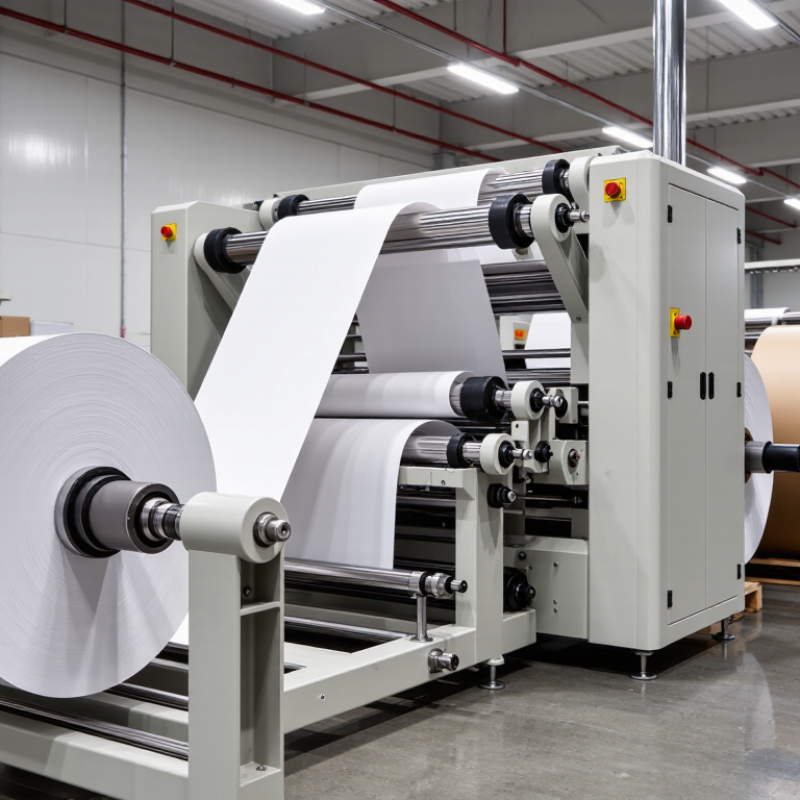
| Definition | A paper roll slitting machine is a converting machine that cuts a wide parent roll of paper into narrower rolls. | The finished rolls are made to specified widths and may also be rewound to a required diameter or roll format. |
| Primary purpose | It prepares paper in widths suitable for downstream manufacturing, packaging, printing, or end use. | Slitting helps match the roll format to the requirements of equipment such as printing presses, paper converting lines, and packaging machines. |
| Feed material | The input is usually a large paper roll, often called a parent roll or jumbo roll. | Paper grades can include printing paper, kraft paper, tissue, and coated or uncoated papers. Machine settings depend on the grade and roll properties. |
| Basic process | The paper web is unwound, guided through the cutting section, divided lengthwise, and rewound into narrower rolls. | Some machines also include edge trimming, web tension control, and automatic roll handling. |
| Cutting methods | Common methods include rotary shear cutting and razor cutting. | The suitable method depends on the paper grade, thickness, required edge quality, production conditions, and machine design. |
| Main components | Typical components include an unwind stand, web-guiding system, slitting section, tension controls, and rewind stations. | Specific configurations vary; some machines use differential winding or automated knife positioning for particular production needs. |
| Key operating variables | Important variables include web tension, cutting-tool condition and alignment, line speed, and rewind pressure. | Incorrect settings can contribute to issues such as uneven edges, wrinkles, telescoping rolls, or loose winding. |
| Finished product | The output consists of one or more narrower rolls, commonly called slit rolls or finished rolls. | Roll width, diameter, winding tightness, and core specifications are selected according to the next process or customer requirements. |
| Quality checks | Operators commonly check roll width, edge condition, winding consistency, and roll appearance. | Additional checks may include roll diameter, roll weight, splice condition, and whether the finished roll meets the specified tolerance. |
| Typical applications | Slit paper rolls supply printing, packaging, tissue converting, and other paper-processing operations. | The machine does not manufacture paper; it converts an existing wide roll into narrower rolls for subsequent use. |



 Close