What is a Piston Filler and How Does It Work?
The Piston Filler stands as a popular choice in the packaging industry. It is known for its effectiveness in filling liquids and semi-liquids into containers. Made for both small-scale and large-scale production, this machine provides precise volume control. Understanding how a Piston Filler operates is crucial for manufacturers seeking efficiency.
This device employs a piston mechanism, allowing for consistent and accurate filling of products. When the piston moves, it creates a vacuum effect that draws the liquid in. As the piston moves back, the liquid is pushed out, filling the container. This process is swift, enhancing production speeds. However, it's essential to maintain the equipment regularly to prevent operational issues.
Implementing a Piston Filler can elevate a production line, but it comes with challenges. Operators must be trained adequately to ensure optimal performance. Additionally, improper setup can lead to inconsistent fills, wasting both time and resources. Evaluating these factors is vital in making an informed decision before integrating a Piston Filler into your processes.
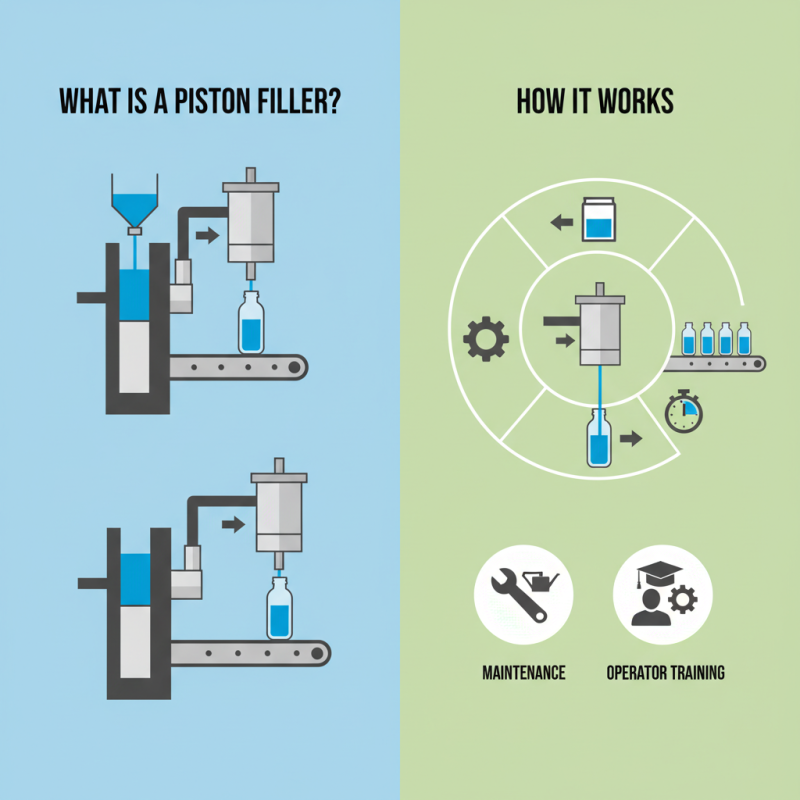
What is a Piston Filler?
A piston filler is a type of filling machine commonly used in various industries. It operates by using a piston mechanism to draw liquid into a chamber. The piston then pushes the liquid through a nozzle, filling containers with precise amounts. This method ensures accuracy and consistency.
The design of a piston filler allows it to accommodate different viscosities. Thick or thin liquids can be handled efficiently. However, adjustments may be necessary for optimal performance. Operators should pay attention to the filling speed and pressure. These factors can impact product quality.
In practice, users often face challenges. Cleaning the machine and maintaining it can be time-consuming. Proper training is essential for staff. Mistakes in setup can lead to spills or underfills. Over time, experience helps improve operational efficiency. Users may need to refine their processes continually. This ensures that the piston filler delivers reliable results consistently.
Key Components of a Piston Filler
A piston filler is a type of liquid filling machine widely used in various industries. Understanding its key components is essential for efficient operation. The system primarily consists of a piston, cylinder, hopper, and control panel. Each part plays a critical role in achieving accurate and consistent filling.
The piston is responsible for drawing liquid from the hopper into the cylinder. It creates a vacuum that pulls the liquid in. Industry reports show that proper maintenance of the piston enhances its lifespan and responsiveness. The cylinder, where the liquid is held, must be precisely calibrated. Any discrepancies here can lead to improper fills, potentially leading to waste or customer dissatisfaction.
The control panel provides operators with access to settings for speed and volume. User-friendly interfaces are crucial in reducing errors. Research indicates that machines with intuitive controls can decrease filling time by up to 15%. However, many operators overlook the importance of regular calibrations. This oversight can cause variations in filled volumes, which can affect product quality. Attention to detail here is paramount for maintaining efficiency and reliability in the filling process.
Mechanism of Operation for Piston Fillers
Piston fillers are common in various industries. They are designed to handle a wide range of liquids and pastes. Their operation relies on a straightforward yet effective mechanism. A piston draws liquid into a chamber through a suction action. Once the chamber is filled, the piston pushes the liquid out through a nozzle. This is ideal for achieving precise and consistent fills.
Tips: Regular maintenance of your piston filler will ensure optimal performance. Check seals and gaskets for wear and tear. This can prevent costly leaks and downtime.
The fill volume can be adjusted easily. By changing the stroke length of the piston, you adjust how much liquid is dispensed. This adaptability makes piston fillers suitable for both small and large production runs. However, calibration can sometimes be tricky. Improper settings might lead to inconsistent fills, which can affect product quality.
Tips: Always conduct test runs after adjustments. This helps to verify the accuracy before full-scale production. Not all products behave the same way in a piston filler, so staying attentive is key.
Applications of Piston Fillers in Various Industries
Piston fillers are widely used in various industries, offering precise filling solutions. In the food and beverage sector, for instance, these fillers are essential for packaging sauces, pastes, and viscous liquids. According to a recent market analysis, the food and beverage industry accounts for nearly 40% of the global piston filler market. This highlights the critical role these machines play in maintaining product quality and consistency during filling.
Pharmaceutical companies also make extensive use of piston fillers. They need high accuracy for filling medicines and vaccines. A report from the International Journal of Pharma Research states that around 30% of all pharmaceutical products are filled using piston technology. This precision reduces waste and ensures correct dosages, which is vital for patient safety. However, challenges like contamination and mechanical failure can arise, necessitating regular maintenance and quality checks.
In the cosmetics industry, piston fillers are used for creams and lotions. The texture and viscosity of these products require specialized filling solutions. Industry experts claim that the cosmetic market will see a growth rate of 5% annually, increasing demand for reliable filling equipment. Yet, businesses must remain vigilant regarding equipment efficiency and potential downtime. The effective implementation of piston fillers can significantly enhance productivity while addressing these challenges.
Advantages and Disadvantages of Using Piston Fillers
Piston fillers have gained popularity in various industries for their efficiency. These machines excel in filling liquids, creams, and pastes. They utilize a piston mechanism to control the fill volume precisely. However, they come with both advantages and disadvantages.
One significant advantage of piston fillers is their accuracy. According to industry reports, they achieve a fill precision rate of up to 99.5%. This level of accuracy is crucial for companies looking to minimize waste and ensure consistent product quality. Additionally, they can handle a wide range of viscosities. This makes them versatile for different products, from thin liquids to thicker creams.
On the downside, piston fillers may require frequent maintenance. Their mechanical components can wear down, leading to downtime. Regular checks are essential to maintain performance. Furthermore, the changeover process for different product types can be time-consuming. Companies must weigh these potential setbacks against the benefits. Ensuring staff training for proper operation is also critical. These factors highlight the need for careful consideration when integrating piston fillers into production lines.



 Close
Close 
