| Hand sickle | Curved blade, handle, and sometimes a toothed cutting edge. | The operator cuts rice stems by hand, usually close to the ground or at a selected cutting height. | Cut stalks are gathered and carried for drying, threshing, or further processing. | Small plots, irregular fields, and areas where larger machinery cannot operate easily. |
| Motorized reaper | Cutting bar, reciprocating knife, crop divider, reel or crop guide, engine, transmission, and wheels or tracks. | The crop dividers separate a strip of rice; the knife cuts the stems as the machine moves through the field. | Cut stalks are laid in rows or discharged to one side. Threshing is normally performed separately. | Small to medium fields where harvesting is mechanized but threshing is done as a separate operation. |
| Reaper-binder | Cutting bar, crop divider, gathering mechanism, tying or binding unit, twine supply, and power unit. | It cuts the rice, gathers the stalks, and ties them into bundles as it travels through the crop. | Bundled stalks are left in the field for collection and later threshing. | Farms that handle harvested rice in bundles rather than threshing it directly in the field. |
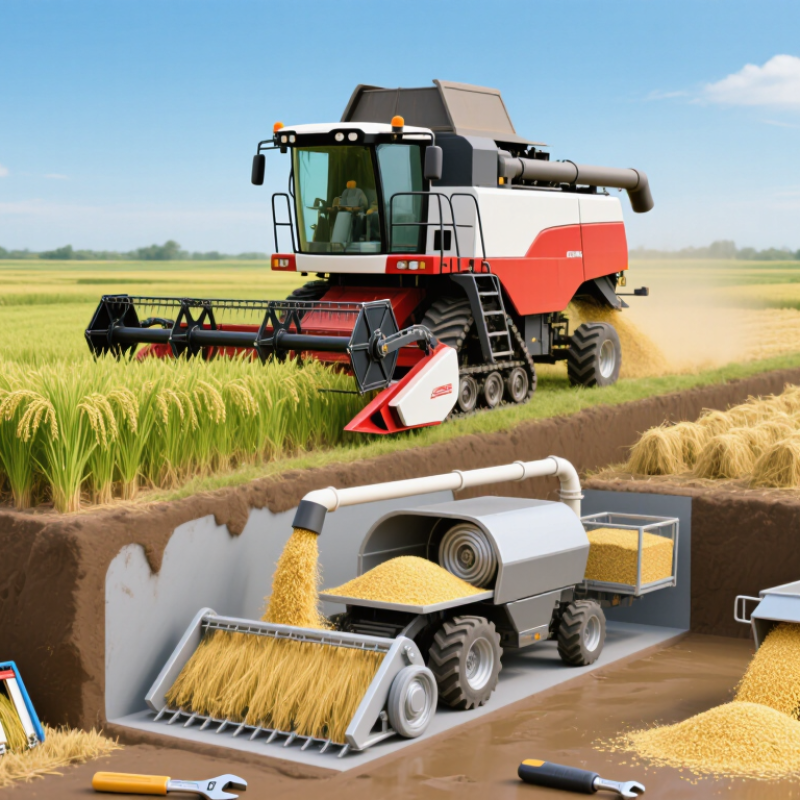
| Combine harvester | Header, reel or crop-lifting components, cutter bar, feeder, threshing drum or rotor, concave, separating system, cleaning sieves, fan, grain elevator, grain tank, and unloading auger. | The header gathers and cuts the crop. The feeder moves it to the threshing unit, which separates grain from the straw. Sieves and airflow remove chaff and other light material before grain enters the tank. | Cleaned grain is stored temporarily in the grain tank and unloaded; straw and chaff are discharged or spread behind the machine, depending on its configuration. | Large or accessible fields where cutting, threshing, and cleaning are carried out in one pass. |
| Tracked rice combine | Combine components, plus crawler tracks, track frame, and undercarriage drive. | It performs the same cutting, threshing, separating, and cleaning operations as a combine, while tracks distribute the machine’s weight over a broader contact area than many standard wheels. | Grain is collected in the tank for unloading; straw and chaff are discharged separately. | Soft, wet, or muddy paddy fields where flotation and traction are important. Suitability depends on field conditions and machine design. |
| Stationary rice thresher | Feeding platform, threshing drum or rotor, concave or threshing surface, separation area, blower or cleaning system, grain outlet, and power source. | Operators feed cut rice stalks into the machine. The rotating threshing unit loosens grain from the panicles; separation and cleaning components direct grain away from straw and chaff. | Grain is collected at an outlet or container, while straw and chaff are discharged separately. | Harvest systems in which rice is cut and transported to a fixed threshing location. |
| Axial-flow rice thresher | Feed inlet, axial rotor, perforated cage or concave, grain separation surface, cleaning fan, sieves, and grain outlet. | Crop material moves along the rotor while rotating action threshes the panicles. Grain passes through separation openings and is cleaned by airflow and sieves. | Separated grain exits through a collection outlet; straw and lighter residues leave through separate discharge paths. | Stationary threshing operations where the crop is fed continuously or in batches, according to the machine design. |



 Close