What Is a Rubber Mixing Mill and How Does It Work?
A rubber mixing mill is essential in the rubber industry. It prepares raw materials for production by blending them evenly. This process ensures the quality of rubber products. Understanding the mechanics of a rubber mixing mill is crucial.
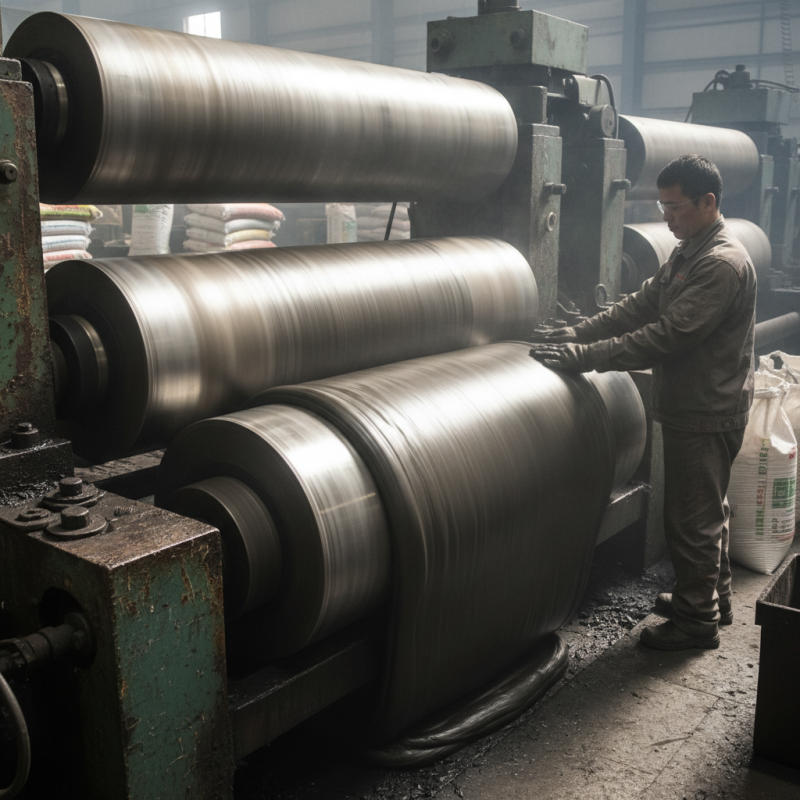
The 9 Rubber Mixing Mill has two main rolls that rotate. These rolls crush and mix the rubber compounds. Heat and friction are generated during this process, enhancing mixing efficiency. Workers operate these machines daily, but challenges arise.
Mills can malfunction or wear out over time. Regular maintenance is vital, yet often overlooked. Users should reflect on this aspect to ensure smooth operations. A well-functioning rubber mixing mill leads to better product consistency. Investing time in understanding these machines can yield significant benefits.
What is a Rubber Mixing Mill?
A rubber mixing mill is essential for processing rubber. It combines different rubber ingredients to achieve a uniform mix. The machine consists of two large counter-rotating rollers. These rollers apply pressure and heat, melting the rubber and blending the materials. Typically, the temperature is closely monitored during the process.
Tips: Ensure the rollers are clean before starting. Contamination can ruin a batch. Regular maintenance is crucial for consistent performance.
Operators must pay attention to mixing times. Over-mixing can cause the material to degrade. Under-mixing leaves lumps. It’s important to strike the right balance. Some operators may find it challenging to achieve the perfect mix.
The configuration of the mill also impacts the final product. Roll spacing and speed must be adjusted based on the rubber type. Experimenting with different settings can lead to improvements. Mistakes can teach valuable lessons but require careful consideration.
Key Components of a Rubber Mixing Mill
A rubber mixing mill is vital for the rubber industry. Its design comprises key components that ensure efficient mixing. There are rollers, a frame, and feeding systems. Each part plays a critical role in the milling process.
The rollers are large and heavy. They create shear forces to mix rubber thoroughly. Their surface texture affects the final product's quality. The frame supports the rollers and maintains alignment. It must be sturdy to handle the forces generated. Additionally, the feeding system controls how rubber enters the mill. An inconsistent feed can lead to uneven mixing.
Mixing parameters are crucial too. Temperature and speed need careful monitoring. Too high a temperature can degrade the rubber, leading to waste. Operators must adjust speeds according to the rubber type. Practicing these adjustments requires skill and experience. Mistakes in this process can result in defective batches. Continuous improvement is necessary for optimal output.
The Working Principle of a Rubber Mixing Mill
A rubber mixing mill is crucial in rubber manufacturing. Its primary function is to blend various ingredients, ensuring uniform distribution. This process enhances the properties of the final product, such as strength and elasticity. Typically, a rubber mixing mill consists of two large rollers. These rollers rotate in opposite directions, creating a shearing effect. This design allows for efficient mixing of compounds.
The working principle revolves around the mechanical interaction of the rubber and additives. Once the materials are fed into the mill, they are subjected to intense pressure and heat. According to industry reports, a well-mixed batch can significantly improve the performance of rubber products. Studies show that the right mixing can increase tensile strength by up to 30%.
**Tips:** Ensure the temperature is monitored closely. Overheating can degrade rubber quality. Mixing speed also matters. Finding the ideal speed balances energy use and mixing efficiency. Remember, inconsistency in batches may lead to quality issues. Regular maintenance of the mill is essential to prevent breakdowns and enhance longevity. Small adjustments can make a big difference in the mixing outcome.
Applications of Rubber Mixing Mills in Industry
Rubber mixing mills play a crucial role in various industries, particularly in the production of rubber products. These mills are essential in combining raw rubber with additives for optimal characteristics. The automotive and construction industries heavily rely on rubber mixing mills for manufacturing tires, seals, and gaskets. According to a recent report, the global rubber processing machinery market is expected to reach $6 billion by 2025, driven primarily by these applications.
Many manufacturers utilize rubber mixing mills to enhance product performance. For instance, in tire production, achieving a specific compound mix is vital for durability and safety. This requires precise control over temperature and mixing time, which can be quite challenging. Inconsistent mixtures can lead to product failures, which underscore the need for high-quality machinery and skilled operators.
Tips: Regular maintenance of mixing mills can prevent unexpected downtimes. Operators should be trained to monitor mix consistency carefully.
The pharmaceutical industry also employs rubber mixing mills for medical supplies. Mixing rubber with specific polymers ensures compliance with safety standards. However, the process is not without its challenges. Variations in materials can affect the final product, leading to concerns over quality control.
Tips: Implementing real-time monitoring systems can enhance quality assurance and reduce rework.
What Is a Rubber Mixing Mill and How Does It Work? - Applications of Rubber Mixing Mills in Industry
| Dimension | Description | Applications |
| Roller Diameter | Typically ranges between 150 mm to 1000 mm | Used in the production of rubber compounds |
| Roller Length | Usually between 300 mm to 2000 mm | Used for mixing, refining and homogenizing rubber |
| Speed | Typically 10 to 20 RPM for the front roller | Fine-tuning of material properties |
| Temperature Control | Can be heated or cooled depending on process | Enhances mixing effectiveness |
| Materials Processed | Natural rubber, synthetic rubber, and fillers | Production of tires, seals, and gaskets |
Maintenance and Safety Considerations for Rubber Mixing Mills
Maintaining rubber mixing mills is crucial for their efficiency and safety. Regular inspections can help identify potential issues before they escalate. Operators should check for signs of wear on rollers and gears. Lubrication is key. Ensure that all moving parts are well-oiled to avoid overheating or malfunction.
Safety practices are equally important. Operators must wear appropriate personal protective equipment (PPE). This includes gloves and goggles to prevent injuries from rubber chemicals. It's also essential to train all personnel thoroughly. Everyone should understand the machine's operation and emergency procedures. Regular safety drills can reinforce this knowledge.
In practice, not all maintenance tasks are straightforward. Some parts may require specialized tools or skills. Keeping a well-organized maintenance log can be beneficial. It helps track service history and predict when parts may need replacing. However, human error is always a possibility. Regular training sessions can mitigate risks associated with such oversights.



 Close
Close