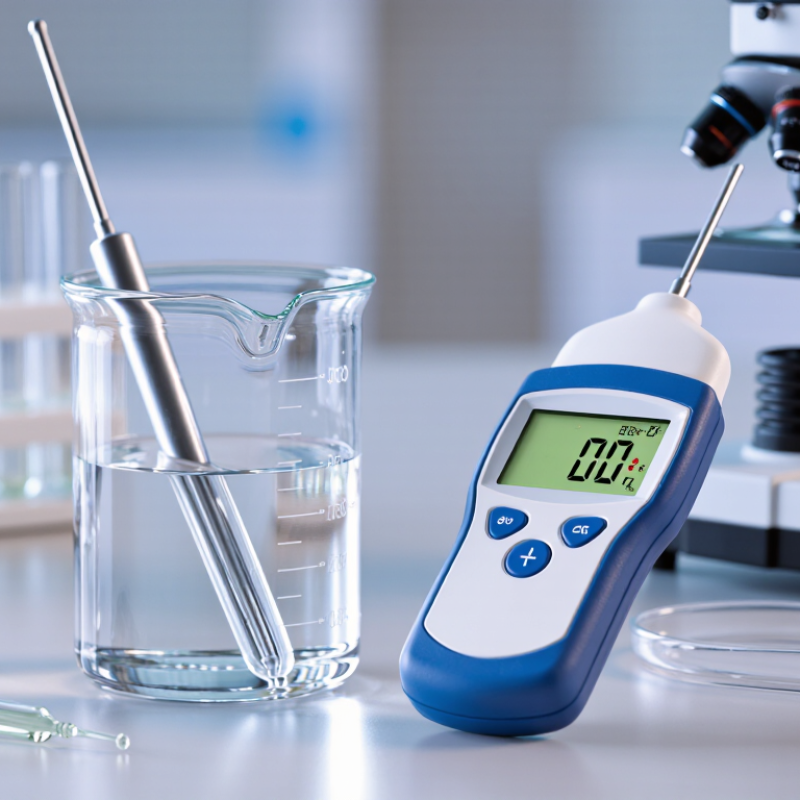
| Electrical conductivity | How readily the sample conducts electricity, which depends largely on the concentration and mobility of dissolved ions. | An electrode cell measures conductance or conductivity. The meter uses a calibration and, when selected, a temperature correction or seawater relationship to estimate salinity. | Conductivity is commonly reported in µS/cm or mS/cm. Salinity may be displayed as practical salinity (often written as PSS-78 or “PSU” on instruments) or as a concentration such as g/kg, depending on the method and calibration. | Fast, convenient, and well suited to repeated field or laboratory measurements. Temperature compensation is available on many meters. | Conductivity responds to all dissolved ions, not just sodium chloride. Results can be affected by temperature, electrode condition, bubbles, contamination, and the ionic composition of the sample. |
| Refractive index | The extent to which the sample bends light, measured with an optical refractometer. | The instrument measures refractive index and applies a calibration curve or scale to estimate salinity or dissolved-salt concentration. | Depending on the instrument and scale, readings may be shown as salinity, parts per thousand (ppt), or refractive index. | Quick measurement with a small sample volume. Handheld optical instruments can be useful for routine checks. | Temperature and sample composition affect the reading. A scale calibrated for seawater or sodium chloride may not give an accurate result for solutions with a different mix of dissolved substances. |
| Argentometric titration | The amount of chloride in a measured sample, determined by reacting it with a known silver nitrate solution. | A titrant is added until the specified endpoint is reached. Chloride concentration is calculated from titrant volume and concentration; salinity is estimated only when an appropriate relationship between chloride and total salts is valid. | Usually a chloride concentration, such as mg/L or g/L. A salinity value can be calculated where the sample type and method support that conversion. | Provides a chemical measurement of chloride and can be useful for checking or validating other measurements. | It is not a direct measurement of total dissolved salts. Other halides and endpoint detection can affect results; careful reagents, technique, and sample handling are required. |
| Temperature handling | Temperature is measured alongside the sample or controlled during measurement. | Conductivity and refractive index both vary with temperature. Instruments may compensate automatically, but compensation depends on the selected calibration or sample model. | Temperature is commonly displayed in °C or °F alongside the salinity-related result. | Recording temperature helps make measurements more comparable and supports correct interpretation. | Automatic temperature compensation does not correct for every difference in sample chemistry or replace proper calibration. |
| Calibration and checks | The instrument response against one or more solutions with known properties. | Use calibration standards appropriate to the measurement method and expected sample range, following the instrument’s procedure. Rinse and dry or blot the sensor as appropriate between samples. | A calibrated reading with the selected scale and units. | Regular checks help identify drift, residue, damaged sensors, or an unsuitable calibration range. | A calibration standard should match the method and intended measurement. A displayed salinity value is only as reliable as its calibration, sample handling, and assumptions. |



 Close