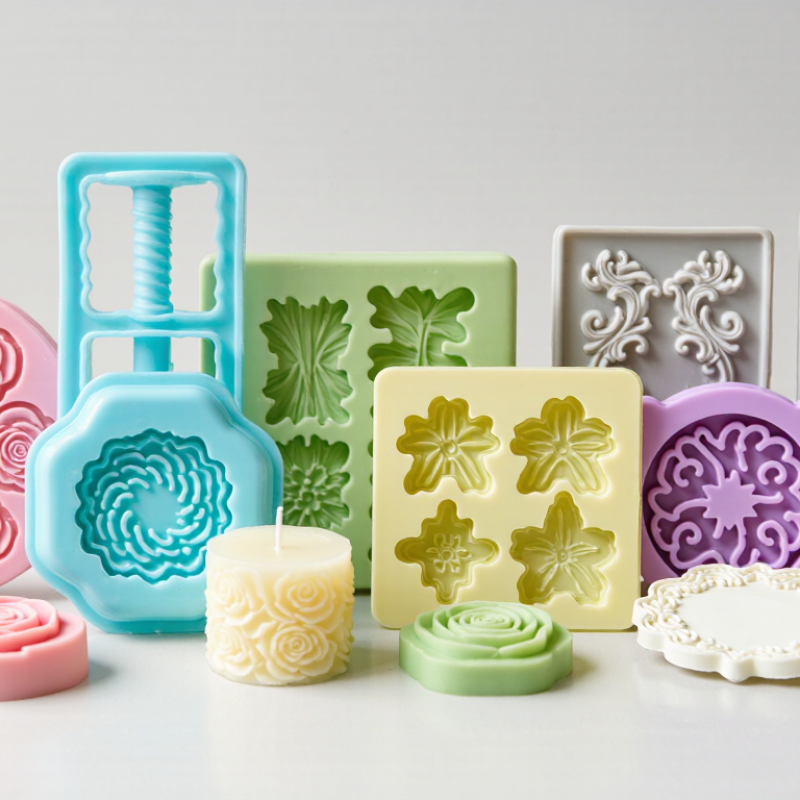
| Floral Molds | Fondant and gum-paste decorations, soap embellishments, candles, and craft projects | Individual flower details often range from about 1–5 cm across; multi-cavity sheets vary by design | Food-contact-rated silicone for edible decorations; craft silicone molds may also be used with suitable casting materials | Check petal detail, cavity depth, and how easily small finished pieces release from the mold |
| Geometric Coaster Molds | Resin, plaster, and concrete-style coasters or small decorative trays | Common coaster cavities are approximately 9–11 cm across, with shape and thickness varying by design | Resin, plaster, or casting mixes compatible with the mold and its manufacturer instructions | Compare cavity dimensions, finished-edge profile, and whether the design includes a level base |
| Leaf and Botanical Molds | Fondant accents, soap designs, resin pieces, and botanical craft decorations | Leaf cavities commonly measure about 2–8 cm long; larger plaques are available in some designs | Food-contact-rated silicone for edible use; otherwise, use materials approved for the mold type | Look for clear vein detail and a range of leaf sizes if buyers need coordinated sets |
| Lace and Filigree Molds | Cake borders, fondant panels, soap details, and decorative craft overlays | Often supplied as strips or panels; widths and lengths depend on the pattern and mold format | Fondant, gum paste, soap-making materials, or compatible craft compounds | Review pattern depth and flexibility, since intricate designs can require careful cleaning and release |
| Baroque and Scrollwork Molds | Decorative cake accents, furniture or craft embellishments, soap, and casting projects | Small motifs are often a few centimeters wide; plaque-style designs can be substantially larger | Food-contact-rated silicone for edible applications; compatible casting or modeling materials for crafts | Request clear images of the relief depth and check that the mold can flex around detailed edges |
| Brick and Stone Texture Molds | Miniature scenes, model-making, architectural crafts, and textured clay or casting work | Texture mats commonly cover a hand-sized area, while individual brick or stone impressions are smaller | Clay, plaster, or other materials specified as compatible by the mold supplier | Confirm pattern repeat, mat coverage, and whether the texture is deep enough for the intended scale |
| Wood-Grain Texture Molds | Fondant panels, clay crafts, resin details, and miniature or rustic-style decorations | Usually offered as flexible texture mats or smaller panels; working area varies by product | Fondant, clay, resin, or other compatible materials according to the mold instructions | Check grain direction, pattern scale, and whether the mat produces a consistent impression across its surface |
| Shell and Coral Molds | Coastal-themed cakes, soaps, candles, resin decorations, and craft castings | Individual shell cavities often range from roughly 2–7 cm across, depending on the design | Food-contact-rated silicone for edible decorations; compatible soap, wax, or casting materials for other uses | Compare the assortment of shell shapes and inspect fine ridges, cavity depth, and release access |
| Seasonal Motif Molds | Holiday baking decorations, themed soaps, candles, and seasonal craft products | Small motifs commonly measure a few centimeters; multi-cavity sheets may contain several designs | Use food-contact-rated molds for edible products; other materials must match the mold’s intended use | Consider seasonal demand, design variety, and whether the product can be stocked beyond a single holiday period |
| Lettering and Number Molds | Custom cake messages, personalized soaps, resin lettering, and small craft projects | Character height is commonly around 1–4 cm, with complete sets varying in layout and character count | Food-contact-rated silicone for edible lettering; compatible modeling or casting materials for craft use | Verify the included characters, font style, cavity orientation, and whether letters release cleanly without distortion |



 Close