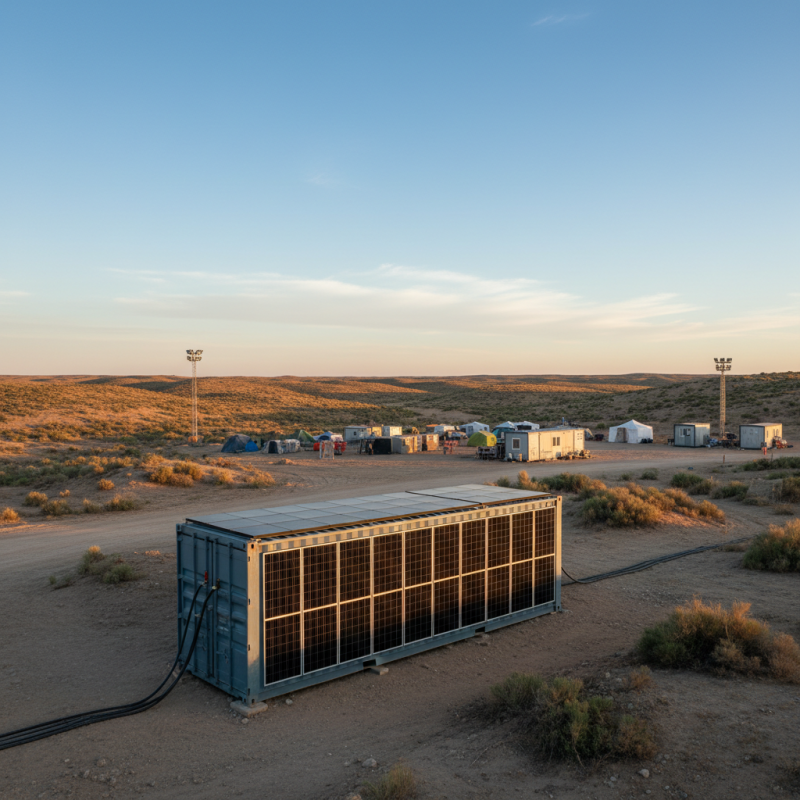
What is a Solar Container and How Does It Work?
A solar container is an innovative solution for harnessing solar energy. This concept combines traditional shipping containers with solar technology. It transforms the way we think about portable energy sources.
solar containers can be deployed in various locations. They provide electricity for remote areas, disaster relief, or outdoor events. The design seeks to optimize space and efficiency. However, there are challenges in scalability and sustainability.
As we explore solar containers, we must consider their impact. Are they a long-term solution or a temporary fix? The potential is exciting, yet we must address potential drawbacks. This exploration will uncover both the benefits and limitations of solar containers.
What is a Solar Container?
A solar container is a portable, modular unit designed to harness solar energy. These containers are equipped with solar panels, batteries, and necessary electronics. They can store energy for various applications. Their flexibility makes them suitable for remote areas or emergency situations.
According to a report by the International Renewable Energy Agency, the global market for solar energy has grown significantly in recent years. In 2022 alone, solar power accounted for more than 20% of the world’s electricity generation. This highlights a shift toward renewable energy. Solar containers play a key role in facilitating this transition.
Despite the potential benefits, solar containers are not without challenges. Installation costs can be high, and not all regions receive optimal sunlight year-round. The technology is improving, but efficiency varies. A study from the National Renewable Energy Laboratory pointed out that energy loss in storage systems can still be a concern. As solar containers evolve, these issues require ongoing attention and improvement.
Key Components of Solar Containers
Solar containers are innovative solutions that integrate solar power technology into portable structures. These containers are equipped with essential components that enable efficient energy generation and storage. Understanding these key elements is crucial for grasping how solar containers operate.
One significant component is the solar panel array. This array converts sunlight into electricity. Typically, these panels are mounted on the container's roof. They must be positioned correctly to capture sunlight effectively. The efficiency of these panels can vary. It’s vital for users to be aware of their performance in different weather conditions.
Another crucial element is the battery storage system. This system stores the energy produced during the day. It ensures a continuous power supply, even at night. Users may encounter challenges like limited battery life or capacity issues. Understanding these limitations can help in planning adequate usage. Overall, the combination of solar panels and battery storage creates a self-sustaining energy system.
Solar Container Energy Output Comparison
How Solar Containers Generate and Store Energy
Solar containers are innovative solutions designed to harness solar energy. They come equipped with photovoltaic panels that absorb sunlight. The energy collected is then converted into electricity. This process is efficient but may depend on weather conditions. Some days, energy production could fall short. On cloudy days, the output might be significantly lower.
Once the energy is generated, it needs storage. Most solar containers incorporate battery systems for this purpose. These batteries store the energy for later use. It’s crucial for ensuring a steady power supply during nighttime or cloudy periods. However, energy storage isn't always perfect. Batteries can degrade over time, leading to reduced capacity. Proper maintenance and monitoring are essential to maximize their lifespan.
In some cases, solar containers can also integrate with smart grids. This allows for better energy distribution and usage tracking. Users can monitor their energy consumption in real-time. Such features enable more informed decisions about energy use. The technology is evolving, but there are challenges to overcome. Techniques for energy conversion and storage need continuous improvement. Each day brings new insights and opportunities for progress.
Applications of Solar Containers in Various Industries
Solar containers are gaining traction across various industries. They offer a portable power solution for remote locations. This innovative technology harnesses solar energy while being easy to transport and deploy. Many industries are tapping into this resource, revolutionizing how they operate.
In agriculture, solar containers can power irrigation systems. Farmers can access water even in remote areas. This reduces dependence on traditional fuel sources. Additionally, solar containers support refrigeration for produce, helping to minimize waste. A farmer could maintain freshness during transport or storage.
The construction industry also benefits significantly. Temporary sites often lack a reliable power source. Solar containers can provide energy for tools and lighting. They can even double as on-site offices. With this flexibility, teams can work efficiently in challenging environments.
Tips: When considering a solar container, assess your energy needs carefully. Understand the local climate as it can affect efficiency. Evaluate the installation process for your specific situation.
What is a Solar Container and How Does It Work? - Applications of Solar Containers in Various Industries
| Industry | Application | Energy Output (kWh) | Key Benefits |
| Construction | Temporary Power Supply | 30 | Reduces diesel fuel dependency |
| Agriculture | Irrigation Systems | 50 | Sustainable water management |
| Event Management | Mobile Energy for Events | 20 | Flexible and easy to deploy |
| Telecommunications | Remote Site Power | 40 | Ensures constant uptime |
| Disaster Relief | Emergency Power Supply | 70 | Rapid response and deployment |
Advantages and Challenges of Using Solar Containers
Solar containers are becoming increasingly popular for their innovative approach to renewable energy. They integrate solar technology into shipping containers, turning them into mobile power stations. This has exciting implications, but the advantages and challenges must be evaluated.
One significant advantage is their flexibility. Solar containers can provide energy to remote areas or during emergencies. According to a report by the International Renewable Energy Agency (IRENA), portable solar solutions can reduce energy costs by up to 50% for communities without access to the grid. However, there are limitations. While they are versatile, their energy output often depends on weather conditions. For example, in cloudy regions, solar generation is significantly reduced.
Maintenance is another challenge. Regular upkeep ensures optimal performance, but the logistics of accessing remote sites can complicate this. Additionally, there are space constraints. Depending on the size of the container, energy generation might be insufficient for large demands. These challenges highlight the need for ongoing innovation in design and functionality, as the market evolves.



 Close
Close