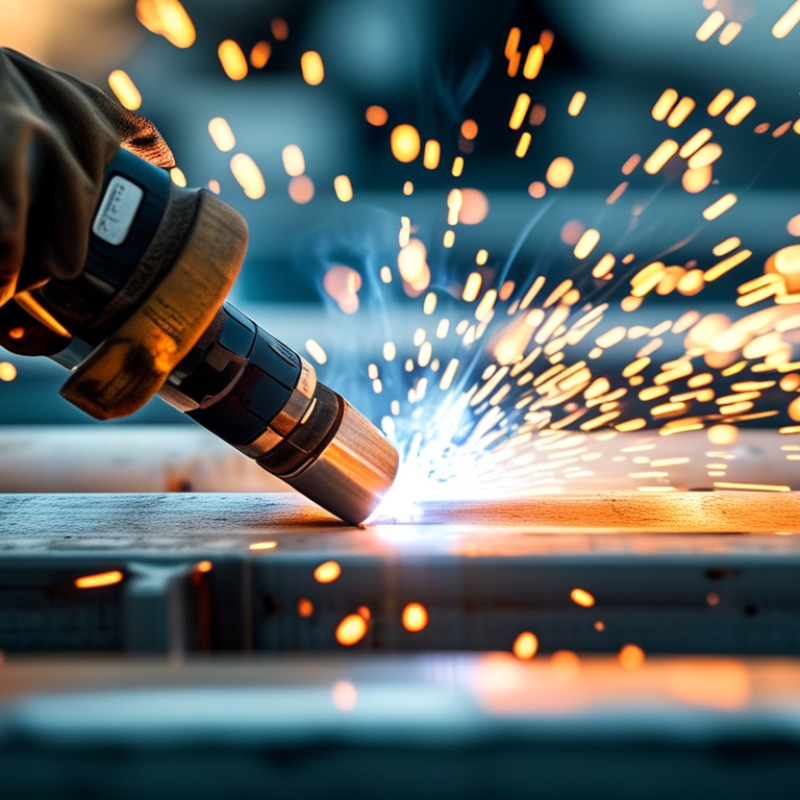
| Process | Gas Tungsten Arc Welding (GTAW/TIG) | Uses a non-consumable tungsten electrode and an inert shielding gas, commonly argon. Filler metal may be added separately. | Produces precise, clean welds with good control of heat input. It is suitable for thin stainless sheet, tubing, pipe, root passes, and visible finished joints. | Maintain shielding-gas coverage, use clean tools reserved for stainless steel, and control heat input to reduce oxidation, distortion, and loss of corrosion resistance. |
| Process | Gas Metal Arc Welding (GMAW/MIG) | Uses a continuously fed wire electrode with shielding gas. Transfer modes include short-circuit, spray, and pulsed spray. | Offers higher deposition rates than TIG and is efficient for production work, medium-thickness components, fittings, and fabrication assemblies. | Select compatible filler wire and shielding gas, maintain correct voltage and wire-feed speed, and protect the arc from drafts to prevent porosity and incomplete fusion. |
| Process | Shielded Metal Arc Welding (SMAW/Stick) | Uses flux-coated consumable electrodes. The electrode coating forms shielding slag and gas during welding. | Requires relatively simple equipment and performs well outdoors or in locations where gas shielding is difficult. It is commonly used for repair and structural work. | Keep electrodes dry according to the applicable welding procedure, remove slag between passes, and use the correct polarity and amperage to limit inclusions and lack of fusion. |
| Process | Flux-Cored Arc Welding (FCAW) | Uses a tubular flux-cored wire. The process may be self-shielded or use external shielding gas. | Provides high productivity and good deposition rates for thicker stainless components and fabrication work, especially when increased fill volume is required. | Remove slag thoroughly, control travel angle and heat input, and verify gas flow when using gas-shielded wire to minimize slag inclusions, porosity, and spatter. |
| Process | Resistance Spot Welding | Joins overlapping sheets by passing electrical current through the workpieces while applying pressure through electrodes. | Produces rapid, repeatable joints without filler metal or shielding gas. It is suitable for thin sheet assemblies and high-volume joining. | Control electrode force, welding current, and weld time. Inspect nugget size and sheet fit-up, and prevent surface contamination that can cause weak or inconsistent spots. |
| Material Behavior | Heat-Affected Zone and Sensitization | Excessive or poorly controlled heat can alter the microstructure adjacent to the weld. Some stainless grades may become susceptible to intergranular corrosion after sensitization. | Appropriate material selection and heat control help retain corrosion resistance, mechanical performance, and dimensional stability. | Use a qualified welding procedure, limit unnecessary heat input, select suitable low-carbon or stabilized grades when appropriate, and follow applicable interpass-temperature limits. |
| Quality Standard | AWS D1.6 | A structural welding code covering stainless steel requirements for design, qualification, fabrication, inspection, and workmanship in applicable structural applications. | Provides a structured basis for welding procedure qualification, welder qualification, joint detailing, acceptance criteria, and inspection of stainless steel structures. | Apply the project edition and governing contract requirements. Confirm essential variables, qualified procedures, inspection methods, acceptance criteria, and required documentation. |
| Quality Standard | ISO 3834 | A quality-management framework for fusion welding of metallic materials. Its levels address quality requirements from basic through comprehensive arrangements. | Establishes controls for personnel, equipment, welding procedures, materials, inspection, nonconformance handling, and traceability throughout production. | Define the applicable quality level, maintain welding procedure and welder qualifications, verify material certificates, record inspections, and retain quality documentation. |
| Weld Defect | Porosity | Gas cavities remain within the solidified weld metal, often appearing as rounded voids or clusters. | Preventing porosity improves weld density, load-carrying capability, corrosion performance, and visual quality. | Check gas flow and shielding, remove moisture, oil, paint, and contamination, protect the arc from drafts, and use clean, compatible filler materials. |
| Weld Defect | Lack of Fusion | The weld metal does not properly fuse with the base metal or a previous weld pass. | Correct fusion provides a continuous load path and reduces crack initiation sites and premature service failure. | Improve joint preparation and fit-up, use adequate heat input, maintain correct travel speed and torch angle, and remove oxides or slag between passes. |
| Weld Defect | Incomplete Penetration | The weld metal does not extend through the intended joint thickness at the root. | Full specified penetration improves joint strength and resistance to leakage, fatigue, and corrosion at the root. | Use the specified root opening, groove angle, backing method, and root-pass parameters. Verify joint geometry and use approved visual or volumetric inspection when required. |
| Weld Defect | Cracking | Cracks are linear separations in the weld metal, heat-affected zone, or base metal and are generally unacceptable unless specifically assessed by the applicable code. | Crack prevention is essential because cracks can propagate under static, cyclic, thermal, or corrosive service conditions. | Control restraint and heat input, use compatible filler metal, follow preheat or interpass requirements when specified, avoid crater defects, and perform required non-destructive testing. |
| Weld Defect | Excessive Oxidation or Heat Tint | Dark discoloration or oxide formation may occur on the weld face or root when stainless steel is exposed to excessive heat or inadequate shielding. | Proper surface protection helps preserve the passive chromium-oxide layer and the corrosion resistance expected from stainless steel. | Use adequate shielding and back-purging where required, control heat input, remove heat tint with an approved cleaning method, and avoid carbon-steel contamination. |
| Inspection | Visual Testing (VT) | Direct or aided visual examination checks weld profile, surface discontinuities, dimensions, undercut, overlap, arc strikes, and cleanliness. | Provides an efficient first-line inspection method that can identify many problems before additional testing or service. | Use qualified personnel, adequate lighting, calibrated measuring tools where required, and acceptance criteria defined by the applicable specification or code. |
| Inspection | Non-Destructive Testing | Methods may include liquid penetrant testing for surface-breaking flaws, radiographic or ultrasonic testing for internal discontinuities, and other techniques selected for the joint. | Helps detect hidden or surface defects without damaging the completed component. | Select the method according to material, joint geometry, defect type, thickness, and applicable acceptance criteria. Document personnel qualifications and test results. |
| Safety | Fumes, Radiation, and Fire | Welding can generate metal fumes, ultraviolet radiation, heat, sparks, and fire hazards. Stainless welding fumes may contain hazardous constituents depending on the material and consumable. | Effective controls protect workers and reduce the risk of respiratory exposure, eye injury, burns, and fire. | Use local exhaust ventilation, suitable respiratory protection when required, welding helmets with the correct shade, flame-resistant clothing, gloves, screens, hot-work controls, and fire monitoring. |
| Safety | Electrical and Gas-Cylinder Safety | Welding equipment involves electric shock, stored energy, pressurized shielding-gas cylinders, hoses, regulators, and conductive workpieces. | Correct setup reduces shock, gas-release, cylinder-impact, hose, and equipment-related incidents. | Inspect leads and connections, provide proper grounding, keep cylinders upright and secured, protect valves, check for leaks, and follow the equipment and site safety procedures. |


 Close
Close