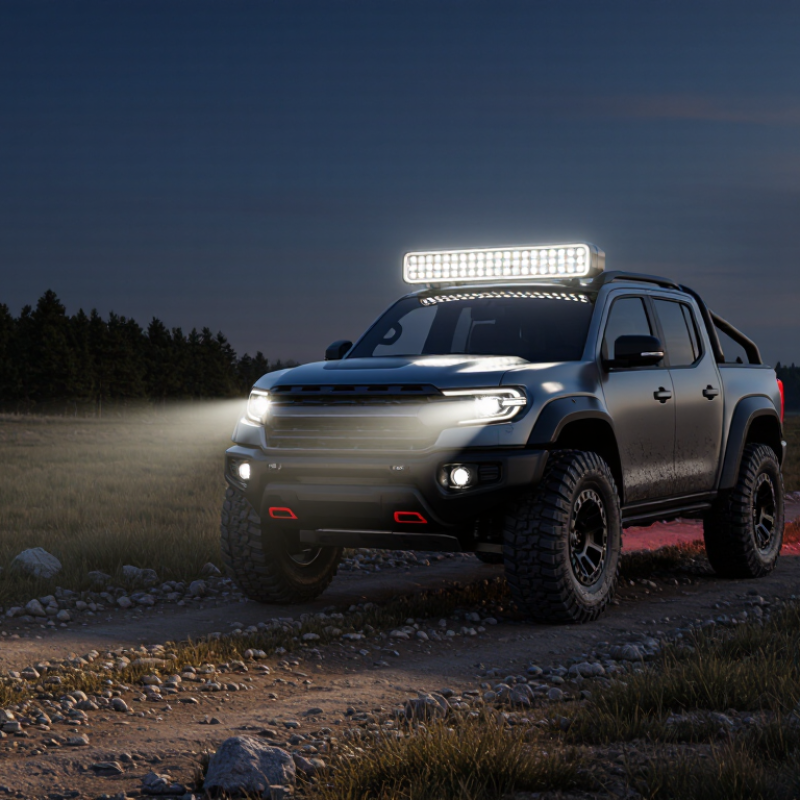
| More usable light for the task | A well-designed light bar can illuminate a wider area or project light farther than a small, low-output lamp. Actual performance depends on the bar’s optics, LED configuration, and measured output. | Off-road driving, work sites, and other settings where additional forward or area lighting is useful. | Compare beam-pattern information and independently measured output where available; advertised lumen figures alone do not show how effectively light reaches the target. |
| Choice of beam pattern | Spot optics concentrate light into a narrower, longer-range beam; flood optics spread light over a wider area. Some bars combine both patterns. | A spot pattern may suit longer sightlines, while a flood pattern can help illuminate nearby surroundings. | Choose a pattern that suits the intended use. A bright beam aimed poorly can cause glare for other road users. |
| Efficient electrical lighting | LEDs generally convert a larger share of electrical power into light than traditional incandescent bulbs, though efficiency varies by product and operating conditions. | Useful when adding auxiliary lighting to a vehicle or equipment with a limited electrical budget. | Check the light bar’s actual power draw, wiring requirements, and compatibility with the vehicle’s electrical system. |
| Long service potential | LEDs have no filament to burn out, and many LED fixtures are designed for long operating life. The driver, connections, seals, heat, and vibration also affect real-world durability. | Can reduce the frequency of lamp replacement in hard-to-reach or frequently used installations. | Review the product’s warranty, ingress-protection rating, mounting quality, and operating-temperature specifications. |
| Fast response when switched on | LED light reaches its operating brightness almost immediately, without the warm-up period associated with some discharge lamps. | Convenient for work lighting, reversing, or situations where auxiliary light is switched on only when needed. | Confirm that the switch, relay, and wiring are suitable for the light bar’s electrical load. |
| Flexible mounting options | Light bars are available in different lengths and mounting styles, making it possible to fit many vehicle and equipment layouts. | Can be installed on suitable roof, bumper, rack, or equipment mounts, depending on the design. | Allow for secure mounting, correct cable routing, and adequate heat dissipation. Installation should follow the manufacturer’s instructions. |
| Potentially improved visibility in dark work areas | Additional light can make obstacles and nearby work areas easier to see when used in an appropriate location and direction. | Useful on private property, at work sites, or off-road where auxiliary lighting is permitted. | Auxiliary lights may be restricted on public roads. Check local regulations and use them in a way that does not dazzle other drivers. |



 Close