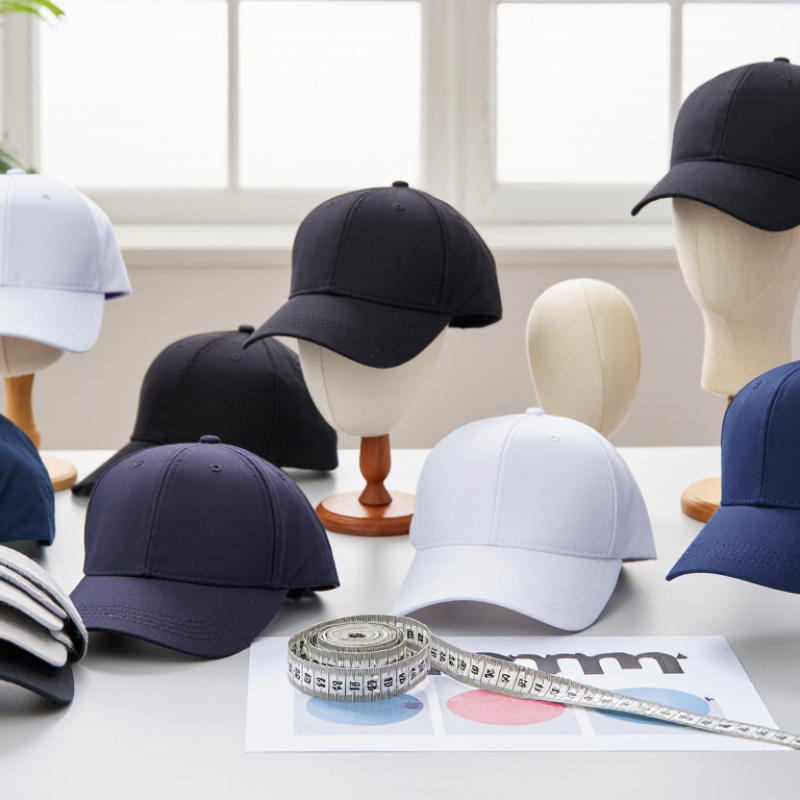
| 1. Choose the right fabric | Fiber content, weight, breathability, and care requirements | Cotton is breathable and has a natural feel. Polyester is generally quick-drying and holds its shape well. Blends can balance comfort, durability, and moisture management. Fabric performance depends on the knit or weave and finishing, not just the fiber name. | Request a fabric swatch or sample and confirm the exact fiber content, color, and care instructions before approving the order. |
| 2. Check the crown construction | Structured versus unstructured crown; panel count and shape | A structured crown uses a stiffener in the front panels to help the cap retain a defined shape. An unstructured crown is softer and more relaxed. Six-panel designs are common; panel seams and crown depth affect appearance and fit. | Ask for a physical sample to assess crown height, front-panel stiffness, and how the cap looks when worn. |
| 3. Verify the fitted size range | Available sizes, measurement method, and size grading | Fitted caps do not use an adjustable closure, so each wearer needs a size that matches their head circumference. Size labels and grading can differ between suppliers; compare the supplier’s measurement chart rather than assuming labels are interchangeable. | Measure representative wearers and request samples in multiple sizes. Confirm the quantity split by size before production. |
| 4. Inspect the bill and finishing | Bill shape, stiffness, stitching, eyelets, and sweatband | Bill curvature and stiffness influence the cap’s profile. Look for even stitching, securely finished seams, clean eyelet openings, and a sweatband that sits comfortably against the forehead. | Inspect samples for loose threads, uneven seams, inconsistent bill shape, and differences between sizes or colors. |
| 5. Match customization to the artwork | Embroidery, woven or sewn-on patches, and printed decoration | Embroidery creates a stitched, textured finish and is often suitable for simple logos or lettering. Small text and fine details may need to be simplified. Patches can accommodate some intricate artwork, while printed methods may suit designs with fine color detail, depending on the fabric and process. | Submit final artwork early and approve a decorated sample. Check placement, dimensions, thread or ink colors, and legibility at the intended size. |
| 6. Confirm order requirements and schedule | Minimum order quantity, size and color splits, sample approval, and production timing | Minimums, available colorways, and production schedules vary by supplier and customization method. Sample development, artwork approval, and shipping can add time beyond manufacturing. | Get the minimum quantity, itemized costs, production milestones, shipping terms, and delivery estimate in writing before placing the order. |
| 7. Compare total value, not just unit price | Product quality, decoration, packaging, shipping, and defect policy | A lower quoted unit price may exclude setup, sampling, decoration, packaging, or freight. Specifications and inspection standards help make quotes comparable and reduce misunderstandings. | Compare complete landed costs and confirm how sizing errors, color variation, or defective units will be handled. |



 Close