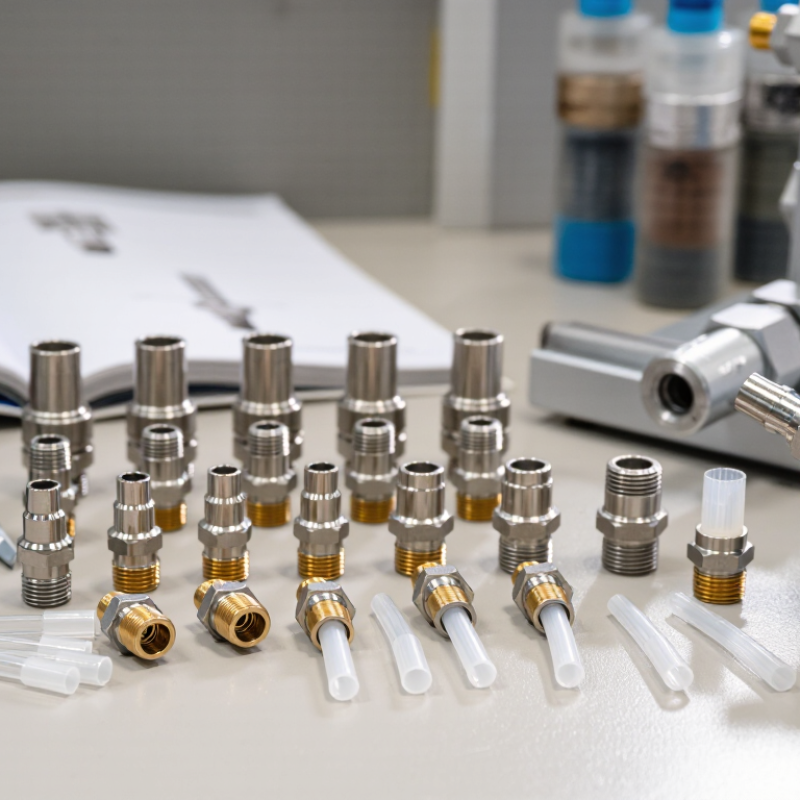
| 1. Match the tube outside diameter | Confirm the fitting is made for the tube’s actual outside diameter, not its inside diameter. | Common pneumatic tube sizes include 4, 6, 8, 10, and 12 mm, as well as fractional-inch sizes. Check the tube specification and fitting marking. | A mismatched tube may not grip or seal reliably and can pull out under pressure. |
| 2. Check seal material compatibility | Identify the seal material and verify compatibility with the fluid, additives, cleaning agents, and operating temperature. | NBR is commonly used for general compressed-air service; FKM may suit some higher-temperature or chemical applications. Compatibility depends on the exact medium and conditions. | An unsuitable elastomer can swell, harden, crack, or leak. Do not assume one material is suitable for every lubricant or process fluid. |
| 3. Identify the port thread standard | Distinguish parallel and tapered threads, and confirm the thread designation and size. | G threads are parallel pipe threads commonly specified to ISO 228-1; R threads are tapered external threads specified to ISO 7-1. NPT is a separate thread standard. | Threads that appear similar may not mate or seal correctly. Never force mismatched standards together. |
| 4. Confirm how the port is sealed | Check whether sealing is provided by an O-ring, bonded washer, gasket, or a suitable thread sealant specified for the connection. | Parallel G threads typically require a separate sealing arrangement. Tapered R connections seal at the threads when assembled using an appropriate sealing method. | Using the wrong sealing method can cause leakage or damage the port. Follow the fitting and equipment instructions. |
| 5. Compare pressure and temperature ratings | Check the fitting’s rated working pressure and temperature range for the intended fluid and installation conditions. | Use the manufacturer’s rating for the exact fitting configuration. Account for temperature effects, pressure surges, vibration, and any limits of the tube. | The assembly is limited by its lowest-rated component; a fitting’s rating does not automatically apply to every tube or application. |
| 6. Inspect installation and tube-release details | Check tube-cutting requirements, insertion depth, clearance for the release collar, and any restrictions on tube material or surface condition. | Cut the tube square, remove burrs, insert it fully, and verify engagement as instructed. Keep enough access to press the release collar during maintenance. | Poor preparation or incomplete insertion can damage the seal and cause leaks or tube separation. |
| 7. Include ISO 4414 safety in system selection | Review the pneumatic system design and installation against applicable ISO 4414 requirements and local regulations. | Provide suitable isolation and pressure-dissipation provisions; assess stored energy and unexpected movement; depressurize before disconnecting or servicing components. | ISO 4414 addresses safety requirements for pneumatic fluid power systems. Selecting a fitting alone does not establish system compliance or make maintenance safe. |



 Close