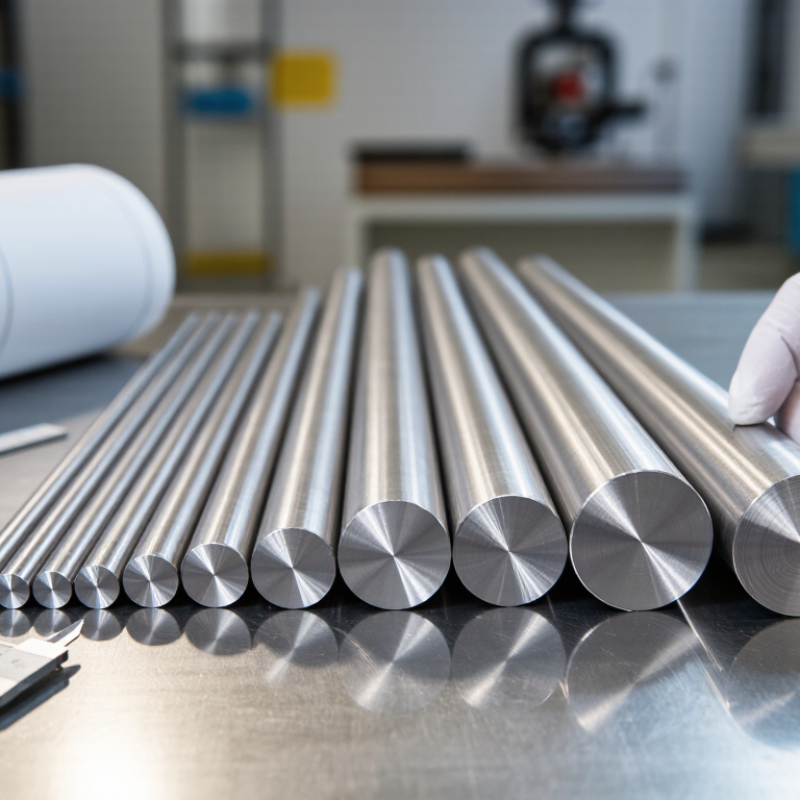
| 1. Match the grade to the application | Confirm the exact grade and product form. Commercially pure Grade 2 and Ti-6Al-4V Grade 5 are common, but their properties and typical uses differ. | Purchase specification and material test certificate identifying the grade. | Check that the grade, bar form, dimensions, and applicable standard all match the design or engineering requirements. |
| 2. Confirm the governing specification | For titanium and titanium-alloy bars and billets, ASTM B348/B348M is one commonly used product specification. The required standard depends on the application and contract. | Certificate or inspection documents stating the specification and revision or edition when required. | Do not assume a material meets a standard just because the grade is listed; verify the standard and any additional order requirements. |
| 3. Review certification documents | Check that the certificate identifies the material, grade, product form, heat or lot, and applicable test results. Quality-management certification is not a substitute for product test documentation. | Material test report or certificate of conformance, as required by the purchase order. | Resolve missing, inconsistent, or unclear fields before accepting the shipment. |
| 4. Check chemistry and mechanical testing | Compare reported chemical composition and mechanical test results with the limits in the specified grade and product standard. | Heat or lot-specific chemical analysis and tensile results; hardness or other tests when specified. | Use the applicable standard and order requirements for acceptance; avoid relying on generic values that may not apply to the product condition or size. |
| 5. Preserve heat-level traceability | Ensure each bar or bundle can be linked to its heat or lot and corresponding material documentation throughout receiving and processing. | Heat number on the bar, tag, or bundle, plus matching records and certificate references. | Check that markings remain legible and are not separated from the material during cutting or repacking. |
| 6. Verify dimensions and condition | Confirm diameter or cross-section, length, tolerances, straightness, and surface condition against the order and applicable requirements. | Dimensional inspection records and receiving inspection results, where required. | Agree on measurement methods and tolerances before purchase, especially for close-tolerance or finished bars. |
| 7. Specify additional testing and independent checks | Determine whether added inspection, non-destructive testing, or third-party verification is necessary for the application. These are not universal requirements for every titanium bar order. | Purchase-order inspection plan, test reports, and independent inspection records when contracted. | State the test method, scope, acceptance criteria, and reporting requirements in the order before production or shipment. |



 Close